Carolyn Shantz - Böcker
Visar alla böcker från författaren Carolyn Shantz. Handla med fri frakt och snabb leverans.
5 produkter
5 produkter
596 kr
Skickas inom 7-10 vardagar
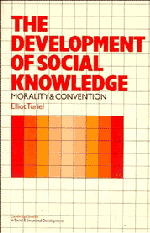
Children are not simply molded by the environment; through constant inference and interpretation, they actively shape their own social world. This book is about that process. Elliot Turiel's work focuses on the development of moral judgement in children and adolescents and, more generally, on their evolving understanding of the conventions of social systems. His research suggests that social judgements are ordered, systematic, subtly discriminative, and related to behavior. His theory of the ways in which children generate social knowledge through their social experiences will be of interest to a wide range of researchers and students in child development and education.
493 kr
Skickas inom 7-10 vardagar
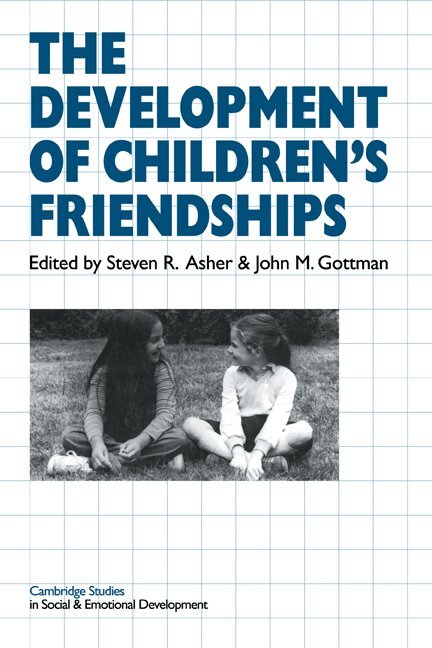
When this book was first published in 1978, it was only recently that researchers had begun to focus on children's peer relationships and the impact of these relationships on their development. The contributors to this volume view friendship as an important context for the study of a variety of cognitive and affective processes - from the perspectives of a wide range of disciplines. The volume poses an array of fascinating theoretical questions, and offers varied methodological tools for answering them. Some contributors present and review applied research addressed to conceptualizing and ameliorating peer relationship problems, whilst others reflect applied or policy-orientated concerns in chapters on racial integration and the integration of mentally retarded children into regular classrooms. A chapter on the scientific, political and social history of the interest in children's friendships and two summary chapters add to the usefulness of the book for students.
416 kr
Skickas inom 7-10 vardagar
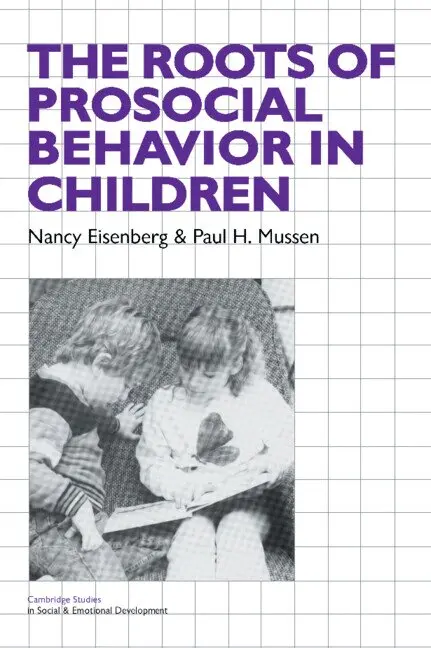
What kinds of childbearing practices foster the development of helping, sharing, and other prosocial behaviours? What roles do biology and culture play in the development of prosocial behaviour? In this book, Nancy Eisenberg and Paul Mussen review and summarize scholarly research that has been devoted to the development of prosocial behaviour in children, and examine the variety of influences that contribute to children's prosocial development, including the media, parents, peers, biology, culture, personal characteristics, as well as situational determinants. The authors argue that prosocial behaviour can be learned and is modifiable, and they suggest ways that parents, teachers, and other can enhance prosocial development. In addition, the authors attempt to communicate the advances in the study of prosocial development that have taken place over the last decade. The book highlights some questions that have not yet been addressed adequately by researchers, and suggests areas for future work.
455 kr
Skickas inom 7-10 vardagar
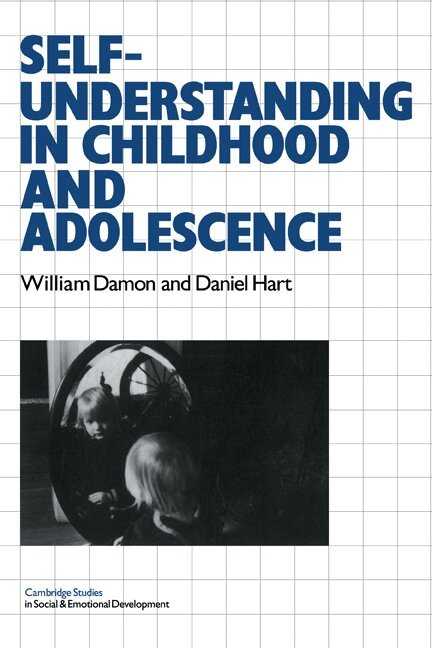
This important book provides a comprehensive look, from a developmental perspective, of how children and adolescents come to understand themselves during the first two decades of life. It explores every aspect of this central area of social cognition, including the physical, social, active, and psychological aspects of self. The authors present data from several cross-sectional and longitudinal studies of children's and adolescents' self-conceptions, and they present alternative methods for interviewing children about themselves and for analyzing children's responses for developmental level and schematic orientation. They offer theoretical explanations about the processes that account for normal development of self-understanding and contrast these with abnormal processes that arise in populations of clinically disturbed youth. A chapter is also devoted to the study of children living in a remote agrarian setting, whose self-understanding is contrasted with the self-conceptions of children in the United States.
442 kr
Skickas inom 7-10 vardagar
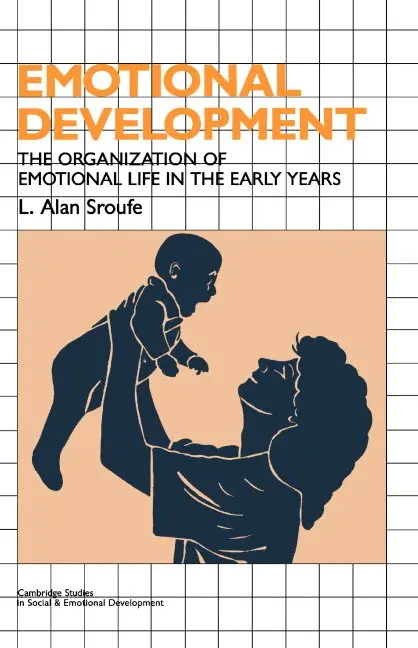
In the past, researchers have treated the development of the emotions and the task of emotional regulation as two separate topics, the former emphasizing 'normative' questions and the latter emphasizing 'individual' differences. Until now, understanding the first topic has never been seen as relevant for the second. This is the area pioneered by Emotional Development. This book presents the early phases of emotional life from a developmental perspective. It argues that emotional generation hinges on the developing ability to express arousal or 'tension' in accordance with one's context. It reveals the common core processes underlying the emergence of specific emotions and the capacity for emotional regulation. It explains the timing of emotional emergence, why emotions function as they do, and also explores individual styles of emotional regulation. Close ties between emotional development, cognitive, social and CNS development are discussed, too.