Carsten Held – författare
Visar alla böcker från författaren Carsten Held. Handla med fri frakt och snabb leverans.
8 produkter
8 produkter
E-bok
Engelska, 20061 323 kr
Läs direkt efter köp
"Cognitive psychology," "cognitive neuroscience," and "philosophy of mind" are names for three very different scientific fields, but they label aspects of the same scientific goal: to understand the nature of mental phenomena. Today, the three disciplines strongly overlap under the roof of the cognitive sciences. The book''s purpose is to present views from the different disciplines on one of the central theories in cognitive science: the theory of mental models. Cognitive psychologists report their research on the representation and processing of mental models in human memory. Cognitive neuroscientists demonstrate how the brain processes visual and spatial mental models and which neural processes underlie visual and spatial thinking. Philosophers report their ideas about the role of mental models in relation to perception, emotion, representation, and intentionality. The single articles have different and mutually complementing goals: to introduce new empirical methods and approaches, to report new experimental results, and to locate competing approaches for their interpretation in the cross-disciplinary debate. The book is strongly interdisciplinary in character. It is especially addressed to researchers in any field related to mental models theory as both a reference book and an overview of present research on the topic in other disciplines. However, it is also an ideal reader for a specialized graduate course.- Examines the theory of mental models from the perspectives of cognitive psychology, cognitive neuroscience and philosophy of the mind- Introduces new empirical methods, experimental results, and interdisciplinary yet complementary approaches- Serves as a reference book and an overview of current research
Del 138 - Advances in Psychology
Mental Models and the Mind
Current developments in Cognitive Psychology, Neuroscience and Philosophy of Mind
Inbunden, Engelska, 2006
1 303 kr
Skickas inom 10-15 vardagar
"Cognitive psychology," "cognitive neuroscience," and "philosophy of mind" are names for three very different scientific fields, but they label aspects of the same scientific goal: to understand the nature of mental phenomena. Today, the three disciplines strongly overlap under the roof of the cognitive sciences. The book's purpose is to present views from the different disciplines on one of the central theories in cognitive science: the theory of mental models. Cognitive psychologists report their research on the representation and processing of mental models in human memory. Cognitive neuroscientists demonstrate how the brain processes visual and spatial mental models and which neural processes underlie visual and spatial thinking. Philosophers report their ideas about the role of mental models in relation to perception, emotion, representation, and intentionality. The single articles have different and mutually complementing goals: to introduce new empirical methods and approaches, to report new experimental results, and to locate competing approaches for their interpretation in the cross-disciplinary debate. The book is strongly interdisciplinary in character. It is especially addressed to researchers in any field related to mental models theory as both a reference book and an overview of present research on the topic in other disciplines. However, it is also an ideal reader for a specialized graduate course. Examines the theory of mental models from the perspectives of cognitive psychology, cognitive neuroscience and philosophy of the mind Introduces new empirical methods, experimental results, and interdisciplinary yet complementary approaches Serves as a reference book and an overview of current research
245 kr
Skickas inom 5-8 vardagar
Inbunden, Tyska, 2025
385 kr
Skickas inom 5-8 vardagar
Häftad, Engelska, 2025
237 kr
Skickas inom 5-8 vardagar
863 kr
Skickas inom 3-6 vardagar
Häftad, Tyska, 2022
420 kr
Skickas inom 10-15 vardagar
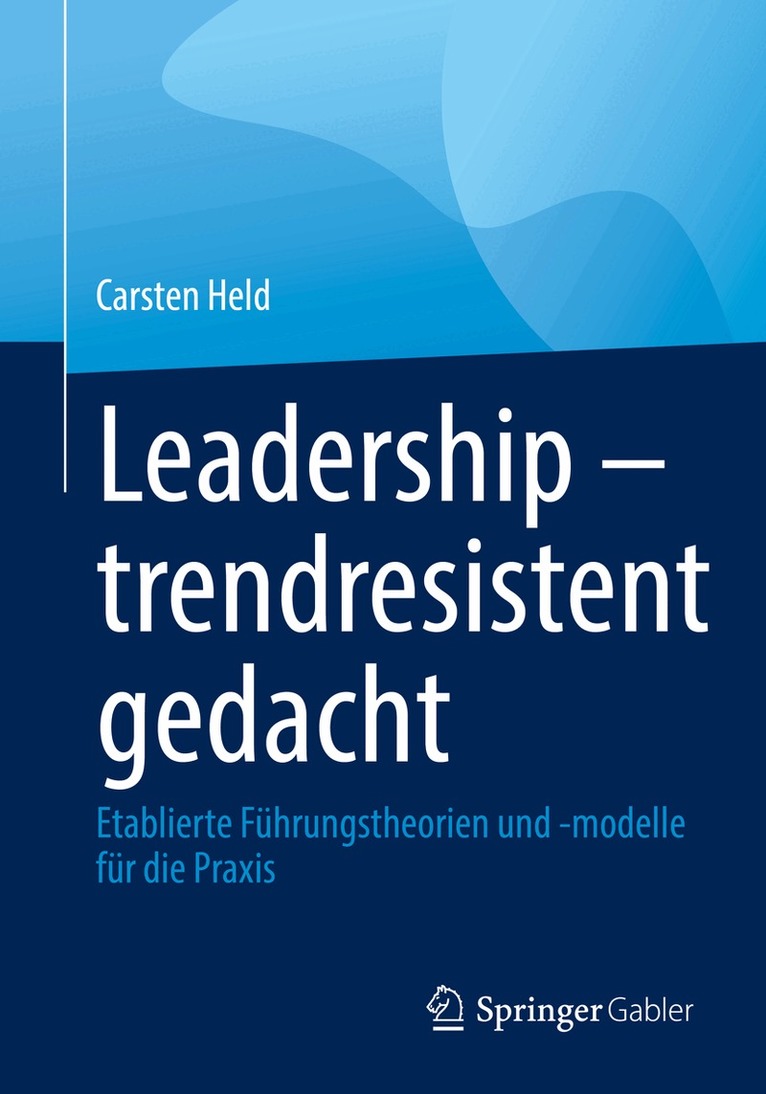
Dieses Fachbuch vereint die wichtigsten Theorien der etablierten Führungsforschung mit dem Führungsalltag von Praktikern. Es bewegt sich bewusst im wissenschaftlichen Mainstream, ohne allerneueste Forschungstrends verfrüht als Wundermittel anzupreisen. Der Autor stellt eine Auswahl an etablierten, viel beachteten und in der Wissenschaft wenig kontrovers diskutierten Theorien und Modellen vor, die sich in der Führungs-Praxis als hoch praktikabel erwiesen haben. Das Buch schließt die Lücke zwischen grauer Theorie und gelebter Praxis vornehmlich durch sprachliche Vereinfachung komplexerer Theorie in Kombination mit expliziten, kondensierten Handlungsempfehlungen und Reflexionsaufgaben für den eigenen Führungsalltag. Darüber hinaus ergänzt es den Bereich der Führungsforschung um Wissenswertes aus den Bereichen Kommunikation und Konflikt sowie (Sozial-)Psychologie; ohne diese ist gutes Führen nicht möglich.Der InhaltDer (kleine, aber feine) Unterschied zwischen Führung und ManagementDas große und kleine 1x1 der FührungMacht, Motivation, Teams, Kommunikation & Konflikt, UnternehmenskulturDer Führungskräfte-MethodenkofferSelf-Leadership
E-bok
Tyska, 2022409 kr
Läs direkt efter köp
Dieses Fachbuch vereint die wichtigsten Theorien der etablierten Führungsforschung mit dem Führungsalltag von Praktikern. Es bewegt sich bewusst im wissenschaftlichen Mainstream, ohne allerneueste Forschungstrends verfrüht als Wundermittel anzupreisen. Der Autor stellt eine Auswahl an etablierten, viel beachteten und in der Wissenschaft wenig kontrovers diskutierten Theorien und Modellen vor, die sich in der Führungs-Praxis als hoch praktikabel erwiesen haben. Das Buch schließt die Lücke zwischen grauer Theorie und gelebter Praxis vornehmlich durch sprachliche Vereinfachung komplexerer Theorie in Kombination mit expliziten, kondensierten Handlungsempfehlungen und Reflexionsaufgaben für den eigenen Führungsalltag. Darüber hinaus ergänzt es den Bereich der Führungsforschung um Wissenswertes aus den Bereichen Kommunikation und Konflikt sowie (Sozial-)Psychologie; ohne diese ist gutes Führen nicht möglich.Der InhaltDer (kleine, aber feine) Unterschied zwischen Führung und ManagementDas große und kleine 1x1 der FührungMacht, Motivation, Teams, Kommunikation & Konflikt, UnternehmenskulturDer Führungskräfte-MethodenkofferSelf-Leadership