Catherine Boone - Böcker
Visar alla böcker från författaren Catherine Boone. Handla med fri frakt och snabb leverans.
8 produkter
8 produkter
441 kr
Skickas inom 7-10 vardagar
In most post-colonial regimes in sub-Saharan Africa, state power has been used to structure economic production in ways that have tended to produce economic stagnation rather than growth. In this 1993 book, Catherine Boone examines the ways in which the exercise of state power has inhibited economic growth, focusing on the case of Senegal. She traces changes in the political economy of Senegal from the heyday of colonial merchant capital in the 1930s to the decay of the 1980s and reveals that old trading monopolies and commercial hierarchies were preserved at the cost of reforms that would have stimulated economic growth. Boone uses this case to develop an argument against analyses of political-economic development that identify state institutions and ideologies as independent forces driving the process of economic transformation. State power, she argues, is rooted in the material and social bases of ruling alliances.
1 574 kr
Skickas inom 7-10 vardagar
In most post-colonial regimes in sub-Saharan Africa, state power has been used to structure economic production in ways that have tended to produce economic stagnation rather than growth. In this 1993 book, Catherine Boone examines the ways in which the exercise of state power has inhibited economic growth, focusing on the case of Senegal. She traces changes in the political economy of Senegal from the heyday of colonial merchant capital in the 1930s to the decay of the 1980s and reveals that old trading monopolies and commercial hierarchies were preserved at the cost of reforms that would have stimulated economic growth. Boone uses this case to develop an argument against analyses of political-economic development that identify state institutions and ideologies as independent forces driving the process of economic transformation. State power, she argues, is rooted in the material and social bases of ruling alliances.
Political Topographies of the African State
Territorial Authority and Institutional Choice
Häftad, Engelska, 2003
397 kr
Skickas inom 7-10 vardagar
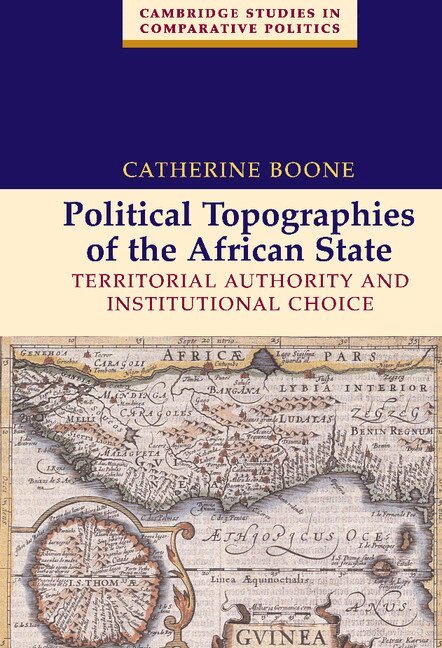
This 2003 study brings Africa into the mainstream of studies of state-formation in agrarian societies. Territorial integration is the challenge: institutional linkages and political deals that bind center and periphery are the solutions. In African countries, as in territorially diverse states around the world, rulers at the center are forced to bargain with regional elites to establish stable mechanisms of rule and taxation. Variation in regional forms of social organization make for differences in the interests and political strength of regional leaders who seek to maintain or enhance their power vis-...-vis their followers and subjects, and also vis-...-vis the center. The uneven political topography of the regions ultimately produces unevenness in the patterns and depth of center-region linkage. Six sub-regions of three West African countries - Senegal, Cote d'Ivoire, and Ghana - are the backbone of the study.
Political Topographies of the African State
Territorial Authority and Institutional Choice
Inbunden, Engelska, 2003
1 166 kr
Skickas inom 7-10 vardagar
This 2003 study brings Africa into the mainstream of studies of state-formation in agrarian societies. Territorial integration is the challenge: institutional linkages and political deals that bind center and periphery are the solutions. In African countries, as in territorially diverse states around the world, rulers at the center are forced to bargain with regional elites to establish stable mechanisms of rule and taxation. Variation in regional forms of social organization make for differences in the interests and political strength of regional leaders who seek to maintain or enhance their power vis-...-vis their followers and subjects, and also vis-...-vis the center. The uneven political topography of the regions ultimately produces unevenness in the patterns and depth of center-region linkage. Six sub-regions of three West African countries - Senegal, Cote d'Ivoire, and Ghana - are the backbone of the study.
396 kr
Skickas inom 7-10 vardagar
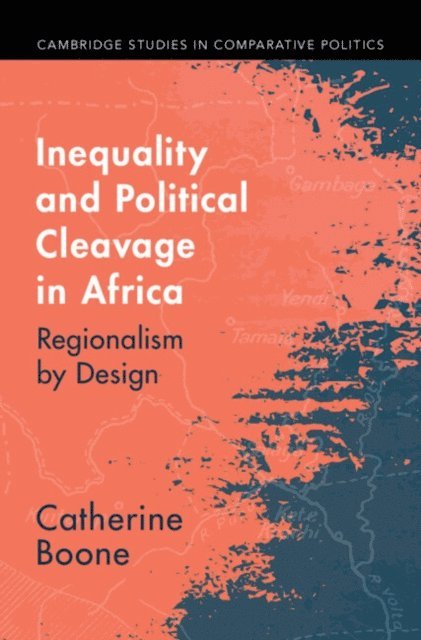
This pathbreaking work integrates African countries into broader comparative theories of how spatial inequality shapes political competition over the construction of markets, states, and nations. Existing literature on African countries has found economic cleavages, institutions, and policy choices to be of low salience in national politics. This book inverts these arguments. Boone trains our analytic focus on the spatial inequalities and territorial institutions that structure national politics in Africa, showing that regional cleavages find expression in both electoral competition and policy struggles over redistribution, sectoral investment, market integration, and state design. Leveraging comparative politics theory, Boone argues that African countries' regional and core-periphery tensions are similar to those that have shaped national economic integration in other parts of the world. Bringing together electoral and economic geography, the book offers a new and powerful map of political competition on the African continent.
1 228 kr
Skickas inom 7-10 vardagar
This pathbreaking work integrates African countries into broader comparative theories of how spatial inequality shapes political competition over the construction of markets, states, and nations. Existing literature on African countries has found economic cleavages, institutions, and policy choices to be of low salience in national politics. This book inverts these arguments. Boone trains our analytic focus on the spatial inequalities and territorial institutions that structure national politics in Africa, showing that regional cleavages find expression in both electoral competition and policy struggles over redistribution, sectoral investment, market integration, and state design. Leveraging comparative politics theory, Boone argues that African countries' regional and core-periphery tensions are similar to those that have shaped national economic integration in other parts of the world. Bringing together electoral and economic geography, the book offers a new and powerful map of political competition on the African continent.
Property and Political Order in Africa
Land Rights and the Structure of Politics
Inbunden, Engelska, 2014
1 166 kr
Skickas inom 7-10 vardagar
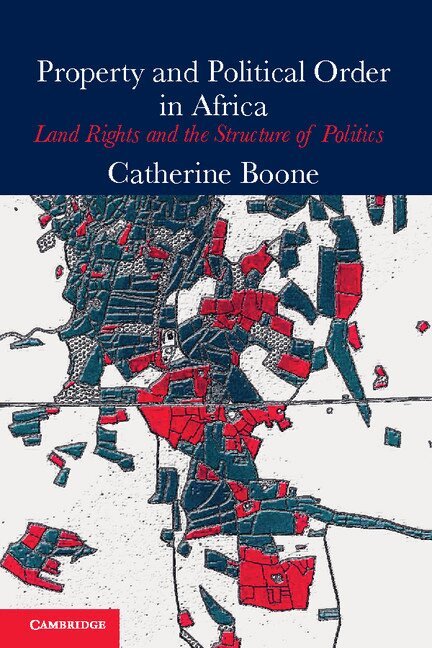
In sub-Saharan Africa, property relationships around land and access to natural resources vary across localities, districts and farming regions. These differences produce patterned variations in relationships between individuals, communities and the state. This book captures these patterns in an analysis of structure and variation in rural land tenure regimes. In most farming areas, state authority is deeply embedded in land regimes, drawing farmers, ethnic insiders and outsiders, lineages, villages and communities into direct and indirect relationships with political authorities at different levels of the state apparatus. The analysis shows how property institutions - institutions that define political authority and hierarchy around land - shape dynamics of great interest to scholars of politics, including the dynamics of land-related competition and conflict, territorial conflict, patron-client relations, electoral cleavage and mobilization, ethnic politics, rural rebellion, and the localization and 'nationalization' of political competition.
Property and Political Order in Africa
Land Rights and the Structure of Politics
Häftad, Engelska, 2014
397 kr
Skickas inom 7-10 vardagar
In sub-Saharan Africa, property relationships around land and access to natural resources vary across localities, districts and farming regions. These differences produce patterned variations in relationships between individuals, communities and the state. This book captures these patterns in an analysis of structure and variation in rural land tenure regimes. In most farming areas, state authority is deeply embedded in land regimes, drawing farmers, ethnic insiders and outsiders, lineages, villages and communities into direct and indirect relationships with political authorities at different levels of the state apparatus. The analysis shows how property institutions - institutions that define political authority and hierarchy around land - shape dynamics of great interest to scholars of politics, including the dynamics of land-related competition and conflict, territorial conflict, patron-client relations, electoral cleavage and mobilization, ethnic politics, rural rebellion, and the localization and 'nationalization' of political competition.