Cathrine O. Frank - Böcker
Visar alla böcker från författaren Cathrine O. Frank. Handla med fri frakt och snabb leverans.
7 produkter
7 produkter
1 157 kr
Skickas inom 7-10 vardagar
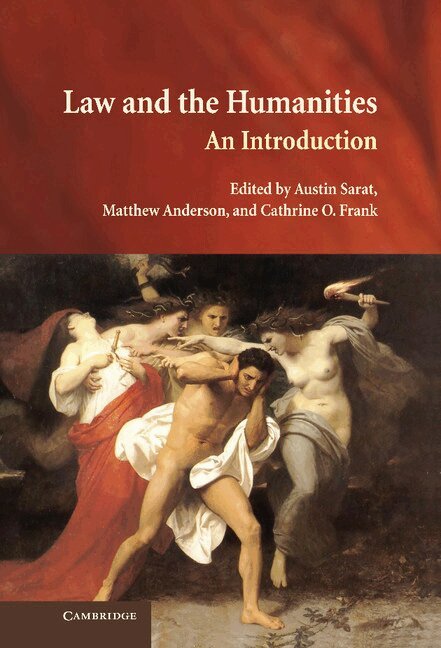
Law and the Humanities: An Introduction brings together a distinguished group of scholars from law schools and an array of the disciplines in the humanities. Contributors come from the United States and abroad in recognition of the global reach of this field. This book is, at one and the same time, a stock taking both of different national traditions and of the various modes and subjects of law and humanities scholarship. It is also an effort to chart future directions for the field. By reviewing and analyzing existing scholarship and providing thematic content and distinctive arguments, it offers to its readers both a resource and a provocation. Thus, Law and the Humanities marks the maturation of this 'law and' enterprise and will spur its further development.
600 kr
Skickas inom 7-10 vardagar
Law and the Humanities: An Introduction brings together a distinguished group of scholars from law schools and an array of the disciplines in the humanities. Contributors come from the United States and abroad in recognition of the global reach of this field. This book is, at one and the same time, a stock taking both of different national traditions and of the various modes and subjects of law and humanities scholarship. It is also an effort to chart future directions for the field. By reviewing and analyzing existing scholarship and providing thematic content and distinctive arguments, it offers to its readers both a resource and a provocation. Thus, Law and the Humanities marks the maturation of this 'law and' enterprise and will spur its further development.
881 kr
Skickas inom 10-15 vardagar
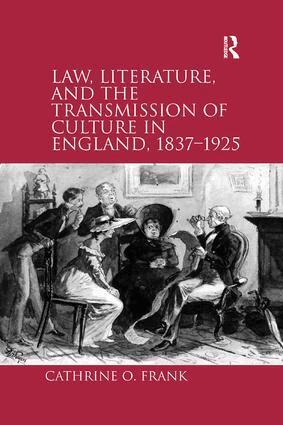
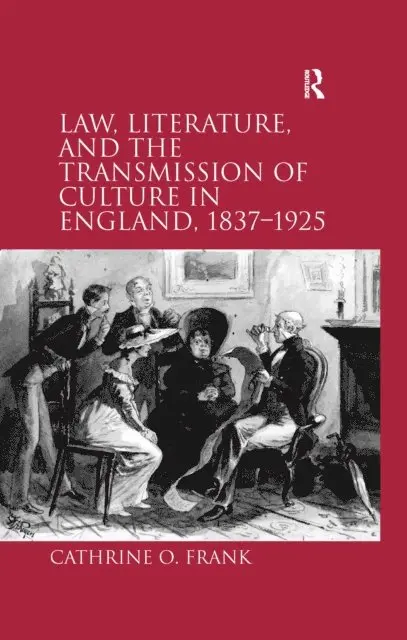
Focusing on the last will and testament as a legal, literary, and cultural document, Cathrine O. Frank examines fiction of the Victorian and Edwardian eras alongside actual wills, legal manuals relating to their creation, case law regarding their administration, and contemporary accounts of curious wills in periodicals. Her study begins with the Wills Act of 1837 and poses two basic questions: What picture of Victorian culture and personal subjectivity emerges from competing legal and literary narratives about the will, and how does the shift from realist to modernist representations of the will accentuate a growing divergence between law and literature? Frank’s examination of works by Emily Brontë, George Eliot, Charles Dickens, Wilkie Collins, Anthony Trollope, Samuel Butler, Arnold Bennett, John Galsworthy, and E.M. Forster reveals the shared rhetorical and cultural significance of the will in law and literature while also highlighting the competition between these discourses to structure a social order that emphasized self-determinism yet viewed individuals in relationship to the broader community. Her study contributes to our knowledge of the cultural significance of Victorian wills and creates intellectual bridges between the Victorian and Edwardian periods that will interest scholars from a variety of disciplines who are concerned with the laws, literature, and history of the nineteenth and early twentieth centuries.
2 478 kr
Skickas inom 10-15 vardagar
Focusing on the last will and testament as a legal, literary, and cultural document, Cathrine O. Frank examines fiction of the Victorian and Edwardian eras alongside actual wills, legal manuals relating to their creation, case law regarding their administration, and contemporary accounts of curious wills in periodicals. Her study begins with the Wills Act of 1837 and poses two basic questions: What picture of Victorian culture and personal subjectivity emerges from competing legal and literary narratives about the will, and how does the shift from realist to modernist representations of the will accentuate a growing divergence between law and literature? Frank’s examination of works by Emily Brontë, George Eliot, Charles Dickens, Wilkie Collins, Anthony Trollope, Samuel Butler, Arnold Bennett, John Galsworthy, and E.M. Forster reveals the shared rhetorical and cultural significance of the will in law and literature while also highlighting the competition between these discourses to structure a social order that emphasized self-determinism yet viewed individuals in relationship to the broader community. Her study contributes to our knowledge of the cultural significance of Victorian wills and creates intellectual bridges between the Victorian and Edwardian periods that will interest scholars from a variety of disciplines who are concerned with the laws, literature, and history of the nineteenth and early twentieth centuries.
1 344 kr
Skickas
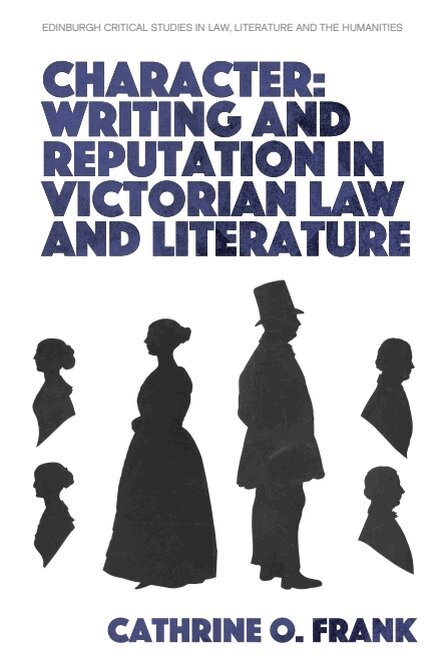
Why would Hawthorne and Eliot grant their fallen women an anachronistic right to silence that could only worsen their punishment? Why did Bronte and Gaskell find gossip such a useful source of information when lawyers excluded it as hearsay? How did Trollope's work as an editor influence his preoccupation throughout his novels with libel? Drawing on a range of primary sources including novels, Victorian periodical literature, legislative debate, case law, and legal treatise, Cathrine O. Frank traces the ways conventions of literary characterisation mingled with character-centred legal developments to produce a jurisprudential theory of character that extends beyond the legal profession. She explores how key categories and representational strategies for imagining individual personhood also defined communities and mediated relations within them, in life and in fiction. This book offers new readings of works by Nathaniel Hawthorne, George Eliot, Anne Bronte, Elizabeth Gaskell, Anthony Trollope, Robert Louis Stevenson, Oscar Wilde and Arthur Conan Doyle. It analyses their literary constructions of character in relation to specific legal cases and doctrines, including the right to silence, libel and privacy.
667 kr
Skickas inom 3-6 vardagar
Examines legal and literary narratives of personhood in the 19th century Traces the concept of character through related areas of law, cultural discourses of character and the formal structures of the novel Offers new readings of works by Nathaniel Hawthorne, George Eliot, Anne Bronte, Elizabeth Gaskell, Anthony Trollope, Robert Louis Stevenson, Oscar Wilde and Arthur Conan DoyleAnalyses literary constructions of character in relation to specific legal cases and doctrines, including the right to silence, libel and privacyIncludes new work on Anthony Trollope's topical and editorial interest in libel Covers the relationship between libel, the development of privacy rights and emerging modernist aestheticsPresents a transatlantic approach to select works and issues, including the right to silence and privacy Why would Hawthorne and Eliot grant their fallen women an anachronistic right to silence that could only worsen their punishment? Why did Bronte and Gaskell find gossip such a useful source of information when lawyers excluded it as hearsay? How did Trollope's work as an editor influence his preoccupation throughout his novels with libel?Drawing on a range of primary sources including novels, Victorian periodical literature, legislative debate, case law, and legal treatise, Cathrine O. Frank traces the ways conventions of literary characterisation mingled with character-centred legal developments to produce a jurisprudential theory of character that extends beyond the legal profession. She explores how key categories and representational strategies for imagining individual personhood also defined communities and mediated relations within them, in life and in fiction.
1 218 kr
Skickas inom 7-10 vardagar
Provides a resource for teachers interested in learning about the field of law and literature and shows how to bring its insights to bear in their classrooms, both in the liberal arts and in law schools. Essays in the first section, “Theory and History of the Movement,” provide a retrospective of the field and look forward to new developments. The second section, “Model Courses,” offers readers an array of possibilities for structuring courses that integrate legal issues with the study of literature, from The Canterbury Tales to current prison literature. In “Texts,” the third section, guidance is provided for teaching not only written documents (novels, plays, trial reports) but also cultural objects: digital media, Native American ceremonies, documentary theater, hip-hop. The volume’s contributors investigate what constitutes law and literature and how each informs the other.