Cavan W. Concannon - Böcker
Visar alla böcker från författaren Cavan W. Concannon. Handla med fri frakt och snabb leverans.
4 produkter
4 produkter
814 kr
Skickas inom 7-10 vardagar
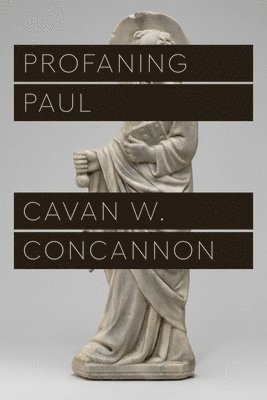
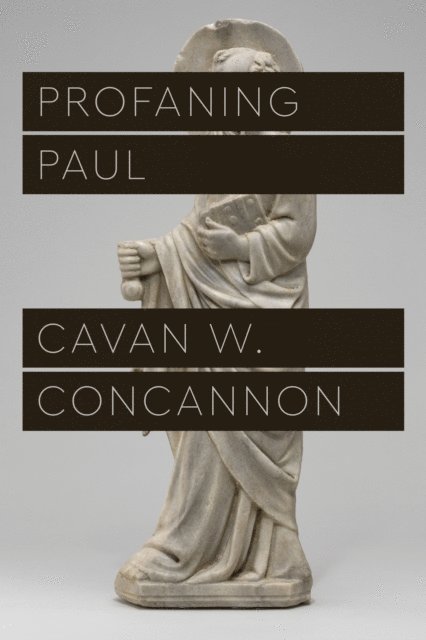
A critical reconsideration of the repeated use of the biblical letters of Paul. The letters of Paul have been used to support and condone a host of evils over the span of more than two millennia: racism, slavery, imperialism, misogyny, and anti-Semitism, to name a few. Despite, or in some cases because of, this history, readers of Paul have felt compelled to reappropriate his letters to fit liberal or radical politics, seeking to set right the evils done in Paul’s name. Starting with the language of excrement, refuse, and waste in Paul’s letters, Profaning Paul looks at how Paul’s “shit” is recycled and reconfigured. It asks why readers, from liberal Christians to academic biblical scholars to political theorists and philosophers, feel compelled to make Paul into a hero, mining his words for wisdom. Following the lead of feminist, queer, and minoritized scholarship, Profaning Paul asks what would happen if we stopped recycling Paul’s writings. By profaning the status of his letters as sacred texts, we might open up new avenues for imagining political figurations to meet our current and coming political, economic, and ecological challenges.
242 kr
Skickas inom 7-10 vardagar
A critical reconsideration of the repeated use of the biblical letters of Paul. The letters of Paul have been used to support and condone a host of evils over the span of more than two millennia: racism, slavery, imperialism, misogyny, and anti-Semitism, to name a few. Despite, or in some cases because of, this history, readers of Paul have felt compelled to reappropriate his letters to fit liberal or radical politics, seeking to set right the evils done in Paul’s name. Starting with the language of excrement, refuse, and waste in Paul’s letters, Profaning Paul looks at how Paul’s “shit” is recycled and reconfigured. It asks why readers, from liberal Christians to academic biblical scholars to political theorists and philosophers, feel compelled to make Paul into a hero, mining his words for wisdom. Following the lead of feminist, queer, and minoritized scholarship, Profaning Paul asks what would happen if we stopped recycling Paul’s writings. By profaning the status of his letters as sacred texts, we might open up new avenues for imagining political figurations to meet our current and coming political, economic, and ecological challenges.
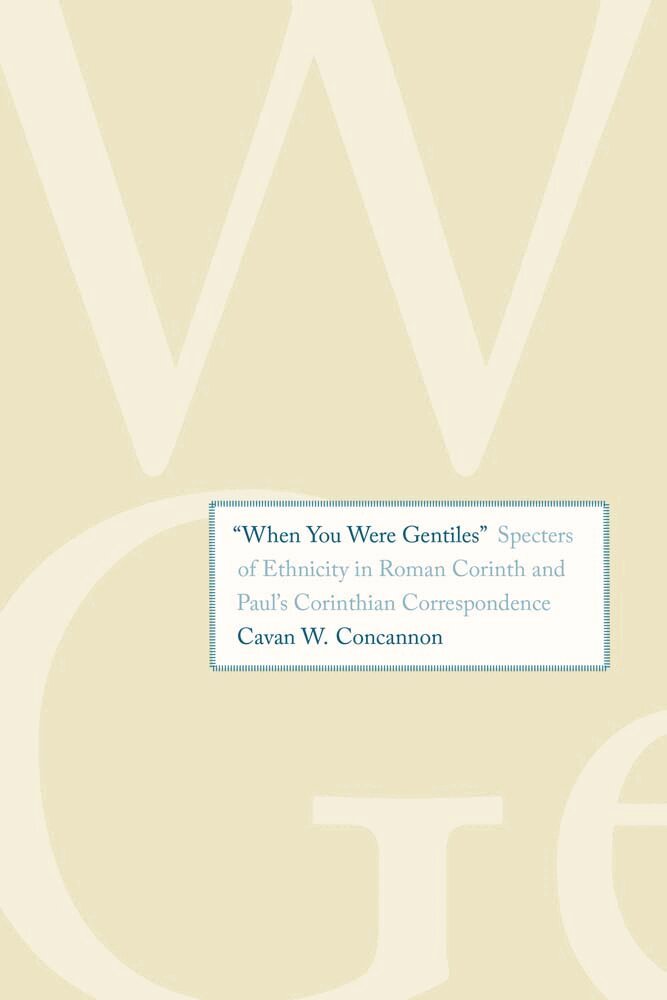
"When You Were Gentiles"
Specters of Ethnicity in Roman Corinth and Paul's Corinthian Correspondence
Inbunden, Engelska, 2014
956 kr
Skickas inom 5-8 vardagar
Cavan W. Concannon makes a significant contribution to Pauline studies by imagining the responses of the Corinthians to Paul’s letters. Based on surviving written materials and archaeological research, this book offers a textured portrait of the ancient Corinthians with whom Paul conversed, argued, debated, and partnered, focusing on issues of ethnicity, civic identity, politics, and empire. In doing so, the author provides readers a unique opportunity to assess anew, and imagine possibilities beyond, Paul’s complicated legacy in shaping Western notions of race, ethnicity, and religion.
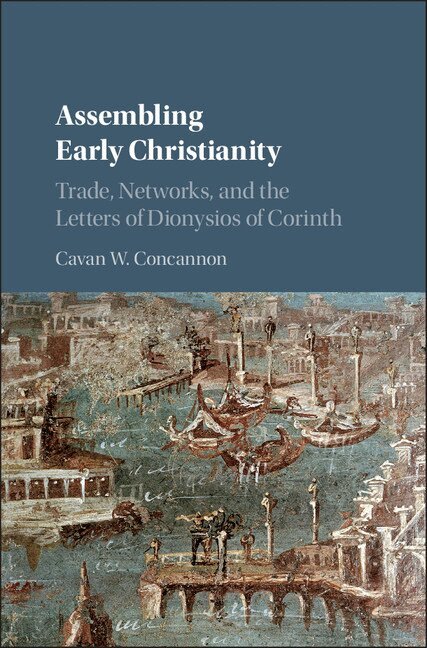
Assembling Early Christianity
Trade, Networks, and the Letters of Dionysios of Corinth
Inbunden, Engelska, 2017
1 297 kr
Skickas inom 7-10 vardagar
In this book, Cavan W. Concannon explores the growth and development of Christianity in the second century. He focuses on Dionysios of Corinth, an early Christian bishop who worked to build a network of churches along trade routes in the eastern Mediterranean. Using archaeological evidence, and analysing Dionysios' fragmentary letter collection, Concannon shows how various networks and collectives assembled together, and how various Christianities emerged and coexisted as a result of tenuous and shifting networks. Dionysios' story also overlaps with key early Christian debates, notably issues of celibacy, marriage, re-admission of sinners, Roman persecution, and the economic and political interdependence of churches, which are also explored in this study. Concannon's volume thus offers new insights into a fluid, emergent Christianity at a pivotal moment of its evolution.