C.D. Pusey - Böcker
Visar alla böcker från författaren C.D. Pusey. Handla med fri frakt och snabb leverans.
3 produkter
3 produkter
1 632 kr
Skickas inom 10-15 vardagar
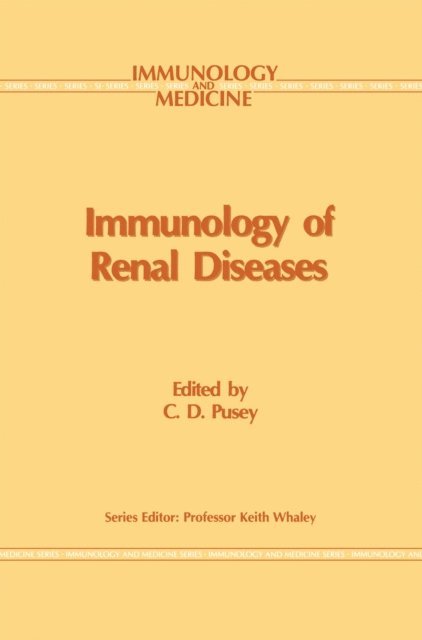
Although there have been considerable advances in the management of renal failure by dialysis and transplantation, there has been relatively little progress in its prevention. The term glomerulonephritis covers a wide range of conditions with different immunological, histological and clinical features. This volume therefore starts with reviews of the immunology and pathology of different types of glomerulonephritis. This is followed by detailed consideration of the treatment of the commoner primary and secondary forms of the disease. There are separate chapters on special circumstances, such as glomerulonephritis in pregnancy or following renal transplantation. In each chapter, attempts are made to review the evidence for the effectiveness of treatment, based on controlled trials, immunopathological principles and the authors' considerable experience. Although some aspects of the treatment of glomerulonephritis can be found in the standard texts on renal disease, this volume provides an up-to-date, thoroughly referenced, and practical guide to management.As such, it should be of value to nephrologists and general physicians, including those in training, and to postgraduate students of nephrology.
1 632 kr
Skickas inom 10-15 vardagar
Glomerulonephritis is one of the commonest causes of end-stage renal failure worldwide. Although there have been considerable advances in the management of renal failure by dialysis and transplantation, there has been relatively little progress in its prevention. This volume sets out to review current practice in the treatment of glomerulonephritis, which is aimed both at controlling the clinical manifestations, e.g. nephrotic syndrome, and at preventing the progression to renal failure. The term glomerulonephritis covers a wide range of conditions with different immunological, histological and clinical features. This volume therefore starts with reviews of the immunology and pathology of different types of glomerulonephritis. This is followed by detailed consideration of the treatment of the commoner primary and secondary forms of the disease. There are separate chapters on special circumstances, such as glomerulonephritis in pregnancy or following renal transplantation. In each chapter, attempts are made to review the evidence for the effectiveness of treatment, based on controlled trials, immunopathological principles and the authors' considerable experience. Although some aspects of the treatment of glomerulonephritis can be found in the standard texts on renal disease, this volume provides an up-to-date, thoroughly referenced, and practical guide to management. As such, it should be of value to nephrologists and general physicians, including those in training, and to postgraduate students of nephrology.
549 kr
Skickas inom 10-15 vardagar
Although it has been appreciated for many years that immune processes underlie most types of glomerulonephritis, it is the recent explosion in knowl edge of cellular and molecular immunology that has prompted another book on the subject. The understanding of the mechanisms involved in renal injury requires the integration of information from in vitro cell-culture systems, experimental models of disease, and clinical studies. This volume draws on all of these sources in an attempt to explain current concepts of nephritis. Increased emphasis is placed on autoimmune processes, as opposed to the deposition of circulating immune complexes, although it will be apparent that these may overlap in the area of "in situ" immune complex formation. Of central importance in autoimmunity is the relationship between antigen pre senting cells (including B cells) expressing MHC class II molecules, autoan tigenic peptides, T helper lymphocytes, and various effector cells. The mechanisms by which the immune system may lead to tissue injury are also becoming better understood, and consideration is given to the role of inflam matory cells, the complement proteins, and soluble factors such as cytokines and eicosanoids.