Cecilia MacDowell Santos – författare
Visar alla böcker från författaren Cecilia MacDowell Santos. Handla med fri frakt och snabb leverans.
2 produkter
2 produkter
Häftad, Engelska, 2005
495 kr
Skickas inom 10-15 vardagar
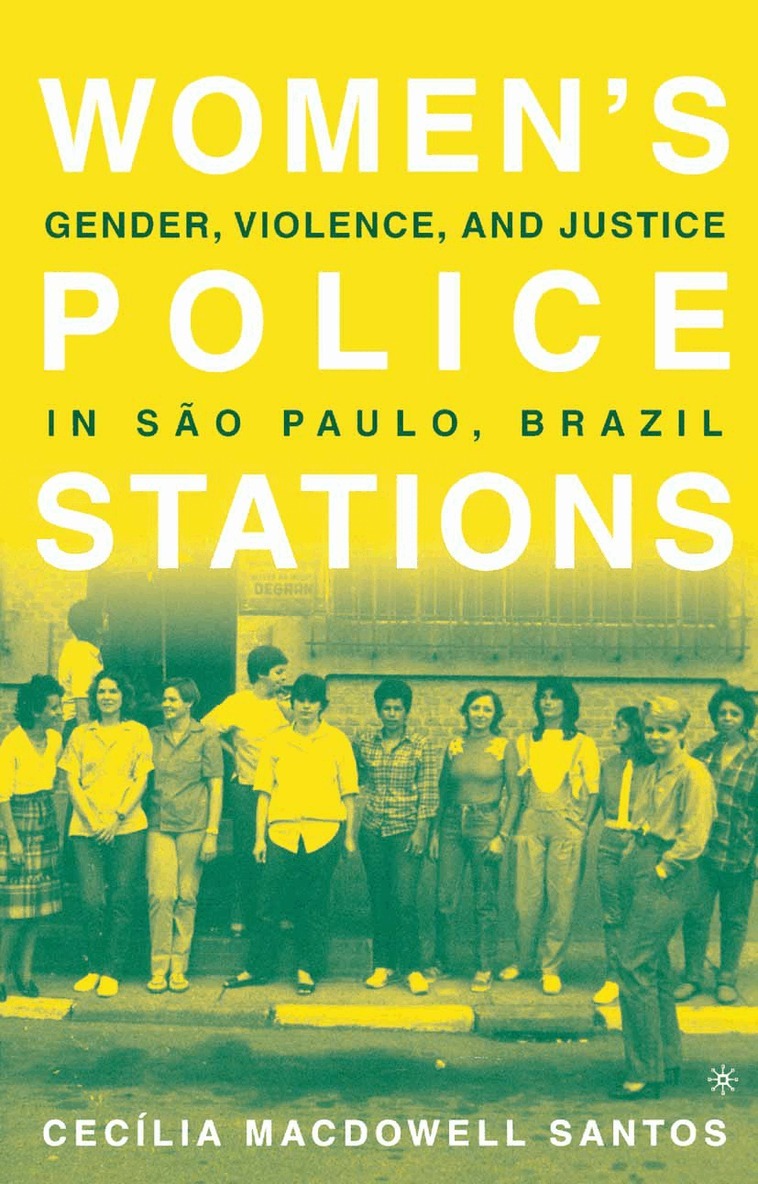
Women's Police Stations examines the changing and complex relationship between women and the state, and the construction of gendered citizenship, using women's police stations in Sao Paulo. These are police stations run exclusively by police women for women with the authority to investigate crimes against women such as domestic violence, assault and rape. Sao Paulo was the home of the first such police station, and there are now more than 250 women's police stations throughout Brazil. Cecilia MacDowell Santos examines the importance of this phenomenon for the first time, looking at the dynamics of the relationship between women and the state as a consequence of a political regime, and exploring the notion of gendered citizenship.
E-bok
PDF, Engelska, 201844 kr
Läs direkt efter köp
Activists, particularly those based in the global South, have accumulated a wealth of experience in dealing with a range of transnational networks operating in diverse issue areas. New theoretical understandings have reflected this accumulating experience.As the twentieth century came to a close, the practice of global and transnational politics was undergoing a sea change. Understandings of its dynamics were changing along with the practice. Classic paradigms of international relations, which had focused almost exclusively on relations among nation-states, were being expanded to consider the impact of transnational civil society organizations. Recognition of the role of new nonstate actors in global politics was epitomized by the impact of Margaret Keck and Kathryn Sikkink''s Activists beyond Borders in 1998. Their framework is a foundational reference point for the analyses of recent and future trends that are set out in this book.This volume brings together a set of ten essays by reflective activists who draw on their experience to provide new insights into what has been happening in the world of transnational advocacy, and by engaged academics who are committed to using the tools of their disciplines to contribute to the same agenda. The essays reflect not only the views of individual authors but also the collective dialogue among the authors at the workshop where the papers were originally presented in the spring of 2015.