Célia dos Santos Lopes – författare
Visar alla böcker från författaren Célia dos Santos Lopes. Handla med fri frakt och snabb leverans.
2 produkter
2 produkter
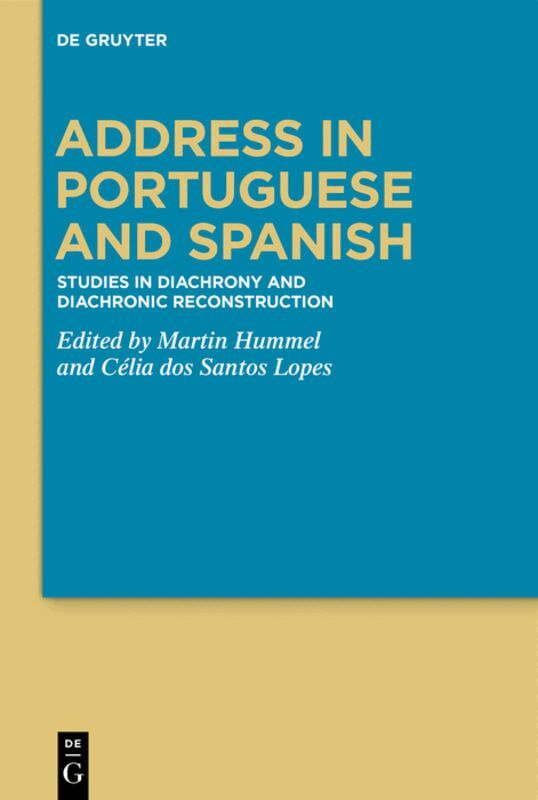
Inbunden, Engelska, 2020
1 446 kr
Skickas inom 5-8 vardagar
The volume provides the first systematic comparative approach to the history of forms of address in Portuguese and Spanish, in their European and American varieties. Both languages share a common history—e.g., the personal union of Philipp II of Spain and Philipp I of Portugal; the parallel colonization of the Americas by Portugal and Spain; the long-term transformation from a feudal to a democratic system—in which crucial moments in the diachrony of address took place. To give one example, empirical data show that the puzzling late spread of Sp. usted ‘you (formal, polite)’ and Pt. você ‘you’ across America can be explained for both languages by the role of the political and military colonial administration. To explore these new insights, the volume relies on an innovative methodology, as it links traditional downstream diachrony with upstream diachronic reconstruction based on synchronic variation. Including theoretical reflections as well as fine-grained empirical studies, it brings together the most relevant authors in the field.
E-bok
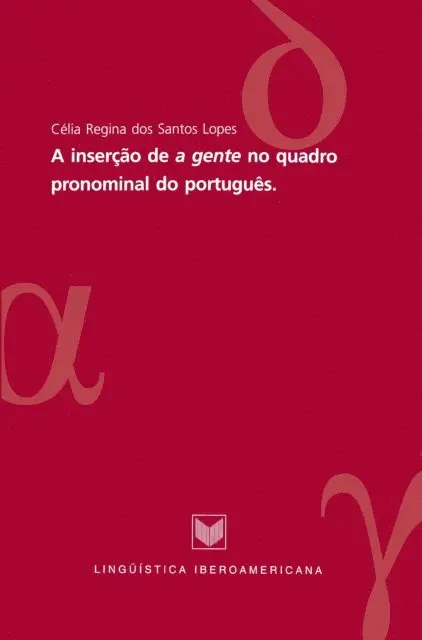
Portugisiska, 2014136 kr
Läs direkt efter köp
Este livro é o resultado de uma pesquisa sobre a pronominalização de nominais, particularmente, sobre o percurso histórico da gramaticalização da forma a gente em português. A autora analisa os fatores lingüísticos e extralingüísticos que atuaram na mudança categorial de nome para pronome, testando hipóteses funcionalistas, variacionistas e gerativistas que, conjugadas, contribuem para uma descrição mais eficaz da gramática do português, no tópico relativo à inserção de novas formas no sistema pronominal.O livro destina-se a um público amplo. Atende, em primeiro lugar, a pesquisadores interessados em conhecer um pouco da história da língua portuguesa, mas visa sobretudo a despertar a curiosidade de todos aqueles que vêem a língua como uma atividade dinâmica e criativa, em pleno processo de variação e mudança. Atende ainda aos que se interessam pelo fenômeno da gramaticalização, pelo estudo dos pronomes pessoais, pelas razões sócio-históricas da mudança lingüística...