Celia V. Holland – författare
Visar alla böcker från författaren Celia V. Holland. Handla med fri frakt och snabb leverans.
4 produkter
4 produkter
E-bok
PDF, Engelska, 20062 822 kr
Läs direkt efter köp
The soil-transmitted nematode parasites, or geohelminths, are - called because they have a direct life cycle, which involves no intermediate hosts or vectors, and are transmitted by faecal contamination of soil, foodstuffs and water supplies. They all inhabit the intestine in their adult stages but most species also have tissue-migratoryjuvenile stages, so the disease manifestations they cause can therefore be both local and systemic. The geohelminths together present an enormous infection burden on humanity. Those which cause the most disease in humans are divided into three main groupings, Ascaris lumbricoides (the large roundworm), Trichuris trichiura (whipworm), and the blood-feeding hookworms (Ancylostoma duodenale and Necator americanus ), and this book concentrates on these. These intestinal parasites are highly prevalent worldwide, A. lumbricoides is estimated to infect 1471 million (over a quarter ofthe world’s population), hookworms 1277 million, and T. trichiura 1049 million. The highly pathogenic Strongyloides species might also be classified as geohelminths, but they are not dealt with here because the understanding of their epidemiology, immunology and genetics has not advanced as rapidly as for the others. This is primarily because of the often covert nature of the infections, with consequent difficulties for analysis. If there is ever a second edition of this book, then there will hopefully be much to say about this infection.
Inbunden, Engelska, 2001
2 159 kr
Skickas inom 10-15 vardagar
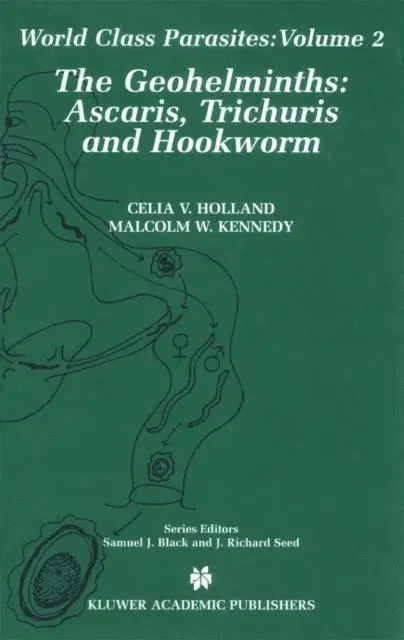
The soil-transmitted nematode parasites, or geohelminths, are so called because they have a direct life cycle, which involves no intermediate hosts or vectors, and are transmitted by faecal contamination of soil, foodstuffs and water supplies. They all inhabit the intestine in their adult stages but most species also have tissue-migratory juvenile stages, so the disease manifestations they cause can therefore be both local and systemic. The geohelminths together present an enormous infection burden on humanity. Those which cause the most disease in humans are divided into three main groupings, Ascaris lumbricoides (the large roundworm), Trichuris trichiura (whipworm), and the blood-feeding hookworms (Ancylostoma duodenale and Necator americanus ). This text is written for researchers, students and scholars who enjoy reading research that has a major impact on human health, or agricultural productivity, and against which we have no satisfactory defense. It is intended to supplement more formal texts that cover taxonomy, life cycles, morphology, vector distribution, symptoms and treatment.It integrates vector, pathogen and host biology and celebrates the diversity of approach that comprises modern parasitological research.
Häftad, Engelska, 2010
2 236 kr
Skickas inom 10-15 vardagar
The soil-transmitted nematode parasites, or geohelminths, are so called because they have a direct life cycle, which involves no intermediate hosts or vectors, and are transmitted by faecal contamination of soil, foodstuffs and water supplies. They all inhabit the intestine in their adult stages but most species also have tissue-migratory juvenile stages, so the disease manifestations they cause can therefore be both local and systemic. The geohelminths together present an enormous infection burden on humanity. Those which cause the most disease in humans are divided into three main groupings, Ascaris lumbricoides (the large roundworm), Trichuris trichiura (whipworm), and the blood-feeding hookworms (Ancylostoma duodenale and Necator americanus ). The Geohelminths: Ascaris, Trichuris And Hookworm, Volume two of 'World Class Parasites', is written for researchers, students and scholars who enjoy reading research that has a major impact on human health, or agricultural productivity, and against which we have no satisfactory defense.It is intended to supplement more formal texts that cover taxonomy, life cycles, morphology, vector distribution, symptoms and treatment. It integrates vector, pathogen and host biology and celebrate the diversity of approach that comprises modern parasitological research.
Inbunden, Engelska, 2006
1 856 kr
Skickas inom 5-8 vardagar
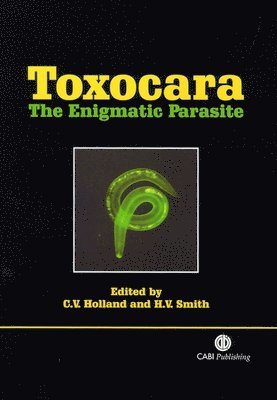
Toxocara is a parasitic helminth worm which continues to stimulate both public concern and scientific interest. Toxocara canis and T.cati, the most studied species, are gastrointestinal parasites of dogs and cats and their eggs can contaminate the environment, thus exposing humans and other mammals and birds to infection. Many questions remain unanswered about the host-parasite relationship, its epidemiology and public health significance. Veterinarians and clinicians are interested in its importance as a zoonosis. The parasite's capacity to cause ocular disease is of concern to ophthalmologists, while its propensity to stimulate allergic manifestations is of interest to allergologists, dermatologists and respiratory medicine specialists. Furthermore Toxocara provides a unique model system to explore questions in parasite biology.This book provides a comprehensive review of Toxocara and the disease it causes known as toxocariasis.