Cento Veljanovski – författare
Visar alla böcker från författaren Cento Veljanovski. Handla med fri frakt och snabb leverans.
7 produkter
7 produkter
E-bok
PDF, Engelska, 20202 296 kr
Läs direkt efter köp
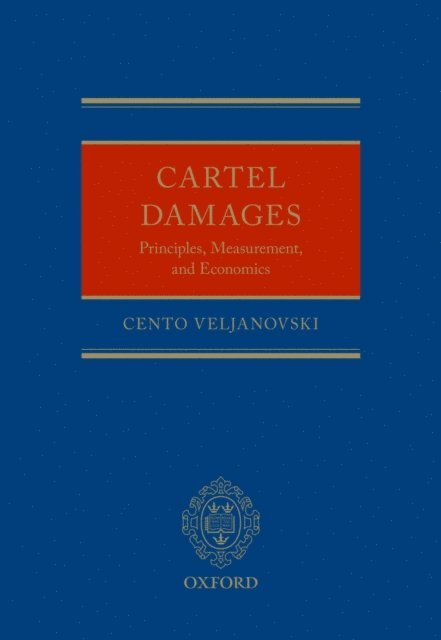
Cartel Damages represents a comprehensive practical guide on the law, economics, and measurement of cartel damages under UK and European competition laws. It draws together the most recent research on cartels, economic analysis, empirical techniques, case law, and legislation to examine how the quantification of losses suffered by those harmed by a cartel are, and could be, applied under European and UK competition laws.Written with the practitioner in mind, the author adopts a rigorous yet pragmatic approach to the subject. Detailed discussions of leading cases complement the treatment of the application of economic theory and empirical techniques in competition law and litigation. Three useful appendices provide the reader with quick reference guides to statistics on European Cartel Decisions (1999 to 2018), Bank of England ''base rate'' (1980-2019), and where to find key documents and information.This represents an essential tool for competition practitioners and academics involved or interested in cartel damages. Fully cross-referenced and tabled, Cartel Damages is an invaluable and practical guide to issues of increasing importance and relevance in competition law.
E-bok
Engelska, 20202 275 kr
Läs direkt efter köp
Cartel Damages represents a comprehensive practical guide on the law, economics, and measurement of cartel damages under UK and European competition laws. It draws together the most recent research on cartels, economic analysis, empirical techniques, case law, and legislation to examine how the quantification of losses suffered by those harmed by a cartel are, and could be, applied under European and UK competition laws.Written with the practitioner in mind, the author adopts a rigorous yet pragmatic approach to the subject. Detailed discussions of leading cases complement the treatment of the application of economic theory and empirical techniques in competition law and litigation. Three useful appendices provide the reader with quick reference guides to statistics on European Cartel Decisions (1999 to 2018), Bank of England ''base rate'' (1980-2019), and where to find key documents and information.This represents an essential tool for competition practitioners and academics involved or interested in cartel damages. Fully cross-referenced and tabled, Cartel Damages is an invaluable and practical guide to issues of increasing importance and relevance in competition law.
Inbunden, Engelska, 2020
3 428 kr
Skickas inom 3-6 vardagar
Cartel Damages represents a comprehensive practical guide on the law, economics, and measurement of cartel damages under UK and European competition laws. It draws together the most recent research on cartels, economic analysis, empirical techniques, case law, and legislation to examine how the quantification of losses suffered by those harmed by a cartel are, and could be, applied under European and UK competition laws.Written with the practitioner in mind, the author adopts a rigorous yet pragmatic approach to the subject. Detailed discussions of leading cases complement the treatment of the application of economic theory and empirical techniques in competition law and litigation. Three useful appendices provide the reader with quick reference guides to statistics on European Cartel Decisions (1999 to 2018), Bank of England 'base rate' (1980-2019), and where to find key documents and information.This represents an essential tool for competition practitioners and academics involved or interested in cartel damages. Fully cross-referenced and tabled, Cartel Damages is an invaluable and practical guide to issues of increasing importance and relevance in competition law.
E-bok
PDF, Engelska, 201578 kr
Läs direkt efter köp
Ronald Coase is one of the most important economists of the twentieth century. Amongst other great achievements, Coase taught us why firms exist and how we can better understand how to solve environmental problems. He also made a profound contribution to our understanding of the provision of so-called "public goods" and helped join the often distinct intellectual fields of law and economics. Coase coined the phrase "blackboard economics" to describe an approach to economics that involved ignoring what happens in practice and, instead, led the profession to obsess with theory. He once said: ''If economists wished to study the horse, they wouldn''t go and look at horses. They''d sit in their studies and say to themselves, "what would I do if I were a horse?"''There is much that students, teachers, policymakers and regulators can learn from the economics of Ronald Coase, and he will, no doubt, provide a rich seam of material for decades to come. The authors of this short book have taken up the challenge. They apply Coase''s ideas to a number of different areas of economics and, in doing so, provide a practical and very readable introduction to a number of topics that have direct relevance for regulation and for public policy.
E-bok
Engelska, 201578 kr
Läs direkt efter köp
Ronald Coase is one of the most important economists of the twentieth century. Amongst other great achievements, Coase taught us why firms exist and how we can better understand how to solve environmental problems. He also made a profound contribution to our understanding of the provision of so-called "public goods" and helped join the often distinct intellectual fields of law and economics. Coase coined the phrase "blackboard economics" to describe an approach to economics that involved ignoring what happens in practice and, instead, led the profession to obsess with theory. He once said: ''If economists wished to study the horse, they wouldn''t go and look at horses. They''d sit in their studies and say to themselves, "what would I do if I were a horse?"''There is much that students, teachers, policymakers and regulators can learn from the economics of Ronald Coase, and he will, no doubt, provide a rich seam of material for decades to come. The authors of this short book have taken up the challenge. They apply Coase''s ideas to a number of different areas of economics and, in doing so, provide a practical and very readable introduction to a number of topics that have direct relevance for regulation and for public policy.
E-bok
PDF, Engelska, 201652 kr
Läs direkt efter köp
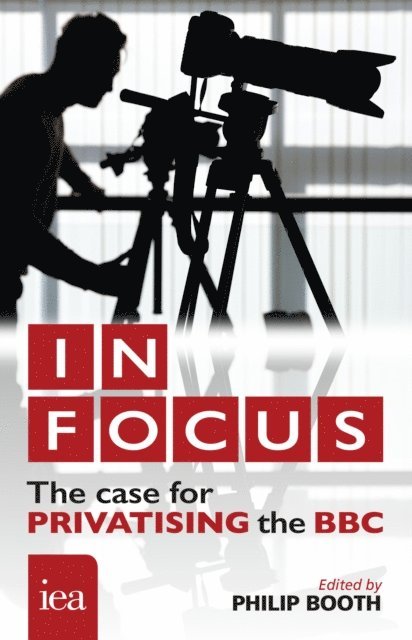
The BBC holds a special place in the world of broadcasting. It derives its funding from a compulsory levy on people who may not even use the service. The protection it receives is justified on the grounds that it contributes to national welfare because of its role in ‘public service broadcasting’. The authors of this book argue that the BBC’s funding model is becoming untenable as technology changes. Furthermore, technology has also undermined the justification for government support for public service broadcasting.There is also major concern about bias at the BBC. However, the book concludes that bias is not confined to the BBC, but is common to all media providers. The problem is not bias as such, but the link between the BBC and the government, together with the compulsory funding model which does not allow people to not fund content of which they disapprove.Various options for reform are presented, concluding with a proposal for fullblown privatisation. It is concluded that this is the only way to realise the potential of an organisation that should be international in scope and which, under the current funding model, will become marginalised by media players operating worldwide across a range of platforms.This book is essential reading for anybody involved in public policy or the economics of broadcasting.
E-bok
Engelska, 201652 kr
Läs direkt efter köp
The BBC holds a special place in the world of broadcasting. It derives its funding from a compulsory levy on people who may not even use the service. The protection it receives is justified on the grounds that it contributes to national welfare because of its role in ‘public service broadcasting’. The authors of this book argue that the BBC’s funding model is becoming untenable as technology changes. Furthermore, technology has also undermined the justification for government support for public service broadcasting.There is also major concern about bias at the BBC. However, the book concludes that bias is not confined to the BBC, but is common to all media providers. The problem is not bias as such, but the link between the BBC and the government, together with the compulsory funding model which does not allow people to not fund content of which they disapprove.Various options for reform are presented, concluding with a proposal for fullblown privatisation. It is concluded that this is the only way to realise the potential of an organisation that should be international in scope and which, under the current funding model, will become marginalised by media players operating worldwide across a range of platforms.This book is essential reading for anybody involved in public policy or the economics of broadcasting.