Ceri Sullivan - Böcker
Visar alla böcker från författaren Ceri Sullivan. Handla med fri frakt och snabb leverans.
5 produkter
5 produkter
1 442 kr
Skickas inom 5-8 vardagar
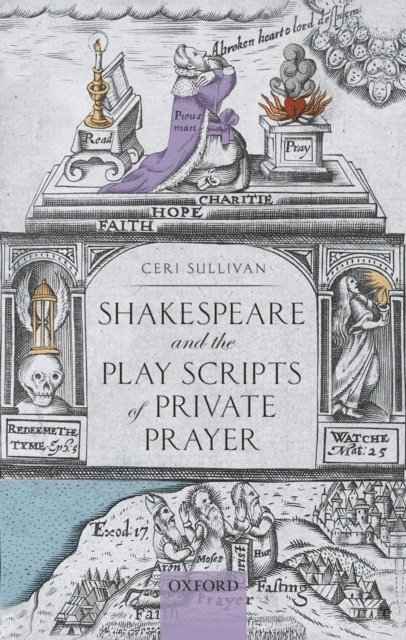
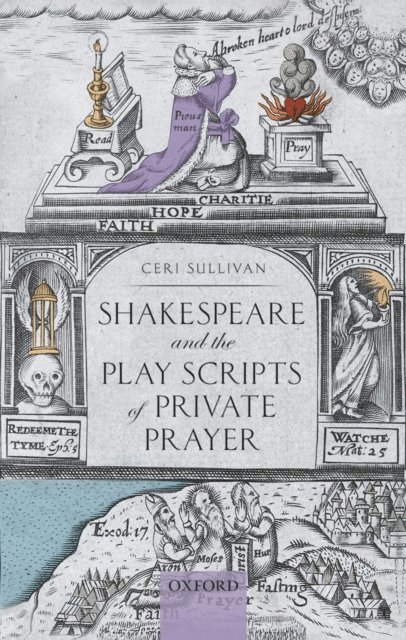
Early modern private prayer is skilled at narrative and drama. In manuals and sermons on how to pray, collections of model prayers, scholarly treatises about biblical petitions, and popular tracts about life crises prompting calls to God, prayer is valued as a powerful agent of change. Model prayers create stories about people in distinct ranks and jobs, with concrete details about real-life situations. These characters may act in play-lets, or appear in the middle of difficulties, or voice a suite of petitions from all sides of a conflict. Thinking of early modern private prayers as dramatic dialogues rather than lyric monologues raises the question of whether play-going and praying were mutually reinforcing practices. Could dramatists deploying prayer on stage rely on having audience members who were already expert at making up roles for themselves in prayer, and who expected their petitions to have the power to intervene in major events? Does prayer's focus on cause and effect structure the historiography of Shakespeare's Henry VI, Richard III, Richard II, Henry V, and Henry VIII?
1 099 kr
Skickas inom 5-8 vardagar
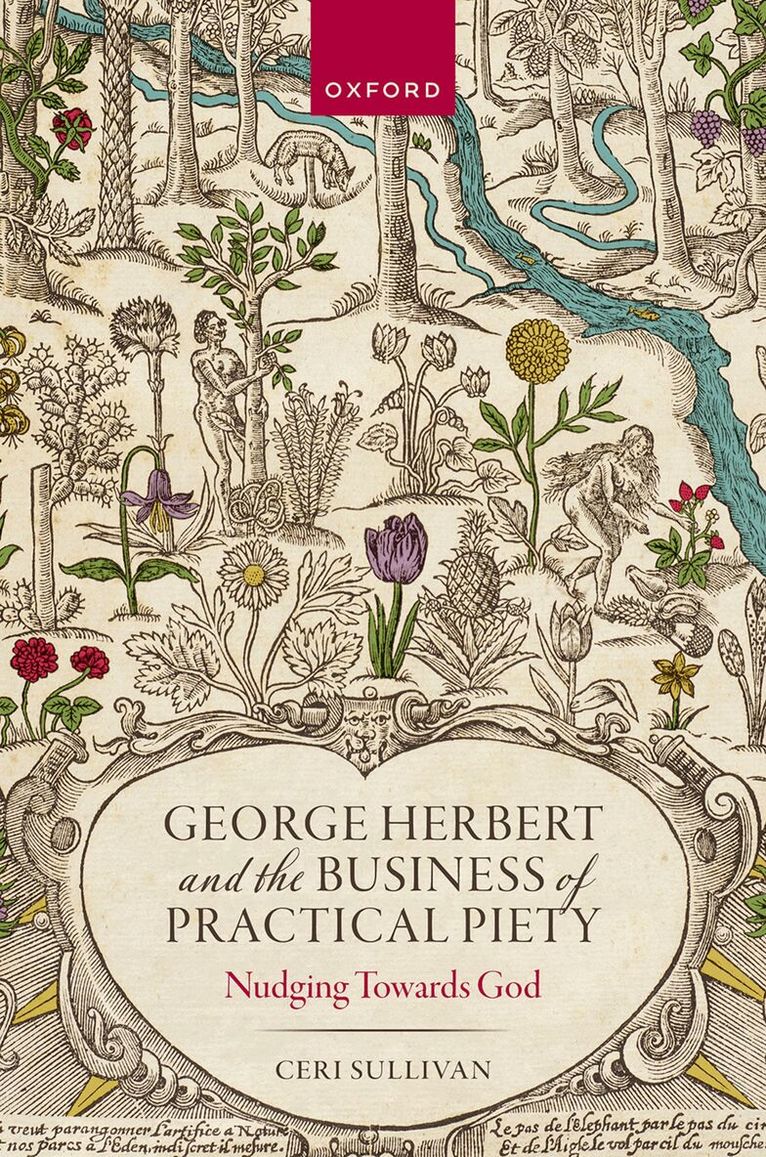
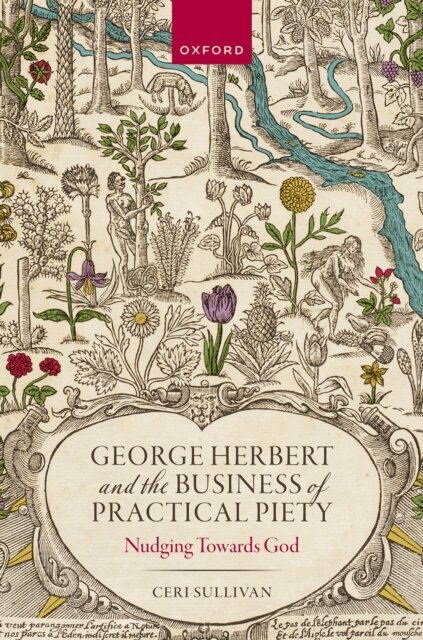
Contemporary nudge theory points out that people make good choices over issues where they have had past experience of similar circumstances, where there is reliable, substantial, and relevant information about the situation, and where they will get prompt feedback about the effect of their decision. Yet none of these conditions apply to the most vital choice of action facing early modern Protestants: how can they be saved? In George Herbert and the Business of Practical Piety, Ceri Sullivan uses nudge theory to show how practical divinity disregards the doleful conclusions of predestination--that salvation cannot be earned--to supply readers with suggestions on how to prepare to act, regardless of their final destiny. Such texts create cognitive niches to support cheerful, godly thought and action, in a way which is far from being despairing or compulsive. Their nudges were repeatedly put into practice by Herbert's friends, the Ferrars, who tried to form an ideal religious community at Little Gidding. These prescriptions and examples illustrate how George Herbert's The Temple (1633) is a compendium of the techniques of choice architecture. Herbert's poems are full of the humour emerging from a life of faith which is willing to guard high ideals by low cunning, stooping to use the least little things to change a self. George Herbert and the Business of Practical Piety initially calls on theories of the extended mind to ask what sort of minor physical and social structures scaffold decisions, then examines a selection of nudges used by Herbert: contracts with the self, building a mind, cleaning a heart, conversing with God, making to-do lists, and working on working well.
2 385 kr
Skickas inom 7-10 vardagar
There is a kind of conscience some men keepe,Is like a Member that's benumb'd with sleepe;Which, as it gathers Blood, and wakes agen,It shoots, and pricks, and feeles as bigg as tenDonne, Herbert, and Vaughan see the conscience as only partly theirs, only partly under their control. Of course, as theologians said, it ought to be a simple syllogism, comparing actions to God's law, and giving judgement, in a joint procedure of the soul and its maker. Inevitably, though, there are problems. Hearts refuse to confess, or forget the rules, or jumble them up, or refuse to come to the point when delivering a verdict. The three poets are beady-eyed experts on failure. After all, where subjects can only discover their authentic nature in relation to the divine it matters whether the conversation works. Remarkably, each poet - despite their very different devotional backgrounds - uses similar sets of tropes to investigate problems: enigma, aposiopesis (breaking off), chiasmus, subjectio (asking then answering a question), and antanaclasis (repetition with a difference). Structured like a language, the conscience is tortured, rewritten, read, and broken up to engineer a proper response. Considering the faculty as an uncomfortable extrusion of the divine into the everyday, the rhetoric of the conscience transforms Protestant into prosthetic poetics. It moves between early modern theology, rhetoric, and aesthetic theory to give original, scholarly, and committed readings of the great metaphysical poets. Topics covered include boredom, torture, graffiti, tattoos, anthologizing, resentment, tears, dust, casuistry, and opportunism.
881 kr
Skickas inom 10-15 vardagar
Providing a guide to fantasy writing from the classical period to the 20th century, this text focuses on different examples of how fantasy has acted as a political response to cultural opportunities and pressures. A wide variety of styles and genres are investigated.
3 095 kr
Skickas inom 10-15 vardagar
Writing and Fantasy brings together essays which restore a sense of the fantastic as a political response to cultural opportunities and pressures. It moves on from two conventional fields of discussion: the psychoanalytic, where phantasies are produced by the emergence of the consciousness, and the social, where fantasies are the production of nineteenth-century individualism. Chapters run from the classical period to the twentieth century, each focusing on a local reading of how fantasy acts as a strategy to contain or exploit specific historical and cultural moments. A wide variety of sites are investigated including the feminization of the wild west, originary and maternal spaces, highwaywomen, financial credit, and the ideal home. Multiple genres containing fantasy are explored, ranging from ghost stories to feminist utopias.Aids to the reader include an introduction summarising recent discussions of fantasy, illustrations dealing with visual fantasies, and an annotated bibliography. The new research presented here will be of great interest to academics and students in literature, history and cultural studies departments who are working in the field of the historical development of concepts of fantasy, cultural opposition, and the imbrication of politics and modes of representation.