Cesar Bernal Bravo – författare
Visar alla böcker från författaren Cesar Bernal Bravo. Handla med fri frakt och snabb leverans.
6 produkter
6 produkter
E-bok
Engelska, 2022589 kr
Läs direkt efter köp
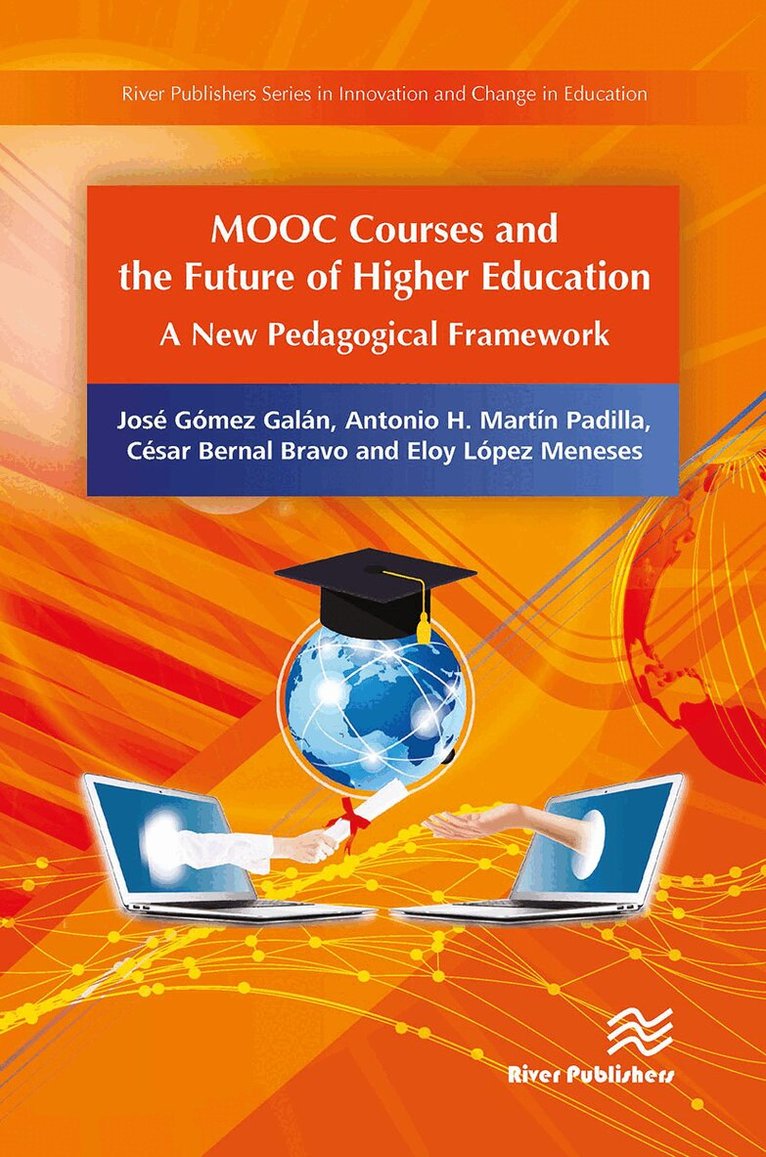
During the last decades, our society is witnessing an authentic revolution that, in a dizzying manner has deeply influenced, modified, and transformed the way of life of human beings. This constant and unstoppable revolution is transmuting all areas of our life: social, cultural, personal, labor, economic, training, etc. This new society is characterized by a high generation of knowledge and the constant and fluid processing of information. In this macro-context, the MOOC phenomenon emerged. MOOC (Massive Open Online Courses) courses are based on the principles of massive, free access to all materials and resources offered online. This new didactic path can be constituted in an innovative techno-social tendency, especially oriented in the panorama of Higher Education to stimulate university improvement, open opportunities at the same time for education and training or, simply, derive towards a new business model for the universities. In addition to being an entry point for the popularization of science and knowledge, the future possibilities are enormous and are being studied in all their various dimensions. Many initiatives as a result have been developed to implement this new form of education. MOOC Courses and the Future of Higher Education presents the latest research theories and current examples of MOOC courses practices in Higher Education. The chapters represent an extensive assortment of interpretations and practices examples of MOOC courses, across areas as varied as teaching methodologies, instructional innovations, educational technology, etc. This work is structured in three sections, the first one covers the university institution in the knowledge society, the second analyzes the MOOC training proposals, and the third discusses the future role of MOOCs. Technical topics discussed in the book include: The Virtualization of Teaching in Higher EducationTraining and Professional Development at the e-UniversityTaxonomy of MOOCsMOOC: Strengths and WeaknessesMOOCs and the Scientific Community: Challenges and InnovationMOOC PlatformsDirectory of MOOC ResourcesMOOC: Reflections of the Future
E-bok
PDF, Engelska, 2022584 kr
Läs direkt efter köp
During the last decades, our society is witnessing an authentic revolution that, in a dizzying manner has deeply influenced, modified, and transformed the way of life of human beings. This constant and unstoppable revolution is transmuting all areas of our life: social, cultural, personal, labor, economic, training, etc. This new society is characterized by a high generation of knowledge and the constant and fluid processing of information. In this macro-context, the MOOC phenomenon emerged. MOOC (Massive Open Online Courses) courses are based on the principles of massive, free access to all materials and resources offered online. This new didactic path can be constituted in an innovative techno-social tendency, especially oriented in the panorama of Higher Education to stimulate university improvement, open opportunities at the same time for education and training or, simply, derive towards a new business model for the universities. In addition to being an entry point for the popularization of science and knowledge, the future possibilities are enormous and are being studied in all their various dimensions. Many initiatives as a result have been developed to implement this new form of education. MOOC Courses and the Future of Higher Education presents the latest research theories and current examples of MOOC courses practices in Higher Education. The chapters represent an extensive assortment of interpretations and practices examples of MOOC courses, across areas as varied as teaching methodologies, instructional innovations, educational technology, etc. This work is structured in three sections, the first one covers the university institution in the knowledge society, the second analyzes the MOOC training proposals, and the third discusses the future role of MOOCs. Technical topics discussed in the book include: The Virtualization of Teaching in Higher EducationTraining and Professional Development at the e-UniversityTaxonomy of MOOCsMOOC: Strengths and WeaknessesMOOCs and the Scientific Community: Challenges and InnovationMOOC PlatformsDirectory of MOOC ResourcesMOOC: Reflections of the Future
E-bok
Spanska, 2017100 kr
Läs direkt efter köp
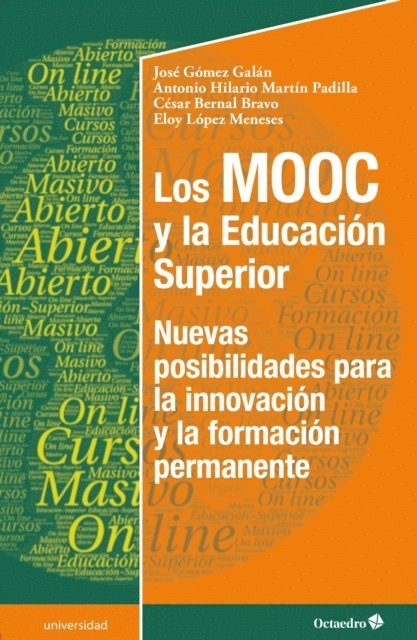
La formación masiva y abierta supone un reto para las instituciones universitarias y a la comunidad docente que debe redefinir el paradigma metodológico actual para adentrase en nuevas posibilidades para la innovación y formas curriculares más abiertas, ubicuas e interactivas para el desarrollo sostenible de la formación permanente.Los MOOC son ofrecidos por muchas de las mejores instituciones del mundo y pueden suponer un punto de inflexión en ecosistema biótico de la Educación Superior.Con la presente obra didáctica y científica elaborada por diferentes universidades españolas hemos querido presentar una visión educativa y holística de estas nuevas modalidades de formación en red orientadas principalmente tanto, al desarrollo profesional de los docentes como a la implementación del itinerario competencial del estudiantado para su desarrollo académico y profesional.
E-bok
Spanska, 201899 kr
Läs direkt efter köp
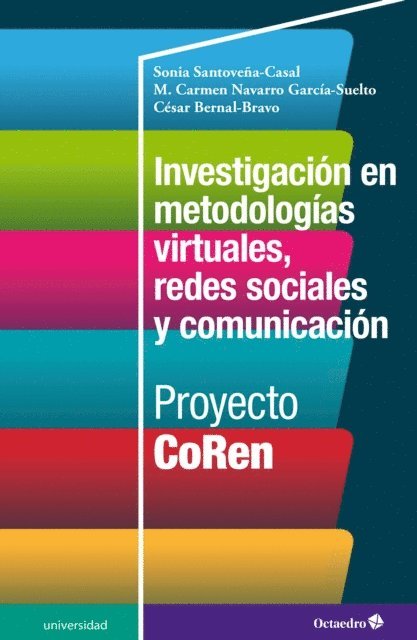
El libro se desarrolla dentro del marco del proyecto "Análisis de pedagogías digitales: comunicación, redes sociales y nuevas narrativas" (CoReN). Presenta los resultados obtenidos de la fase de investigación del proyecto con relación al estudio de metodologías virtuales innovadoras potenciales que cabe desarrollar en el ámbito universitario, redes sociales y procesos de comunicación.Se analizan investigaciones y experiencias realizadas basadas en pedagogías virtuales innovadoras, con una experiencia en el campo del trabajo colaborativo que aborda la temática desde el punto de vista de los estudiantes y permite a los lectores aproximarse a las principales dificultades encontradas a la hora de llevar a cabo un trabajo colaborativo real.Partiendo de los resultados obtenidos en el área de redes sociales, también se abarca la investigación realizada en tres asignaturas de estudios universitarios donde se ha implementado una actividad innovadora basada en el debate académico a través de Twitter.El libro está dirigido a estudiantes y profesionales de la educación (profesorado, educadores, gestores...), interesados en conocer nuevas formas de aprender y enseñar en el campo de las pedagogías virtuales.
Häftad, Engelska, 2024
511 kr
Skickas inom 10-15 vardagar
During the last decades, our society is witnessing an authentic revolution that, in a dizzying manner has deeply influenced, modified, and transformed the way of life of human beings. This constant and unstoppable revolution is transmuting all areas of our life: social, cultural, personal, labor, economic, training, etc. This new society is characterized by a high generation of knowledge and the constant and fluid processing of information. In this macro-context, the MOOC phenomenon emerged. MOOC (Massive Open Online Courses) courses are based on the principles of massive, free access to all materials and resources offered online. This new didactic path can be constituted in an innovative techno-social tendency, especially oriented in the panorama of Higher Education to stimulate university improvement, open opportunities at the same time for education and training or, simply, derive towards a new business model for the universities. In addition to being an entry point for the popularization of science and knowledge, the future possibilities are enormous and are being studied in all their various dimensions. Many initiatives as a result have been developed to implement this new form of education. MOOC Courses and the Future of Higher Education presents the latest research theories and current examples of MOOC courses practices in Higher Education. The chapters represent an extensive assortment of interpretations and practices examples of MOOC courses, across areas as varied as teaching methodologies, instructional innovations, educational technology, etc. This work is structured in three sections, the first one covers the university institution in the knowledge society, the second analyzes the MOOC training proposals, and the third discusses the future role of MOOCs. Technical topics discussed in the book include: The Virtualization of Teaching in Higher EducationTraining and Professional Development at the e-UniversityTaxonomy of MOOCsMOOC: Strengths and WeaknessesMOOCs and the Scientific Community: Challenges and InnovationMOOC PlatformsDirectory of MOOC ResourcesMOOC: Reflections of the Future
Inbunden, Engelska, 2019
1 193 kr
Skickas inom 10-15 vardagar
During the last decades, our society is witnessing an authentic revolution that, in a dizzying manner has deeply influenced, modified, and transformed the way of life of human beings. This constant and unstoppable revolution is transmuting all areas of our life: social, cultural, personal, labor, economic, training, etc. This new society is characterized by a high generation of knowledge and the constant and fluid processing of information. In this macro-context, the MOOC phenomenon emerged. MOOC (Massive Open Online Courses) courses are based on the principles of massive, free access to all materials and resources offered online. This new didactic path can be constituted in an innovative techno-social tendency, especially oriented in the panorama of Higher Education to stimulate university improvement, open opportunities at the same time for education and training or, simply, derive towards a new business model for the universities. In addition to being an entry point for the popularization of science and knowledge, the future possibilities are enormous and are being studied in all their various dimensions. Many initiatives as a result have been developed to implement this new form of education. MOOC Courses and the Future of Higher Education presents the latest research theories and current examples of MOOC courses practices in Higher Education. The chapters represent an extensive assortment of interpretations and practices examples of MOOC courses, across areas as varied as teaching methodologies, instructional innovations, educational technology, etc. This work is structured in three sections, the first one covers the university institution in the knowledge society, the second analyzes the MOOC training proposals, and the third discusses the future role of MOOCs. Technical topics discussed in the book include: The Virtualization of Teaching in Higher EducationTraining and Professional Development at the e-UniversityTaxonomy of MOOCsMOOC: Strengths and WeaknessesMOOCs and the Scientific Community: Challenges and InnovationMOOC PlatformsDirectory of MOOC ResourcesMOOC: Reflections of the Future