Chad E. Beyer – författare
Visar alla böcker från författaren Chad E. Beyer. Handla med fri frakt och snabb leverans.
5 produkter
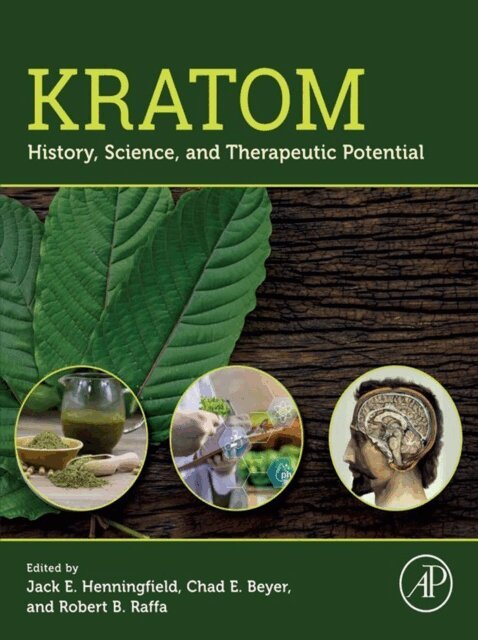
Kratom
History, Science and Therapeutic Potential
Av Jack E. Henningfield, Chad E. Beyer m. fl.
Häftad, 2025
1677 kr
Lägg i varukorg
Kratom: History, Science and Therapeutic Potential is the first book to address the unregulated, widespread availability of kratom, with its weak opioid and stimulant effects, coupled with limited awareness of it by healthcare professionals. Kratom has great therapeutic utility and medicinal …
Kratom
History, Science and Therapeutic Potential
Av Robert B. Raffa, Chad E. Beyer m. fl.
E-bok, 2025
2184 kr
Lägg i varukorg
Kratom: History, Science and Therapeutic Potential is the first book to address the unregulated, widespread availability of kratom, with its weak opioid and stimulant effects, coupled with limited awareness of it by healthcare professionals. Kratom has great therapeutic utility and medicinal …
Next Generation Antidepressants
Moving Beyond Monoamines to Discover Novel Treatment Strategies for Mood Disorders
Av Chad E. Beyer, Stephen M. Stahl
Inbunden, 2010
2314 kr
Lägg i varukorg
The World Health Organization defines depression as a primary contributor to the global burden of disease and predicts it will become the second leading cause of death by 2020. The need to develop effective therapies has never been so pressing. Current antidepressant drugs have several limitations. …
Next Generation Antidepressants
Moving Beyond Monoamines to Discover Novel Treatment Strategies for Mood Disorders
Av Stephen M. Stahl, Chad E. Beyer
E-bok, 2010
2299 kr
Lägg i varukorg
The World Health Organization defines depression as a primary contributor to the global burden of disease and predicts it will become the second leading cause of death by 2020. The need to develop effective therapies has never been so pressing. Current antidepressant drugs have several limitations. …
Next Generation Antidepressants
Moving Beyond Monoamines to Discover Novel Treatment Strategies for Mood Disorders
Av Stephen M. Stahl, Chad E. Beyer
E-bok, 2010
2299 kr
Lägg i varukorg
The World Health Organization defines depression as a primary contributor to the global burden of disease and predicts it will become the second leading cause of death by 2020. The need to develop effective therapies has never been so pressing. Current antidepressant drugs have several limitations. …