Chad F. Emmett - Böcker
Visar alla böcker från författaren Chad F. Emmett. Handla med fri frakt och snabb leverans.
3 produkter
3 produkter
392 kr
Skickas inom 7-10 vardagar
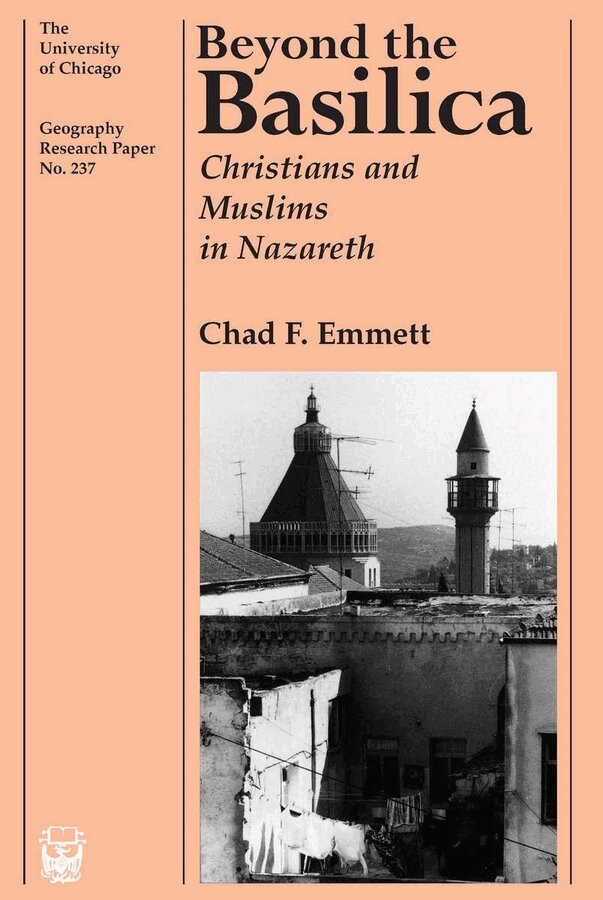
Nazareth, the largest Arab city in Israel, is a surprising example of ethnic harmony in a region dominated by conflict. A recent trend toward integration of its historical Greek Orthodox, Roman Catholic and Muslim quarters, however, has disrupted the harmony. In this book, Emmett provides an analysis of the complex relationship between the structure of Nazareth's quarters and the relations between its ethnic communities. Emmett describes both the positive and negative effects of Nazareth's residential patterns. He shows that the addition of new and ethnically mixed quarters has promoted mixed schools, joint holiday celebrations, a common political culture and social networks that cross ethnic boundaries. But he also finds that tensions exist among Christian groups and between Muslims and Christians in regard to intersectarian marriages, religious conversion, attempts to establish a joint Christian cemetery and the emergence of a local Islamic party. Extensive interviews with leaders of religious groups, political parties and residents reveal the way in which members of each ethnic community perceive one another.A survey of 300 families provides details about the make-up of Nazareth's population, including residential histories, religion, level of religious conviction, friendship and shopping patterns. The maps trace changes in the distribution of religious groups and political affiliation in Nazareth from the mid-19th century to the present. This book should be of interest to cultural geographers, historians, demographers, political scientists and anyone who would like to learn more about an ethnically divided community in which the residents co-operate more than they fight.
1 543 kr
Skickas inom 3-6 vardagar
Sex and World Peace unsettles a variety of assumptions in political and security discourse, demonstrating that the security of women is a vital factor in the security of the state and its incidence of conflict and war. The authors compare micro-level gender violence and macro-level state peacefulness in global settings, supporting their findings with detailed analyses and color maps. Harnessing an immense amount of data, they call attention to discrepancies between national laws protecting women and the enforcement of those laws, and they note the adverse effects on state security of abnormal sex ratios favoring males, the practice of polygamy, and inequitable realities in family law, among other gendered aggressions. The authors find that the treatment of women informs human interaction at all levels of society. Their research challenges conventional definitions of security and democracy and shows that the treatment of gender, played out on the world stage, informs the true clash of civilizations.In terms of resolving these injustices, the authors examine top-down and bottom-up approaches to healing wounds of violence against women, as well as ways to rectify inequalities in family law and the lack of parity in decision-making councils. Emphasizing the importance of an R2PW, or state responsibility to protect women, they mount a solid campaign against women's systemic insecurity, which effectively unravels the security of all.
267 kr
Sex and World Peace unsettles a variety of assumptions in political and security discourse, demonstrating that the security of women is a vital factor in the security of the state and its incidence of conflict and war. The authors compare micro-level gender violence and macro-level state peacefulness in global settings, supporting their findings with detailed analyses and color maps. Harnessing an immense amount of data, they call attention to discrepancies between national laws protecting women and the enforcement of those laws, and they note the adverse effects on state security of abnormal sex ratios favoring males, the practice of polygamy, and inequitable realities in family law, among other gendered aggressions. The authors find that the treatment of women informs human interaction at all levels of society. Their research challenges conventional definitions of security and democracy and shows that the treatment of gender, played out on the world stage, informs the true clash of civilizations.In terms of resolving these injustices, the authors examine top-down and bottom-up approaches to healing wounds of violence against women, as well as ways to rectify inequalities in family law and the lack of parity in decision-making councils. Emphasizing the importance of an R2PW, or state responsibility to protect women, they mount a solid campaign against women's systemic insecurity, which effectively unravels the security of all.