Chaiwat Satha-Anand – författare
Visar alla böcker från författaren Chaiwat Satha-Anand. Handla med fri frakt och snabb leverans.
10 produkter
10 produkter
Inbunden, Engelska, 2017
2 394 kr
Skickas inom 10-15 vardagar
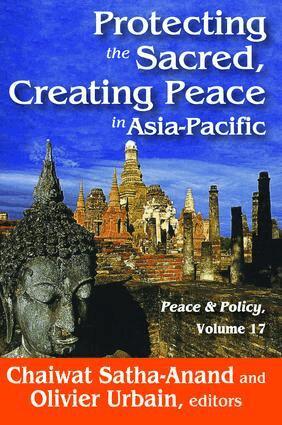
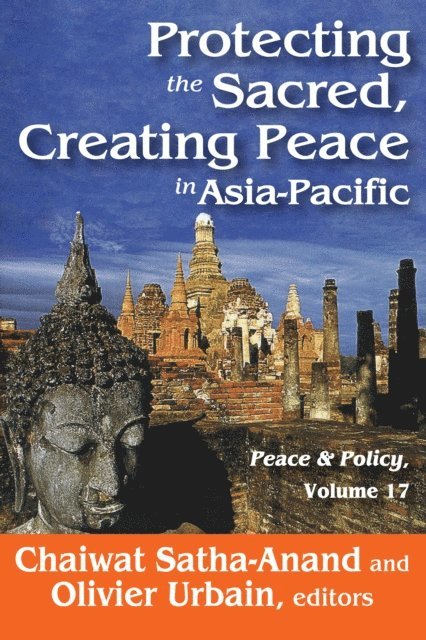
Using case studies from the Middle East, South Asia, Southeast Asia, and the Pacific Basin, this book examines the global trend of violence against religious places and figures. The contributors believe attacks on sacred places to be particularly damaging to peace and harmony because of the centrality of religion in many Asian and Pacific countries.A diverse range of topics are covered, including an empirical exploration of the global trends of violence against sacred spaces; attacks against and policies toward holy sites in Israel and the Palestinian Territories; the fate of Indian Islamic monuments after India gained independence in 1947; the Christian community's response to the increasing Islamization of Malaysia, and the future of communalism in Malaysia. Africa and Australia are also referenced in the work.Taken together, this volume explores the importance of protecting sacred spaces, holy symbols, and religious people as a crucial element in fostering peace in the world, and especially the Asia-Pacific region. The contributors argue that much of the violence in the world is rooted in politics of religious identity.
Inbunden, Engelska, 2017
2 198 kr
Skickas inom 10-15 vardagar
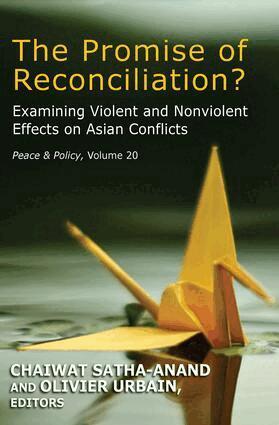
The Promise of Reconciliation? explores the relationship between violence, nonviolence, and reconciliation in societal conflicts with questions such as: In what ways does violence impact the reconciliation process that necessarily follows a cessation of deadly conflict? Would an understanding of how conflict has been engaged, with violence or nonviolence, be conducive to how it could be prevented from sliding further into violence?The contributors examine international influences on the peace/reconciliation process in Indonesia's Aceh conflict, as well as the role of Muslim religious scholars in promoting peace. They also examine the effect of violence in southern Thailand, where insurgent violence has provided "leverage" during the fighting, but negatively affects post-conflict objectives. The chapter on Sri Lanka shows that "successful" violence does not necessarily end conflict Sri Lankan society today is more polarized than it was before its civil war. The Vietnam chapter argues that the rise of nonviolent protest in Vietnam reflects a profound loss of state legitimacy, which cannot be resolved with force, while another chapter on Thailand examines "Red Sunday," a Thai political movement engaged in nonviolent protest in the face of violent government suppression. The book ends with a look at Indonesian cities, sites of ethnic conflicts, as potential abodes of peace if violence can be curtailed.
Inbunden, Engelska, 2020
1 781 kr
Skickas inom 10-15 vardagar
This classic work on the psychology of socialism carries for this edition a slightly refurbished title. By calling it The Psychology of Marxian Socialism, the work is sharply distinguished from an earlier work of the same title (written at a much earlier time) by Gustave LeBon. This book was written in the post-Bolshevik revolutionary era, at the height of the Weimar democracy in Germany; LeBon’s represents a fin de siècle effort, reflecting earlier concerns in socialist theory. De Man’s work derives its strength from a close and hard look at how socialism operated in one country. It is probably one of the greatest such efforts in the post-World War I period.
E-bok
Engelska, 2017891 kr
Läs direkt efter köp
The Promise of Reconciliation? explores the relationship between violence, nonviolence, and reconciliation in societal conflicts with questions such as: In what ways does violence impact the reconciliation process that necessarily follows a cessation of deadly conflict? Would an understanding of how conflict has been engaged, with violence or nonviolence, be conducive to how it could be prevented from sliding further into violence?The contributors examine international influences on the peace/reconciliation process in Indonesia''s Aceh conflict, as well as the role of Muslim religious scholars in promoting peace. They also examine the effect of violence in southern Thailand, where insurgent violence has provided "leverage" during the fighting, but negatively affects post-conflict objectives. The chapter on Sri Lanka shows that "successful" violence does not necessarily end conflict Sri Lankan society today is more polarized than it was before its civil war. The Vietnam chapter argues that the rise of nonviolent protest in Vietnam reflects a profound loss of state legitimacy, which cannot be resolved with force, while another chapter on Thailand examines "Red Sunday," a Thai political movement engaged in nonviolent protest in the face of violent government suppression. The book ends with a look at Indonesian cities, sites of ethnic conflicts, as potential abodes of peace if violence can be curtailed.
E-bok
PDF, Engelska, 2017860 kr
Läs direkt efter köp
The Promise of Reconciliation? explores the relationship between violence, nonviolence, and reconciliation in societal conflicts with questions such as: In what ways does violence impact the reconciliation process that necessarily follows a cessation of deadly conflict? Would an understanding of how conflict has been engaged, with violence or nonviolence, be conducive to how it could be prevented from sliding further into violence?The contributors examine international influences on the peace/reconciliation process in Indonesia''s Aceh conflict, as well as the role of Muslim religious scholars in promoting peace. They also examine the effect of violence in southern Thailand, where insurgent violence has provided "leverage" during the fighting, but negatively affects post-conflict objectives. The chapter on Sri Lanka shows that "successful" violence does not necessarily end conflict Sri Lankan society today is more polarized than it was before its civil war. The Vietnam chapter argues that the rise of nonviolent protest in Vietnam reflects a profound loss of state legitimacy, which cannot be resolved with force, while another chapter on Thailand examines "Red Sunday," a Thai political movement engaged in nonviolent protest in the face of violent government suppression. The book ends with a look at Indonesian cities, sites of ethnic conflicts, as potential abodes of peace if violence can be curtailed.
E-bok
Engelska, 2017824 kr
Läs direkt efter köp
Using case studies from the Middle East, South Asia, Southeast Asia, and the Pacific Basin, this book examines the global trend of violence against religious places and figures. The contributors believe attacks on sacred places to be particularly damaging to peace and harmony because of the centrality of religion in many Asian and Pacific countries.A diverse range of topics are covered, including an empirical exploration of the global trends of violence against sacred spaces; attacks against and policies toward holy sites in Israel and the Palestinian Territories; the fate of Indian Islamic monuments after India gained independence in 1947; the Christian community''s response to the increasing Islamization of Malaysia, and the future of communalism in Malaysia. Africa and Australia are also referenced in the work.Taken together, this volume explores the importance of protecting sacred spaces, holy symbols, and religious people as a crucial element in fostering peace in the world, and especially the Asia-Pacific region. The contributors argue that much of the violence in the world is rooted in politics of religious identity.
E-bok
PDF, Engelska, 2017795 kr
Läs direkt efter köp
Using case studies from the Middle East, South Asia, Southeast Asia, and the Pacific Basin, this book examines the global trend of violence against religious places and figures. The contributors believe attacks on sacred places to be particularly damaging to peace and harmony because of the centrality of religion in many Asian and Pacific countries.A diverse range of topics are covered, including an empirical exploration of the global trends of violence against sacred spaces; attacks against and policies toward holy sites in Israel and the Palestinian Territories; the fate of Indian Islamic monuments after India gained independence in 1947; the Christian community''s response to the increasing Islamization of Malaysia, and the future of communalism in Malaysia. Africa and Australia are also referenced in the work.Taken together, this volume explores the importance of protecting sacred spaces, holy symbols, and religious people as a crucial element in fostering peace in the world, and especially the Asia-Pacific region. The contributors argue that much of the violence in the world is rooted in politics of religious identity.
Häftad, Engelska, 2013
700 kr
Skickas inom 10-15 vardagar
Using case studies from the Middle East, South Asia, Southeast Asia, and the Pacific Basin, this book examines the global trend of violence against religious places and figures. The contributors believe attacks on sacred places to be particularly damaging to peace and harmony because of the centrality of religion in many Asian and Pacific countries.A diverse range of topics are covered, including an empirical exploration of the global trends of violence against sacred spaces; attacks against and policies toward holy sites in Israel and the Palestinian Territories; the fate of Indian Islamic monuments after India gained independence in 1947; the Christian community's response to the increasing Islamization of Malaysia, and the future of communalism in Malaysia. Africa and Australia are also referenced in the work.Taken together, this volume explores the importance of protecting sacred spaces, holy symbols, and religious people as a crucial element in fostering peace in the world, and especially the Asia-Pacific region. The contributors argue that much of the violence in the world is rooted in politics of religious identity.
Häftad, Engelska, 2016
756 kr
Skickas inom 10-15 vardagar
The Promise of Reconciliation? explores the relationship between violence, nonviolence, and reconciliation in societal conflicts with questions such as: In what ways does violence impact the reconciliation process that necessarily follows a cessation of deadly conflict? Would an understanding of how conflict has been engaged, with violence or nonviolence, be conducive to how it could be prevented from sliding further into violence?The contributors examine international influences on the peace/reconciliation process in Indonesia's Aceh conflict, as well as the role of Muslim religious scholars in promoting peace. They also examine the effect of violence in southern Thailand, where insurgent violence has provided "leverage" during the fighting, but negatively affects post-conflict objectives. The chapter on Sri Lanka shows that "successful" violence does not necessarily end conflict—Sri Lankan society today is more polarized than it was before its civil war. The Vietnam chapter argues that the rise of nonviolent protest in Vietnam reflects a profound loss of state legitimacy, which cannot be resolved with force, while another chapter on Thailand examines "Red Sunday," a Thai political movement engaged in nonviolent protest in the face of violent government suppression. The book ends with a look at Indonesian cities, sites of ethnic conflicts, as potential abodes of peace if violence can be curtailed.
Häftad, Engelska, 1984
439 kr
Tillfälligt slut
This classic work on the psychology of socialism carries for this edition a slightly refurbished title. By calling it The Psychology of Marxian Socialism, the work is sharply distinguished from an earlier work of the same title (written at a much earlier time) by Gustave LeBon. This book was written in the post-Bolshevik revolutionary era, at the height of the Weimar democracy in Germany; LeBon’s represents a fin de siècle effort, reflecting earlier concerns in socialist theory. De Man’s work derives its strength from a close and hard look at how socialism operated in one country. It is probably one of the greatest such efforts in the post-World War I period.