Chan David - Böcker
Visar alla böcker från författaren Chan David. Handla med fri frakt och snabb leverans.
10 produkter
10 produkter
948 kr
Skickas inom 3-6 vardagar
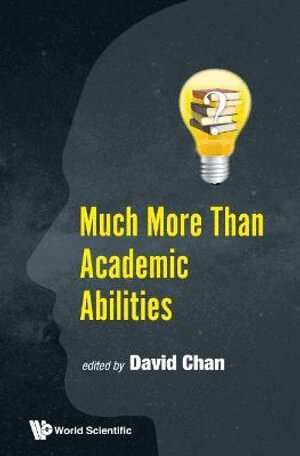
Academic abilities play a critical role not only in school settings but also in practical work situations and other problem-solving contexts that involve important intellectual task demands. However, we will not achieve the intended positive outcomes if we give too much emphasis to academic abilities and neglect non-academic attributes such as personality, interests, motivations, values, information-processing styles, self-concepts and attitudes.What non-academic factors do we need to pay more attention to? How do we approach the issues and effect changes with meaningful impact? What is the relationship between education, work and various notions of success? How are academic and non-academic factors related to civil society and politics, and what lessons can we learn from mistakes and successes in the ways we use or treat these related abilities, attributes or attitudes?This book explores these and other issues about going beyond academic abilities. The book is organised into four parts. Part 1 provides an overview of the issues in conceptualising and assessing academic abilities and non-academic attributes. Part 2 discusses education in Singapore and the adaptive Singapore workforce. Part 3 analyses the relationships linking academic abilities and non-academic factors to civil society and politics. Part 4 addresses specific questions on staff and public engagement, similarities and differences across public, private and people sectors, dealing with feedback and viewpoints, political and public service leadership, and relationships between people and government.This book will provide new perspectives and possibilities on what it means to say "much more than academic abilities", as we aspire to live a better life, make a positive difference to others, and build a stronger society.
844 kr
Skickas inom 3-6 vardagar
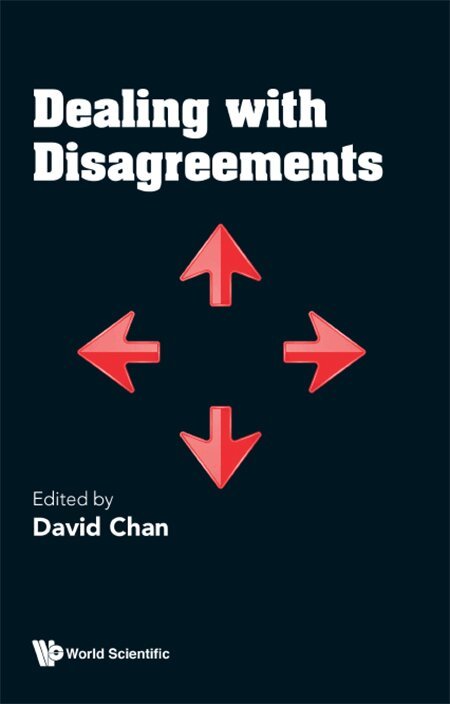
Most people can recall encounters, episodes and experiences involving disagreements over an issue. The more important the issue, the more it affects interpersonal relationships negatively when there is strong disagreement. Disagreements often generate negative thoughts, feelings and actions that significantly influence attitudes, decisions and behaviours. These dynamics in dealing with disagreement is part of our human psychology. If the underlying psychology is understood, this knowledge can facilitate personal and workplace relationships. It can also help address disagreements between policymakers and citizens or advocacy groups.Several questions have become more salient in recent years, particularly amid COVID-19 challenges, as Singapore society underwent significant changes that impact on the nature and level of attention given to the way we deal with disagreements. What factors should we pay more attention to when dealing with disagreements? What are the policy and societal contexts, and can we deal with disagreements in an ethical way? How are disagreements affected by people's social networks and social identities? What lessons can we learn from how we have dealt with disagreements? How do we approach disagreements better to effect positive changes?This book explores these and other issues about dealing with disagreements. The book is organised into four parts. Part 1 provides an overview of the issues involved in dealing with disagreements. Part 2 discusses issues of ethics and values in managing difficult situations. Part 3 analyses the relationships linking disagreements, social networks, diversity, and social identities. Part 4 addresses specific questions on dealing with disagreements in Singapore in terms of education, youths and inter-generational differences, the role and practice of the media, civil society advocacy and engagement, facts and signals in parliamentary debates and public discourse, dealing with feedback and viewpoints, political and public service leadership, and relationships between people and government.This book will provide new perspectives and possibilities on what it means to say "dealing with disagreements", as we resolve problems and generate solutions to live a better life and build a stronger Singapore society.
882 kr
Skickas inom 5-8 vardagar
After celebrating 50 years of independence, Singapore is focused on the question of what the future may bring. The future is neither predetermined nor random. How the chapter turns out will be affected by many economic and social forces, but much will also depend on how Singapore and Singaporeans choose to contribute to it.Singapore is likely to do well if important unresolved issues can be identified and addressed, especially those that require some mindset changes in individuals, the community and the government. Several questions have become more salient in recent years as Singapore society underwent significant changes. What does the future hold for Singapore society? Can people in Singapore really respect and embrace diversity of views and mindsets for a better society? How can the nation develop a diversity that enhances innovation, addresses issues, maintains social cohesion and contributes to people's well-being? What are some ways to build social-psychological capital in individuals and communities to develop a strong society that is resilient to shocks, failures and unmet expectations? Is it possible to move from a society where the role of government is dominant in many areas to one where individuals and communities step up to co-create whole-of-society solutions?This book, based on the proceedings at the Behavioural Sciences Institute Conference 2016, explores these and other issues about the social futures of Singapore. The book is organized into four parts. Part I provides an overview of issues involved in thinking about the social futures of Singapore society. Part II examines social futures from the perspectives of healthcare and education. Part III analyses the relationships linking social futures to the notion of giving and the increasing influence of social media. Part IV addresses specific questions on social futures of Singapore society in terms of social and national identities, cultural values, relationship between economic development and environmental sustainability, religious consciousness, perceptions of political leaders, and relationships between people and government.
975 kr
Skickas inom 3-6 vardagar
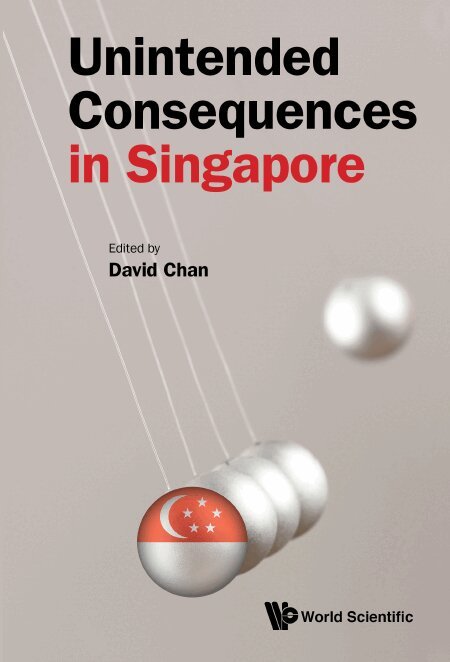
When policymakers, communities or advocates make decisions and take actions, they do so with the purpose of achieving some desired goal. But sometimes, unintended consequences occur. These are outcomes that are not the ones intended by the purposeful decision or action.Unintended consequences can be positive or negative, although the discussions often focus on the unexpected adverse impact that may result from well-intentioned policies or public actions.It is tempting to say that unintended consequences happen because we live in an uncertain and unpredictable world, and that there is not much we can do to prevent their occurrence or prepare for them. In fact, many unintended consequences are neither predetermined nor random. It is true that whether or not unintended consequences happen will be affected by many economic and social factors that Singapore is confronted with, but much will also depend on how we approach these factors and the potential consequences.This book, based on the proceedings at the Behavioural Sciences Institute Conference 2017, explores various issues about unintended consequences in Singapore. The book is organised into four parts. Part 1 provides an overview of issues involved in thinking about unintended consequences. Part 2 examines unintended consequences in the context of Singapore's goal to become a smart nation and compares the perspectives between public and private sector organisations on dealing with uncertainty. Part 3 analyses the relationships linking unintended consequences to healthcare outcomes and the management of race relations in Singapore. Part 4 addresses specific questions on unintended consequences in Singapore in terms of the nation's history, immigration, education, meritocracy, civil service culture and mindsets, and relationships between people and government.This book will provide the reader new perspectives and possibilities related to achieving intended societal goals and building a strong Singapore society.
844 kr
Skickas inom 3-6 vardagar
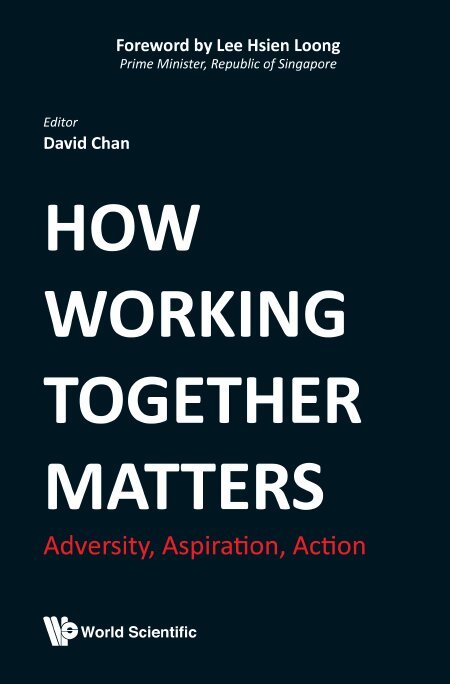
Foreword by Lee Hsien Loong (Prime Minister, Republic of Singapore)This book is about the art and science of finding solutions to helping families in crisis, and making a real and lasting positive difference in their lives. It is about helping people in need, as well as lessons on adversity, aspiration and action when multiple different stakeholders work together in the helping process. The book is organised into two parts. Part 1 discusses the issues in an unprecedented real-life interim housing project in Singapore that helped families in crisis over several years. Part 2 contains chapters critically reflecting on the experiences and lessons learned from the helping process in this project. Collectively, the chapters in this book address salient questions on helping people in need and implications for building a strong Singapore society.Related Link(s)
936 kr
Skickas inom 3-6 vardagar
It is clear that public trust plays a critical role in developing a vibrant economy and a strong society. A reasonably high level of public trust will enable the public, the Government, and the various organisations and groups in the different sectors in Singapore to work together to build a cohesive and adaptive community. This means a community characterised by constructive relationships embedded in positive economic, human, social, political and psychological capital.Public trust is important because it affects how people think, feel and behave. Trust takes time to build, is easy to lose, and once lost is difficult to restore. Trust is multi-dimensional, having to do with distinct aspects relating to competence, integrity and benevolence. Trust is also dynamic — it changes over time and the direction of change is not pre-determined.Given how critical and complex the concept of trust is, we need to have a valid and honest understanding of trust, if we want to shed light on how and why public trust changes, and how we can repair public trust violation and develop public trust in Singapore.The book is organised into four parts. Part 1 provides an overview of issues involved in thinking about public trust. Part 2 examines public trust in the context of upholding public accountability and discusses specific issues of public transport in Singapore. Part 3 analyses the relationships linking trust to social media analytics as well as healthcare. Part 4 addresses specific questions on public trust in Singapore in terms of social harmony, race and religion, education, civil society, social inequalities, dealing with differences and disagreements, political leadership, and relationships between people and government.This book will provide the reader new perspectives and possibilities related to questions that have become more salient in recent years as Singapore society underwent significant changes that likely impact on the nature and level of public trust.
1 531 kr
Skickas inom 5-8 vardagar
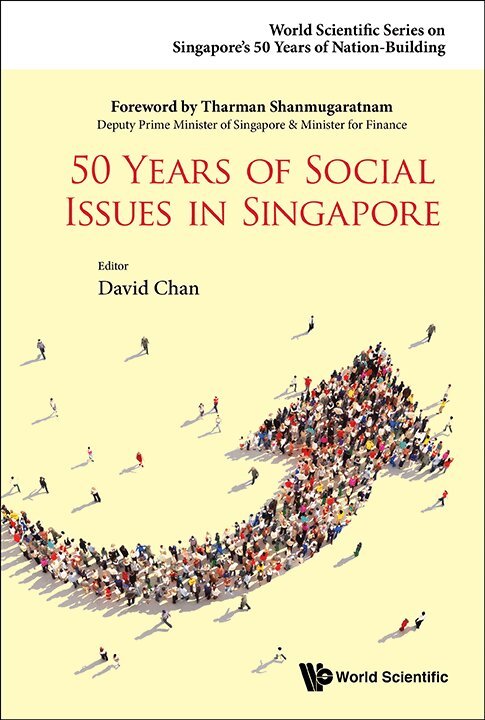
The social context of Singapore is changing rapidly, and understanding how people think, feel and behave in various situations has become a key driver of effectiveness in addressing social issues. 50 Years of Social Issues in Singapore provides a comprehensive review and examination of various social issues at multiple levels of analysis including the individual, group and society.This invaluable book adopts a translational approach to social issues in Singapore by explicitly bridging intellectual and practical perspectives. Contributed by a distinguished team of authors, the chapters examine the critical ideas underlying public debates of social issues and their policy and practical implications.The book is organized into three parts. Part I examines issues of population and social fundamentals in Singapore such as ageing, marriage, urban planning, healthcare and racial and religious harmony. Part II analyses Singapore's social progress through issues of inclusivity such as social mobility, developing communities and marginal groups that deserve more attention. Part III focuses on core principles and social processes related to social justice, doing good, social media and approaches to understanding and addressing social issues in Singapore.Most importantly, the chapters in this book clearly identify many of the critical, unresolved and emerging questions on various social issues that will guide the next generation of public discussion and policy deliberations on what matter in Singapore.
480 kr
Skickas inom 5-8 vardagar
The social context of Singapore is changing rapidly, and understanding how people think, feel and behave in various situations has become a key driver of effectiveness in addressing social issues. 50 Years of Social Issues in Singapore provides a comprehensive review and examination of various social issues at multiple levels of analysis including the individual, group and society.This invaluable book adopts a translational approach to social issues in Singapore by explicitly bridging intellectual and practical perspectives. Contributed by a distinguished team of authors, the chapters examine the critical ideas underlying public debates of social issues and their policy and practical implications.The book is organized into three parts. Part I examines issues of population and social fundamentals in Singapore such as ageing, marriage, urban planning, healthcare and racial and religious harmony. Part II analyses Singapore's social progress through issues of inclusivity such as social mobility, developing communities and marginal groups that deserve more attention. Part III focuses on core principles and social processes related to social justice, doing good, social media and approaches to understanding and addressing social issues in Singapore.Most importantly, the chapters in this book clearly identify many of the critical, unresolved and emerging questions on various social issues that will guide the next generation of public discussion and policy deliberations on what matter in Singapore.
758 kr
Skickas inom 5-8 vardagar
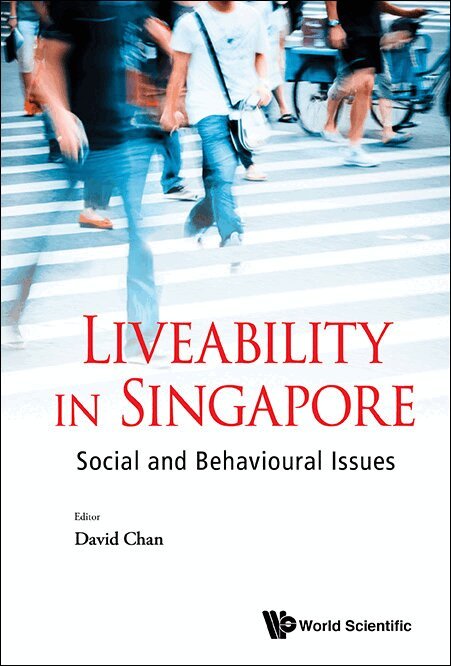
Cities and countries around the world are focused on enhancing their living conditions through ways that go beyond the brick and mortar of urban planning. Just like in other highly-urbanised cities, life and living in Singapore is highly dependent on many other dimensions such as health, access to various services, social interactions, inter-group relations and community bonds. Social and behavioural factors will need to be incorporated when designing and implementing policies and interventions to enhance liveability.This invaluable book, based on the proceedings at the Behavioural Sciences Institute Conference 2014, documents an exchange of ideas among practitioners, academics and public intellectuals on liveability in Singapore. The book is organized into four parts. Part I provides an overview of liveability issues. Part II examines liveability from the perspectives of health and urban planning. Part III analyses the relationships linking quality of life to social class and social services. Part IV addresses specific questions on liveability in terms of public transport, cost of living, government's public communications, role of free market values in town planning, civil society, citizen well-being and whether there is a psychological gulf between government and people.This book will provide the reader valuable perspectives, an increased understanding of issues related to the liveability in Singapore and many potential applications to reflect on.
913 kr
Skickas inom 5-8 vardagar
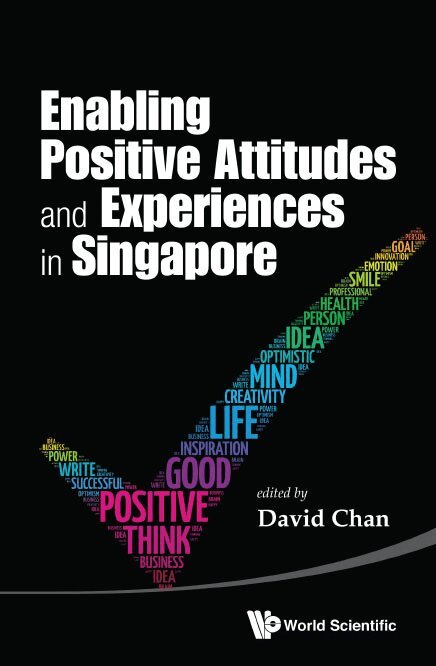
Positive experiences in daily lives enhance people's well-being and motivate them to do well and help others. Therefore, it is important to understand the factors that create positive experiences. Research has shown that positive attitudes can lead to positive experiences, and vice versa. However, there is no public consensus on what the different attitudinal dimensions are and how to measure them. Clearly, understanding the nature of positive attitudes is critical to fostering positivity.Positive attitudes and experiences can create conditions that help generate constructive solutions at the individual, group and societal levels. This will tackle negativity mindsets and solve problems. It will also enhance citizen well-being and create opportunities for them. This book, based on the proceedings at the Behavioural Sciences Institute Conference 2015, explores how these possibilities can be turned into reality in the Singapore context. Issues examined include policy and public actions, public communications, building communities, leadership and applications in specific areas such as health and education.The book is organized into four parts. Part I provides an overview of positivity issues. Part II analyzes the relationships linking positivity to the sense of community in Singapore and leadership in the social services. Part III examines positivity from the perspectives of healthcare and education. Part IV addresses specific questions on positivity in terms of city planning, volunteerism, active citizenry, social media, well-being, values, purpose and meaning, and relationships between people and government.This book will provide the reader valuable perspectives, an increased understanding of issues related to enabling positive attitudes and experiences in Singapore and many potential applications to reflect on.