Chang-Ho C. Ji - Böcker
Visar alla böcker från författaren Chang-Ho C. Ji. Handla med fri frakt och snabb leverans.
3 produkter
3 produkter
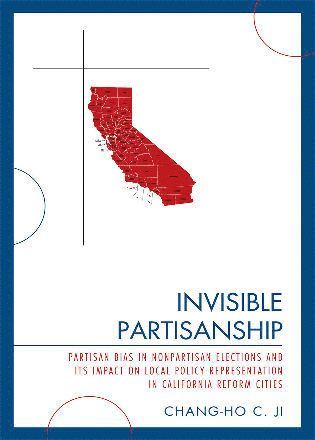
Invisible Partisanship
Partisan Bias in Nonpartisan Elections and Its Impact on Local Policy Representation in California Reform Cities
Häftad, Engelska, 2008
942 kr
Skickas inom 10-15 vardagar
In 1890-1930, the election system in American cities introduced nonpartisan ballots into the cities. Invisible Partnership evaluates this election scheme and how it disproportionately helps Republicans win local legislative contests and shapes city councils and school boards to produce conservative and pro-developmental local policies, as it places more Republicans with such political beliefs and policy preferences in the offices. Author Chang-Ho C. Ji asserts that partisan politics is a stronger force behind city and local politics than generally thought, ultimately shaping the process and results of local elections and various policy decision-making in cities and local School districts.
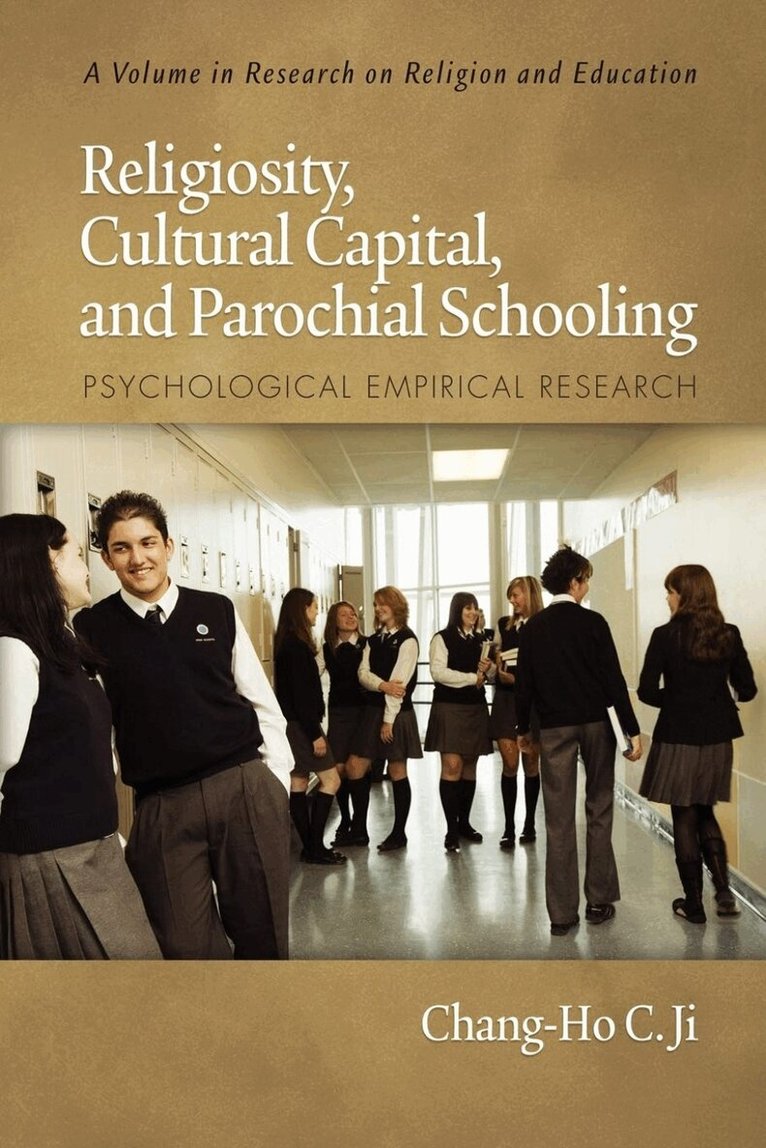
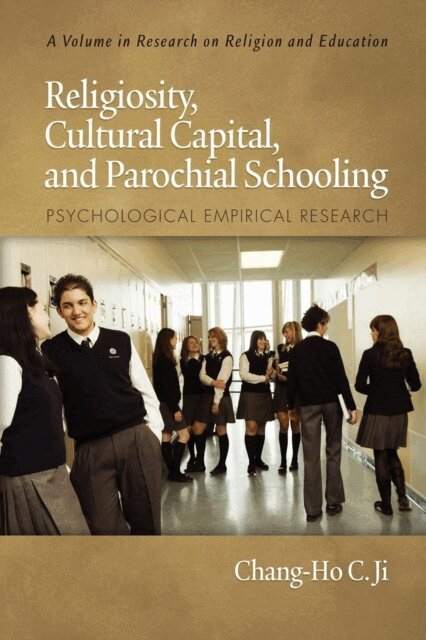
Religiosity, Cultural Capital, and Parochial Schooling
Psychological Empirical Research
Häftad, Engelska, 2010
534 kr
Skickas inom 7-10 vardagar
This book examines whether or not and how personal religion associates with school cultural capital. Specifically, on one level, the book offers insights and empirical data on who is choosing, teaching, and working in parochial schools and what motivates them to do so in the schools, issues that still remain largely unexplored in the educational research literature. In particular, it centers on the significance of personal religion and commitment as a reason for choosing and serving in parochial schools. On another level, the book is an attempt to enhance our understanding of the leadership orientation, school satisfaction, teacher assertiveness and empowerment, educational aspiration, and parental involvement in parochial schools, attributes reportedly essential for successful schools. Most importantly, at the heart of the book is an endeavor to estimate the influence of personal religion on the development of these cultural capital attributes and to address its implications for parochial schools as well as the current discussion on public schooling versus parochial schooling in the United States. To achieve these goals, the author will rely on first-hand empirical data collected for this book or other related research projects and adopt various scientific methods for data analysis and interpretation.The book shows that personal religion matters, but its impact is weaker than thought and is largely restricted to the students and parents in parochial schools, rather than their educators. To the extent that parochial schools excel more than public schools, personal religion seems to be responsible for the development of student and parent-level cultural capital such as parenting style and student desire for academic success and favorable attitude toward school, yet it does not necessarily engender the growth of teacher and administrator cultural capital. This result, to some extent, comes as a surprise but corrects and enhances our understanding about whether or not and how religion affects academic achievement.This book is an inquiry into the issue of school success and cultural capital, representing a scholarly contribution to the fields of education, religion, psychology, and sociology. Both scholars and lay people of education and religion will find this book a useful, informative, and insightful reference and classroom textbook.
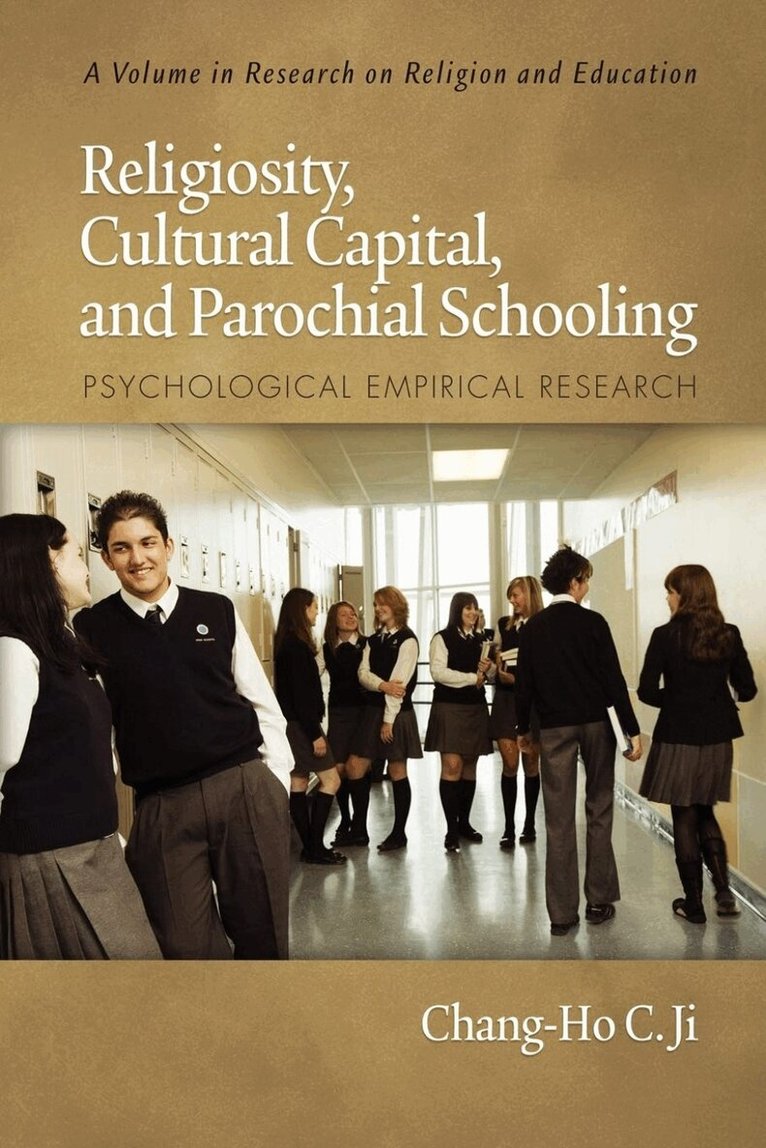
Religiosity, Cultural Capital, and Parochial Schooling
Psychological Empirical Research
Inbunden, Engelska, 2010
986 kr
Skickas inom 7-10 vardagar
This book examines whether or not and how personal religion associates with school cultural capital. Specifically, on one level, the book offers insights and empirical data on who is choosing, teaching, and working in parochial schools and what motivates them to do so in the schools, issues that still remain largely unexplored in the educational research literature. In particular, it centers on the significance of personal religion and commitment as a reason for choosing and serving in parochial schools. On another level, the book is an attempt to enhance our understanding of the leadership orientation, school satisfaction, teacher assertiveness and empowerment, educational aspiration, and parental involvement in parochial schools, attributes reportedly essential for successful schools. Most importantly, at the heart of the book is an endeavor to estimate the influence of personal religion on the development of these cultural capital attributes and to address its implications for parochial schools as well as the current discussion on public schooling versus parochial schooling in the United States. To achieve these goals, the author will rely on first-hand empirical data collected for this book or other related research projects and adopt various scientific methods for data analysis and interpretation.The book shows that personal religion matters, but its impact is weaker than thought and is largely restricted to the students and parents in parochial schools, rather than their educators. To the extent that parochial schools excel more than public schools, personal religion seems to be responsible for the development of student and parent-level cultural capital such as parenting style and student desire for academic success and favorable attitude toward school, yet it does not necessarily engender the growth of teacher and administrator cultural capital. This result, to some extent, comes as a surprise but corrects and enhances our understanding about whether or not and how religion affects academic achievement.This book is an inquiry into the issue of school success and cultural capital, representing a scholarly contribution to the fields of education, religion, psychology, and sociology. Both scholars and lay people of education and religion will find this book a useful, informative, and insightful reference and classroom textbook.