Changho Suh – författare
1 393 kr
Skickas inom 5-8 vardagar
1 435 kr
Skickas inom 5-8 vardagar
869 kr
Skickas inom 10-15 vardagar
870 kr
Läs direkt efter köp
This book introduces the basic principles underlying the design and analysis of the digital communication systems that have heralded the information revolution. One major goal of the book is to demonstrate the role of the digital communication principles in a wide variety of data science applications, including community detection, computational biology, speech recognition and machine learning.
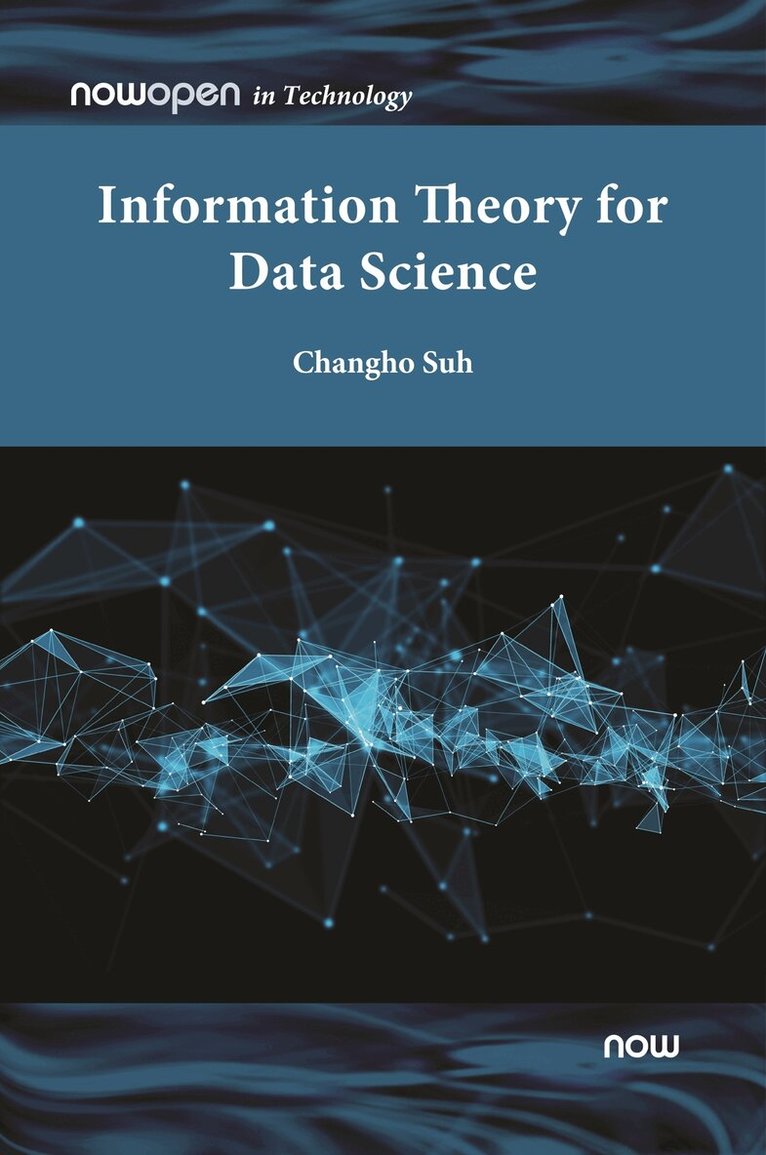
One defining feature of this book is to make an explicit connection between the communication principles and data science problems, as well as to succinctly deliver the “story” of how the communication principles play a role for trending data science applications. All the key “plots” involved in the story are coherently developed with the help of tightly coupled exercise problem sets, and the associated fundamentals are explored mostly from first principles. Another key feature is that it includes programming implementation of a variety of algorithms inspired by fundamentals, together with a brief tutorial of the used programming tools. The implementation is based on Python and TensorFlow.This book does not follow a traditional book-style organization, but is streamlined via a series of lecture notes that are intimately related, centered around coherent storylines and themes. It serves as a textbook mainly for a junior- or senior-level undergraduate course, yet is also suitable for a first-year graduate course. Readers benefit from having a good background in probability and random processes, and basic familiarity with Python. But the background can be supplemented by almost self-contained materials, as well as by numerous exercise problems intended for elaborating on non-trivial concepts. In addition, Part III for data science applications should provide motivation and insights to students and even professional scientists who are interested in the field.

648 kr
Skickas inom 5-8 vardagar
653 kr
Skickas inom 10-15 vardagar
869 kr
Skickas inom 5-8 vardagar
1 108 kr
Läs direkt efter köp
This book introduces probabilistic modelling and explores its role in solving a broad spectrum of engineering problems that arise in Information Technology (IT). Divided into three parts, it begins by laying the foundation of basic probability concepts such as sample space, events, conditional probability, independence, total probability law and random variables. The second part delves into more advanced topics including random processes and key principles like Maximum A Posteriori (MAP) estimation, the law of large numbers and the central limit theorem. The last part applies these principles to various IT domains like communication, social networks, speech recognition, and machine learning, emphasizing the practical aspect of probability through real-world examples, case studies, and Python coding exercises.
A notable feature of this book is its narrative style, seamlessly weaving together probability theories with both classical and contemporary IT applications. Each concept is reinforced with tightly-coupled exercise sets, and the associated fundamentals are explored mostly from first principles. Furthermore, it includes programming implementations of illustrative examples and algorithms, complemented by a brief Python tutorial.
Departing from traditional organization, the book adopts a lecture-notes format, presenting interconnected themes and storylines. Primarily tailored for sophomore-level undergraduates, it also suits junior and senior-level courses. While readers benefit from mathematical maturity and programming exposure, supplementary materials and exercise problems aid understanding. Part III serves to inspire and provide insights for students and professionals alike, underscoring the pragmatic relevance of probabilistic concepts in IT.
653 kr
Skickas inom 5-8 vardagar