Chantal Stebbings - Böcker
Visar alla böcker från författaren Chantal Stebbings. Handla med fri frakt och snabb leverans.
8 produkter
8 produkter
467 kr
Skickas inom 7-10 vardagar
Nineteenth-century governments faced considerable challenges from the rapid, novel and profound changes in social and economic conditions resulting from the industrial revolution. In the context of an increasingly sophisticated and complex government, from the 1830s the specialist and largely lay statutory tribunal was conceived and adopted as the principal method of both implementing the new regulatory legislation and resolving disputes. The tribunal's legal nature and procedures, and its place in the machinery of justice, were debated and refined throughout the Victorian period. In examining this process, this 2007 book explains the interaction between legal constraints, social and economic demand and political expediency that gave rise to this form of dispute resolution. It reveals the imagination and creativity of the legislators who drew on diverse legal institutions and values to create the new tribunals, and shows how the modern difficulties of legal classification were largely the result of the institution's nineteenth-century development.
1 218 kr
Tillfälligt slut
The trust was a popular device among the Victorian middle classes to preserve their private property for the benefit of their families. At the centre of this legal institution was the trustee, whose duty it was to manage the property as the original owner wished. In their task of managing the property, Victorian trustees found themselves in a society which was changing rapidly and extensively, a new commercial and dynamic society which had a profound effect on their ability to carry out their duties. This book explores the legal response to the challenges faced by trustees, and does so through the varied relationships which trustees necessarily experienced in the course of their administration. A consideration of the legal dimension to trusteeship, this book sets the trustee in his legal, social and economic context. It will be of interest to legal historians, as well as to historians of nineteenth-century Britain.
1 339 kr
Skickas inom 7-10 vardagar
Nineteenth-century governments faced considerable challenges from the rapid, novel and profound changes in social and economic conditions resulting from the industrial revolution. In the context of an increasingly sophisticated and complex government, from the 1830s the specialist and largely lay statutory tribunal was conceived and adopted as the principal method of both implementing the new regulatory legislation and resolving disputes. The tribunal's legal nature and procedures, and its place in the machinery of justice, were debated and refined throughout the Victorian period. In examining this process, this 2007 book explains the interaction between legal constraints, social and economic demand and political expediency that gave rise to this form of dispute resolution. It reveals the imagination and creativity of the legislators who drew on diverse legal institutions and values to create the new tribunals, and shows how the modern difficulties of legal classification were largely the result of the institution's nineteenth-century development.
1 387 kr
Skickas inom 7-10 vardagar
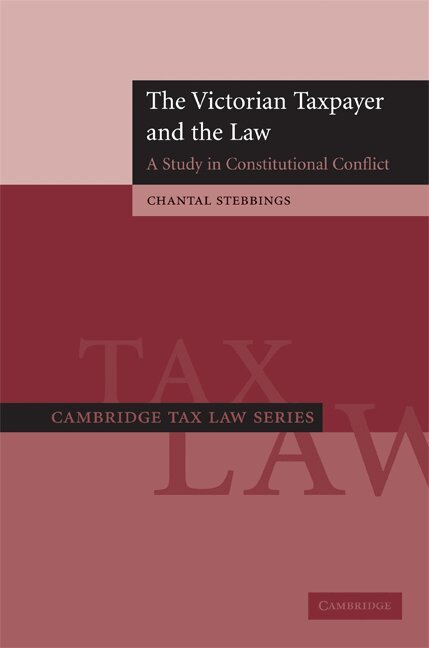
The central element of the taxpayer's relationship with the law was the protection it afforded to ensure only the correct amount of tax was paid, that it was legally levied and justly administered. These legal safeguards consisted of the fundamental constitutional provision that all taxes had to be consented to in Parliament, local tax administration, and a power to appeal to specialist tribunals and the courts. The book explains how these legal safeguards were established and how they were affected by changing social, economic and political conditions. They were found to be restrictive and inadequate, and were undermined by the increasing dominance of the executive. Though they were significantly recast, they were not destroyed. They proved flexible and robust, and the challenge they faced in Victorian England revealed that the underlying, pervasive constitutional principle of consent from which they drew their legitimacy provided an enduring protection for the taxpayer.
1 417 kr
Skickas inom 7-10 vardagar
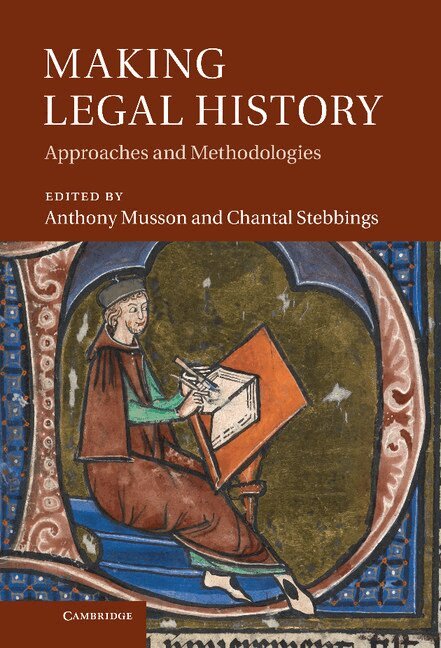
Drawing together leading legal historians from a range of jurisdictions and cultures, this collection of essays addresses the fundamental methodological underpinning of legal history research. Via a broad chronological span and a wide range of topics, the contributors explore the approaches, methods and sources that together form the basis of their research and shed light on the complexities of researching into the history of the law. By exploring the challenges posed by visual, unwritten and quasi-legal sources, the difficulties posed by traditional archival material and the novelty of exploring the development of legal culture and comparative perspectives, the book reveals the richness and dynamism of legal history research.
1 327 kr
Skickas inom 7-10 vardagar
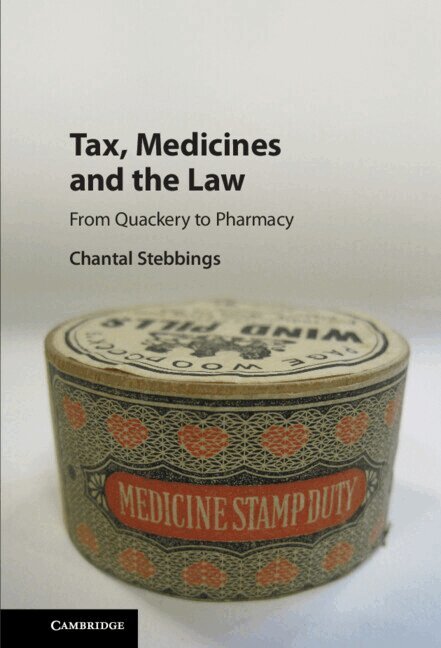
In 1783, a stamp duty was imposed on proprietary or 'quack' medicines. These largely useless but often dangerous remedies were immensely popular. The tax, which lasted until 1941, was imposed to raise revenue. It failed in its incidental regulatory purpose, had a negative effect in that the stamp was perceived as a guarantee of quality, and had a positive effect in encouraging disclosure of the formula. The book explains the considerable impact the tax had on chemists and druggists - how it led to an improvement in professional status, but undermined it by reinforcing their reputations as traders. The legislation imposing the tax was complex, ambiguous and never reformed. The tax authorities had to administer it, and executive practice came to dominate it. A minor, specialised, low-yield tax is shown to be of real significance in the pharmaceutical context, and of exceptional importance as a model revealing the wider impact of tax law and administration.
394 kr
Skickas inom 7-10 vardagar
In 1783, a stamp duty was imposed on proprietary or 'quack' medicines. These largely useless but often dangerous remedies were immensely popular. The tax, which lasted until 1941, was imposed to raise revenue. It failed in its incidental regulatory purpose, had a negative effect in that the stamp was perceived as a guarantee of quality, and had a positive effect in encouraging disclosure of the formula. The book explains the considerable impact the tax had on chemists and druggists - how it led to an improvement in professional status, but undermined it by reinforcing their reputations as traders. The legislation imposing the tax was complex, ambiguous and never reformed. The tax authorities had to administer it, and executive practice came to dominate it. A minor, specialised, low-yield tax is shown to be of real significance in the pharmaceutical context, and of exceptional importance as a model revealing the wider impact of tax law and administration.
1 687 kr
Skickas inom 10-15 vardagar
Unlike the preceding volumes in this series, "Law Reporting in Britain" has a single, clear theme: the history and development of law reporting in Britain, from the earliest English reports of the second half of the 13th century to the beginnings of the reporting of planning decisions in the 20th century. Law reports are one of the main sources from which legal history is written. They record what lawyers and judges said in court in legal argument arising out of the facts of particular caes and how the judges decided the outcome of those cases. They thus provide vital evidence for what the lawyers and judges of the past believed to be the law of their day. They also demonstrate the ability of those lawyers and judges to shape and develop law through argument and decision-making in individual cases.