Chao-Yang Wang - Böcker
Visar alla böcker från författaren Chao-Yang Wang. Handla med fri frakt och snabb leverans.
5 produkter
5 produkter
Del 49 - Modern Aspects of Electrochemistry
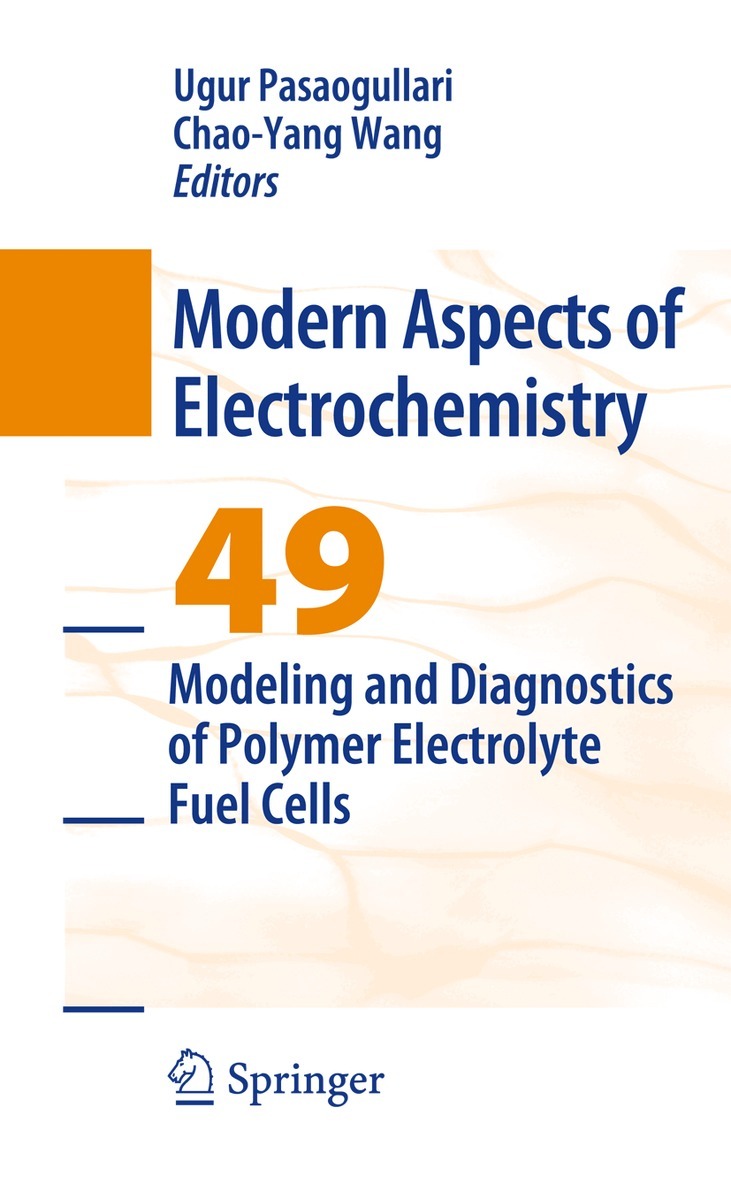
Modeling and Diagnostics of Polymer Electrolyte Fuel Cells
Inbunden, Engelska, 2010
1 578 kr
Skickas inom 10-15 vardagar
Polymer electrolyte fuel cells (PEFCs) or proton exchange m- brane fuel cells (PEMFCs) have been suggested as alternatives to replace many existing energy conversion technologies, incl- inginternalcombustionenginesandbatteries.Themostsigni?cant advances in PEFC technology achieved in the last decade have occurredinareasrelatedtoautomotiveapplications,namelyco- start capabilities, enhanced durability and better understanding of watermanagementandmasstransportlosses. This volume of Modern Aspects of Electrochemistry is intendedtoprovideanoverviewofadvancementsinexperimental diagnosticsandmodelingofpolymerelectrolytefuelcells.Chapters byHuangandReifsniderandGuetal.provideanin-depthreview of the durability issues in PEFCs as well as recent developments in understanding and mitigation of degradation in the polymer membraneandelectrocatalyst. Enabling cold start, the startup of PEFC stacks from subzero temperatures, is a very important capability achieved only within thelastfewyears.TajiriandWangprovideatutorialoverviewofthe requirementsforcoldstart,andprovideasummaryofexperimental diagnosticsandcold-startmodelingstudies. Chapters 4-6 address speci?c diagnostic methods in PEFCs.Martin et al. provide a detailed review of methods for distributed diagnostics of species, temperature, and current in PEFCs in Chapter 4.In Chapter 5, Hussey and Jacobson describe the op- ationalprinciplesofneutronradiographyforin-situvisualizationof liquidwaterdistribution,andalsooutlineissuesrelatedtotemporal andspatialresolution.TsushimaandHiraidescribebothmagnetic resonance imaging (MRI) technique for visualization of water in PEFCsandtunablediodelaserabsorptionspectroscopy (TDLAS) formeasurementofwatervaporconcentrationinChapter6. Diffusionmedia(DM)areproneto?oodingwithliquidwater. AlthoughtheDMisanessentialcomponentofPEFCsthatenable distributionofspeciesandcollectionofcurrentandheat,littlewas knownaboutcapillarytransportinDMsuntilrecently.InChapters7 Gostick et al. provide a description of liquid water transport in porousDMduetocapillarityanddescribeexperimentaltechniques usedtocharacterizeDMproperties. v vi Preface The?naltwochaptersdiscussmodelingofPEFCs.Mukherjee and Wang provide an in-depth review of meso-scale modeling of two-phase transport, while Zhou et al. summarize both the s- ulation of electrochemical reactions on electrocatalysts and the transport of protons through the polymer electrolyte using at- isticsimulationtoolssuchasmoleculardynamicsandMonteCarlo techniques.Eachchapterinthevolumeisself-contained;thereforetheydo notneedtobereadinacertainorder. Special thanks are due to 23 authors who contributed to this volume.
1 156 kr
Skickas inom 7-10 vardagar
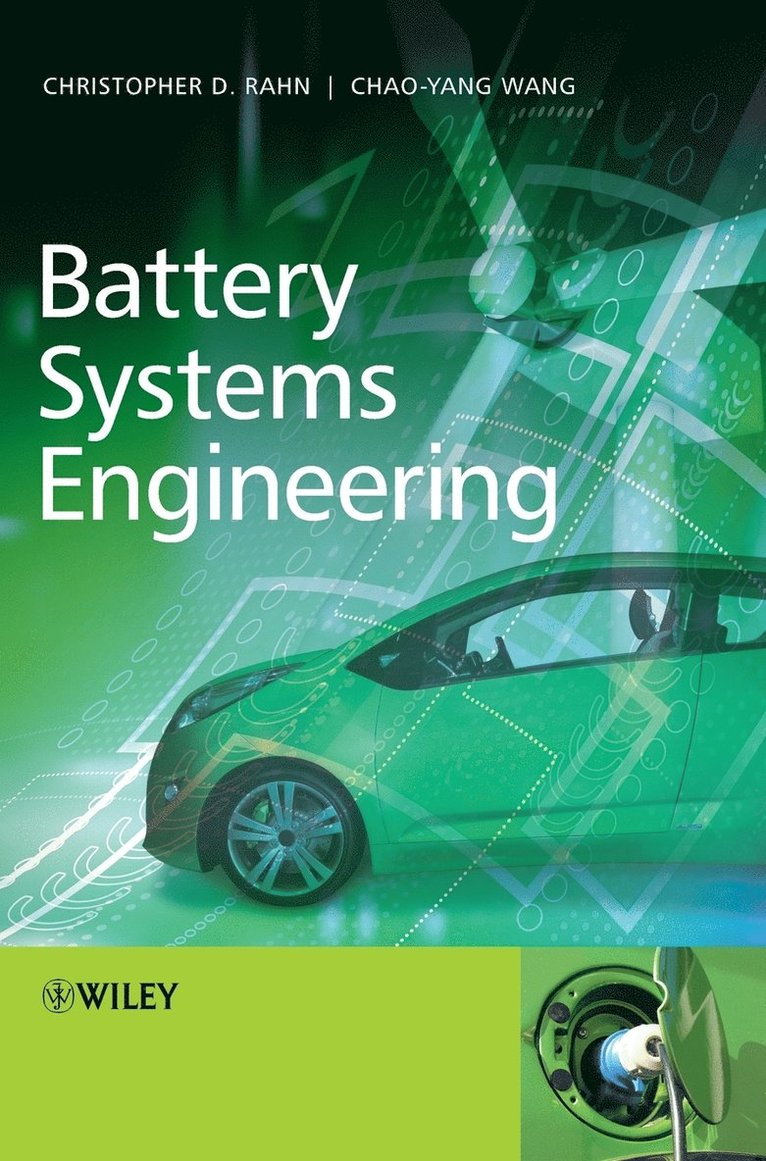
A complete all-in-one reference on the important interdisciplinary topic of Battery Systems EngineeringFocusing on the interdisciplinary area of battery systems engineering, this book provides the background, models, solution techniques, and systems theory that are necessary for the development of advanced battery management systems. It covers the topic from the perspective of basic electrochemistry as well as systems engineering topics and provides a basis for battery modeling for system engineering of electric and hybrid electric vehicle platforms.This original approach gives a useful overview for systems engineers in chemical, mechanical, electrical, or aerospace engineering who are interested in learning more about batteries and how to use them effectively. Chemists, material scientists, and mathematical modelers can also benefit from this book by learning how their expertise affects battery management. Approaches a topic which has experienced phenomenal growth in recent yearsTopics covered include: Electrochemistry; Governing Equations; Discretization Methods; System Response and Battery Management SystemsInclude tables, illustrations, photographs, graphs, worked examples, homework problems, and references, to thoroughly illustrate key materialIdeal for engineers working in the mechanical, electrical, and chemical fields as well as graduate students in these areasA valuable resource for Scientists and Engineers working in the battery or electric vehicle industries, Graduate students in mechanical engineering, electrical engineering, chemical engineering.
1 321 kr
Skickas inom 10-15 vardagar
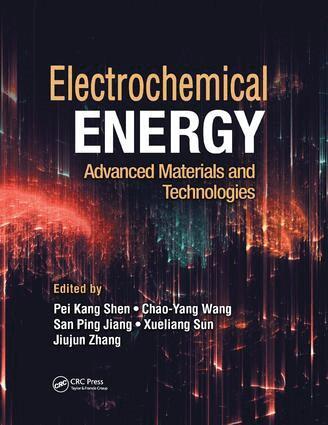
Electrochemical Energy: Advanced Materials and Technologies covers the development of advanced materials and technologies for electrochemical energy conversion and storage. The book was created by participants of the International Conference on Electrochemical Materials and Technologies for Clean Sustainable Energy (ICES-2013) held in Guangzhou, China, and incorporates select papers presented at the conference.More than 300 attendees from across the globe participated in ICES-2013 and gave presentations in six major themes: Fuel cells and hydrogen energyLithium batteries and advanced secondary batteriesGreen energy for a clean environmentPhoto-ElectrocatalysisSupercapacitorsElectrochemical clean energy applications and marketsComprised of eight sections, this book includes 25 chapters featuring highlights from the conference and covering every facet of synthesis, characterization, and performance evaluation of the advanced materials for electrochemical energy. It thoroughly describes electrochemical energy conversion and storage technologies such as batteries, fuel cells, supercapacitors, hydrogen generation, and their associated materials. The book contains a number of topics that include electrochemical processes, materials, components, assembly and manufacturing, and degradation mechanisms. It also addresses challenges related to cost and performance, provides varying perspectives, and emphasizes existing and emerging solutions.The result of a conference encouraging enhanced research collaboration among members of the electrochemical energy community, Electrochemical Energy: Advanced Materials and Technologies is dedicated to the development of advanced materials and technologies for electrochemical energy conversion and storage and details the technologies, current achievements, and future directions in the field.
2 759 kr
Skickas inom 7-10 vardagar
Electrochemical Energy: Advanced Materials and Technologies covers the development of advanced materials and technologies for electrochemical energy conversion and storage. The book was created by participants of the International Conference on Electrochemical Materials and Technologies for Clean Sustainable Energy (ICES-2013) held in Guangzhou, China, and incorporates select papers presented at the conference.More than 300 attendees from across the globe participated in ICES-2013 and gave presentations in six major themes: Fuel cells and hydrogen energyLithium batteries and advanced secondary batteriesGreen energy for a clean environmentPhoto-ElectrocatalysisSupercapacitorsElectrochemical clean energy applications and marketsComprised of eight sections, this book includes 25 chapters featuring highlights from the conference and covering every facet of synthesis, characterization, and performance evaluation of the advanced materials for electrochemical energy. It thoroughly describes electrochemical energy conversion and storage technologies such as batteries, fuel cells, supercapacitors, hydrogen generation, and their associated materials. The book contains a number of topics that include electrochemical processes, materials, components, assembly and manufacturing, and degradation mechanisms. It also addresses challenges related to cost and performance, provides varying perspectives, and emphasizes existing and emerging solutions.The result of a conference encouraging enhanced research collaboration among members of the electrochemical energy community, Electrochemical Energy: Advanced Materials and Technologies is dedicated to the development of advanced materials and technologies for electrochemical energy conversion and storage and details the technologies, current achievements, and future directions in the field.
Del 49 - Modern Aspects of Electrochemistry
Modeling and Diagnostics of Polymer Electrolyte Fuel Cells
Häftad, Engelska, 2014
1 578 kr
Skickas inom 10-15 vardagar
Polymer electrolyte fuel cells (PEFCs) or proton exchange m- brane fuel cells (PEMFCs) have been suggested as alternatives to replace many existing energy conversion technologies, incl- inginternalcombustionenginesandbatteries.Themostsigni?cant advances in PEFC technology achieved in the last decade have occurredinareasrelatedtoautomotiveapplications,namelyco- start capabilities, enhanced durability and better understanding of watermanagementandmasstransportlosses. This volume of Modern Aspects of Electrochemistry is intendedtoprovideanoverviewofadvancementsinexperimental diagnosticsandmodelingofpolymerelectrolytefuelcells.Chapters byHuangandReifsniderandGuetal.provideanin-depthreview of the durability issues in PEFCs as well as recent developments in understanding and mitigation of degradation in the polymer membraneandelectrocatalyst. Enabling cold start, the startup of PEFC stacks from subzero temperatures, is a very important capability achieved only within thelastfewyears.TajiriandWangprovideatutorialoverviewofthe requirementsforcoldstart,andprovideasummaryofexperimental diagnosticsandcold-startmodelingstudies. Chapters 4-6 address speci?c diagnostic methods in PEFCs.Martin et al. provide a detailed review of methods for distributed diagnostics of species, temperature, and current in PEFCs in Chapter 4.In Chapter 5, Hussey and Jacobson describe the op- ationalprinciplesofneutronradiographyforin-situvisualizationof liquidwaterdistribution,andalsooutlineissuesrelatedtotemporal andspatialresolution.TsushimaandHiraidescribebothmagnetic resonance imaging (MRI) technique for visualization of water in PEFCsandtunablediodelaserabsorptionspectroscopy (TDLAS) formeasurementofwatervaporconcentrationinChapter6. Diffusionmedia(DM)areproneto?oodingwithliquidwater. AlthoughtheDMisanessentialcomponentofPEFCsthatenable distributionofspeciesandcollectionofcurrentandheat,littlewas knownaboutcapillarytransportinDMsuntilrecently.InChapters7 Gostick et al. provide a description of liquid water transport in porousDMduetocapillarityanddescribeexperimentaltechniques usedtocharacterizeDMproperties. v vi Preface The?naltwochaptersdiscussmodelingofPEFCs.Mukherjee and Wang provide an in-depth review of meso-scale modeling of two-phase transport, while Zhou et al. summarize both the s- ulation of electrochemical reactions on electrocatalysts and the transport of protons through the polymer electrolyte using at- isticsimulationtoolssuchasmoleculardynamicsandMonteCarlo techniques.Eachchapterinthevolumeisself-contained;thereforetheydo notneedtobereadinacertainorder. Special thanks are due to 23 authors who contributed to this volume.