Charles E. Roberts Jr. – författare
Visar alla böcker från författaren Charles E. Roberts Jr.. Handla med fri frakt och snabb leverans.
5 produkter
5 produkter
E-bok
PDF, Engelska, 20261 698 kr
Läs direkt efter köp
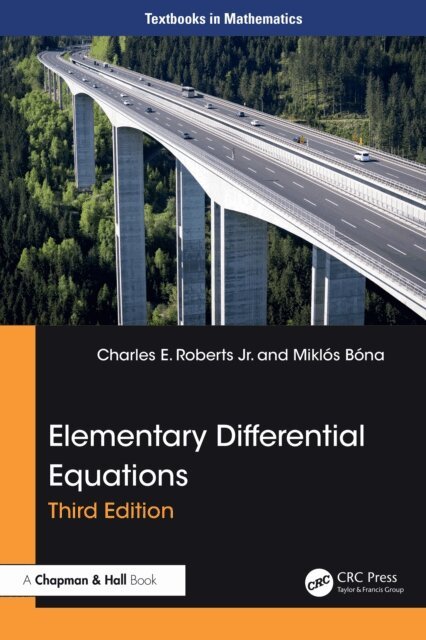
This book is written to innovate the standard course and to modernize it. There has been a dramatic change in the past century in how solutions to differential equations are calculated. However, the way the topic has been taught in introductory courses has barely changed to reflect these advances, which leaves students at a disadvantage.Elementary Differential Equations, Third Edition builds on the previous editions, continuing to innovate with the addition of a new topic: combinatorics. The goal is to assist instructors as they facilitate new teaching methods and utilize the latest technology and to provide flexibility in presenting a new topic to encourage students to explore mathematics and not only its applications.The text is designed to help instructors who want to use computers in their classrooms. It accomplishes this by emphasizing and integrating computers. Many examples and exercises included in the text require the use of computer software to solve problems. It should be noted that since instructors use their own preferred software, this book has been written to be independent of any specific software package.Features: Focuses on numerical methods and computing to generate solutions Features extensive coverage of nonlinear differential equations and nonlinear systems Contains a wider variety of non-mathematical models than any competing textbook In the new Chapter 11, readers will learn notions of set partitions, graphs, and rooted trees, the concept of exponential generating functions, and see how differential equations can be surprisingly useful in solving complex counting problems The third edition continues to serve as an excellent introductory textbook for undergraduate students majoring in applied mathematics, computer science, various engineering disciplines, and other sciences. They also will find that the textbook will aid them greatly in their professional careers because of its instructions on how to use computers to solve equations.
E-bok
Engelska, 20261 698 kr
Läs direkt efter köp
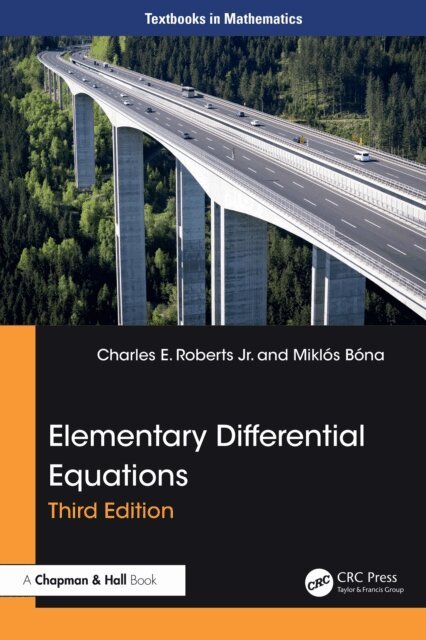
This book is written to innovate the standard course and to modernize it. There has been a dramatic change in the past century in how solutions to differential equations are calculated. However, the way the topic has been taught in introductory courses has barely changed to reflect these advances, which leaves students at a disadvantage.Elementary Differential Equations, Third Edition builds on the previous editions, continuing to innovate with the addition of a new topic: combinatorics. The goal is to assist instructors as they facilitate new teaching methods and utilize the latest technology and to provide flexibility in presenting a new topic to encourage students to explore mathematics and not only its applications.The text is designed to help instructors who want to use computers in their classrooms. It accomplishes this by emphasizing and integrating computers. Many examples and exercises included in the text require the use of computer software to solve problems. It should be noted that since instructors use their own preferred software, this book has been written to be independent of any specific software package.Features: Focuses on numerical methods and computing to generate solutions Features extensive coverage of nonlinear differential equations and nonlinear systems Contains a wider variety of non-mathematical models than any competing textbook In the new Chapter 11, readers will learn notions of set partitions, graphs, and rooted trees, the concept of exponential generating functions, and see how differential equations can be surprisingly useful in solving complex counting problems The third edition continues to serve as an excellent introductory textbook for undergraduate students majoring in applied mathematics, computer science, various engineering disciplines, and other sciences. They also will find that the textbook will aid them greatly in their professional careers because of its instructions on how to use computers to solve equations.
Inbunden, Engelska, 2026
1 477 kr
Skickas inom 10-15 vardagar
Inbunden, Engelska, 2026
1 268 kr
Kommande
Inbunden, Engelska, 2018
1 089 kr
Tillfälligt slut
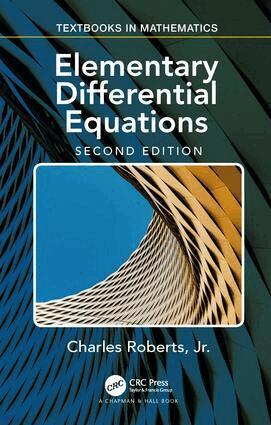
Elementary Differential Equations, Second Edition is written with the knowledge that there has been a dramatic change in the past century in how solutions to differential equations are calculated. However, the way the topic has been taught in introductory courses has barely changed to reflect these advances, which leaves students at a disadvantage. This second edition has been created to address these changes and help instructors facilitate new teaching methods and the latest tools, which includes computers. The text is designed to help instructors who want to use computers in their classrooms. It accomplishes this by emphasizing and integrating computers in teaching elementary or ordinary differential equations. Many examples and exercises included in the text require the use of computer software to solve problems. It should be noted that since instructors use their own preferred software, this book has been written to be independent of any specific software package. Features: Focuses on numerical methods and computing to generate solutions Features extensive coverage of nonlinear differential equations and nonlinear systems Includes software programs to solve problems in the text which are located on the author's website Contains a wider variety of non-mathematical models than any competing textbookThis second edition is a valuable, up-to-date tool for instructors teaching courses about differential equations. It serves as an excellent introductory textbook for undergraduate students majoring in applied mathematics, computer science, various engineering disciplines and other sciences. They also will find that the textbook will aide them greatly in their professional careers because of its instructions on how to use computers to solve equations.