Charles E. Winquist – författare
Visar alla böcker från författaren Charles E. Winquist. Handla med fri frakt och snabb leverans.
9 produkter
9 produkter
Häftad, Engelska, 1995
258 kr
Skickas inom 5-8 vardagar
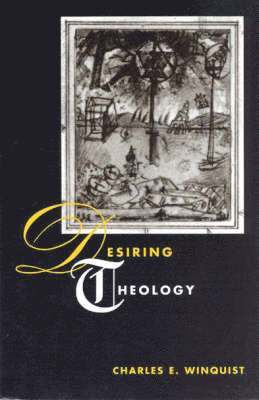
This text argues for the possibility of theological thinking in a postmodern secular milieu. Moving beyond the now familiar reiteration of postmodernity's losses - the death of God, the displacement of the self, the end of history, the closure of the book - Winquist equates a desire to think theologically with a desire, amidst postmodernity's disappointments, for a thinking that does not disappoint. To desire theology in this sense is to desire to know an "other" in and of language that can be valued in the forming of personal and communal identity. In this book, "desiring theology" carries another sense as well, for Winquist argues that, in the wake of psychoanalysis, theology must elaborate the meaning and importance of desire in its own discourse. Winquist's work is tactical as well as theoretical, showing what kind of work theology can do in a postmodern age. He suggests that theology is closely akin to what Gilles Deleuze and Felix Guattari refer to as a minor intensive use of a major language. The minor intensive theological use of language, Winquist argues, pressures the ordinary weave of discourse and opens it to desire.Thus theology becomes a work against "the disappointment of thinking". Engaged with the work of Nietzsche, Derrida, Tillich, Robert P. Scharlemann and Mark C. Taylor, among others, this book aims to provide a contribution to contemporary theology.
Inbunden, Engelska, 2000
3 299 kr
Skickas inom 10-15 vardagar
The Encyclopedia of Postmodernism provides comprehensive and authoritative coverage of academic disciplines, critical terms and central figures relating to the vast field of postmodern studies. With three cross-referenced sections, the volume is easily accessible to readers with specialized research agendas and general interests in contemporary cultural, historical, literary and philosophical issues.Since its inception in the 1960s, postmodernism has emerged as a significant cultural, political and intellectual force that many scholars would argue defines our era. Postmodernism, in its various configurations, has consistently challenged concepts of selfhood, knowledge formation, aesthetics, ethics, history and politics. This Encyclopedia offers a wide-range of perspectives on postmodernism that illustrates the plurality of this critical concept that is so much part of our current intellectual debates. In this regard, the volume does not adhere to a single definition of postmodernism as much as it documents the use of the term across a variety of academic and cultural pursuits.The Encyclopedia of Postmodernism, it must be noted, resists simply presenting postmodernism as a new style among many styles occuring in the post-disciplinary academy. Documenting the use of the term acknowledges that postmodernism has a much deeper and long-lasting effect on academic and cultural life. In general, the volume rests on the understanding that postmodernism is not so much a style as it is an on-going process, a process of both disintegration and reformation.
20 660 kr
Skickas inom 10-15 vardagar
Postmodernism has emerged as a significant cultural, political and intellectual concept which has fundamentally altered our understanding of architecture, selfhood, knowledge formation, ethics, history, economics and politics. Until now, the primary and most historically significant accounts of postmodernism have remained uncollected.This set provides scholars with a much needed interdisciplinary and comprehensive collection of essays that map out the ways in which postmodernism is conceptualized and demonstrate how it has caused a wide range of traditions and disciplines to redefine their objects of study and modes of inquiry.The volumes include:* foundational essays* critical texts* disciplinary texts covering the visual arts and architecture, the humanities and the social sciences
Häftad, Engelska, 2003
1 478 kr
Skickas inom 10-15 vardagar
The Encyclopedia of Postmodernism provides comprehensive and authoritative coverage of academic disciplines, critical terms and central figures relating to the vast field of postmodern studies. With three cross-referenced sections, the volume is easily accessible to readers with specialized research agendas and general interests in contemporary cultural, historical, literary and philosophical issues.Since its inception in the 1960s, postmodernism has emerged as a significant cultural, political and intellectual force that many scholars would argue defines our era. Postmodernism, in its various configurations, has consistently challenged concepts of selfhood, knowledge formation, aesthetics, ethics, history and politics. This Encyclopedia offers a wide-range of perspectives on postmodernism that illustrates the plurality of this critical concept that is so much part of our current intellectual debates. In this regard, the volume does not adhere to a single definition of postmodernism as much as it documents the use of the term across a variety of academic and cultural pursuits.The Encyclopedia of Postmodernism, it must be noted, resists simply presenting postmodernism as a new style among many styles occuring in the post-disciplinary academy. Documenting the use of the term acknowledges that postmodernism has a much deeper and long-lasting effect on academic and cultural life. In general, the volume rests on the understanding that postmodernism is not so much a style as it is an on-going process, a process of both disintegration and reformation.
E-bok
Engelska, 20021 704 kr
Läs direkt efter köp
The Encyclopedia of Postmodernism provides comprehensive and authoritative coverage of academic disciplines, critical terms and central figures relating to the vast field of postmodern studies. With three cross-referenced sections, the volume is easily accessible to readers with specialized research agendas and general interests in contemporary cultural, historical, literary and philosophical issues.Since its inception in the 1960s, postmodernism has emerged as a significant cultural, political and intellectual force that many scholars would argue defines our era. Postmodernism, in its various configurations, has consistently challenged concepts of selfhood, knowledge formation, aesthetics, ethics, history and politics. This Encyclopedia offers a wide-range of perspectives on postmodernism that illustrates the plurality of this critical concept that is so much part of our current intellectual debates. In this regard, the volume does not adhere to a single definition of postmodernism as much as it documents the use of the term across a variety of academic and cultural pursuits.The Encyclopedia of Postmodernism, it must be noted, resists simply presenting postmodernism as a new style among many styles occuring in the post-disciplinary academy. Documenting the use of the term acknowledges that postmodernism has a much deeper and long-lasting effect on academic and cultural life. In general, the volume rests on the understanding that postmodernism is not so much a style as it is an on-going process, a process of both disintegration and reformation.
E-bok
PDF, Engelska, 20021 719 kr
Läs direkt efter köp
The Encyclopedia of Postmodernism provides comprehensive and authoritative coverage of academic disciplines, critical terms and central figures relating to the vast field of postmodern studies. With three cross-referenced sections, the volume is easily accessible to readers with specialized research agendas and general interests in contemporary cultural, historical, literary and philosophical issues.Since its inception in the 1960s, postmodernism has emerged as a significant cultural, political and intellectual force that many scholars would argue defines our era. Postmodernism, in its various configurations, has consistently challenged concepts of selfhood, knowledge formation, aesthetics, ethics, history and politics. This Encyclopedia offers a wide-range of perspectives on postmodernism that illustrates the plurality of this critical concept that is so much part of our current intellectual debates. In this regard, the volume does not adhere to a single definition of postmodernism as much as it documents the use of the term across a variety of academic and cultural pursuits.The Encyclopedia of Postmodernism, it must be noted, resists simply presenting postmodernism as a new style among many styles occuring in the post-disciplinary academy. Documenting the use of the term acknowledges that postmodernism has a much deeper and long-lasting effect on academic and cultural life. In general, the volume rests on the understanding that postmodernism is not so much a style as it is an on-going process, a process of both disintegration and reformation.
Häftad, Engelska, 1987
296 kr
Skickas inom 5-8 vardagar
E-bok
PDF, Engelska, 20131 100 kr
Läs direkt efter köp
The "transcendental imagination" is a philosophical conception used in this essay to illuminate the ontological significance of the continuing proclamation of the Word of God. It has become necessary for theology to respond to the growth of secularization and the impoverishment of religious language in contemporary experience by initiating foundation al inquiry into the meaning and possibility of theological reflection. The following essay is intended to be a preliminary step toward an understanding of theology and religious discourse as they are intimately bound to the realization of possibilities in the life of the church. There are many people to whom I am indebted for my understanding of theology and for the development of this book. I here would like to express my appreciation and gratitude to Professor George Guthrie for introducing me to foundational questions in the study of philosophy during my student years at the University of Toledo; to Professors Schubert Ogden and David Tracy for their careful reading and criticism of this manuscript; and especially to my advisor, Professor Langdon Gilkey, for his encouragement, criticisms, and suggestions during my graduate study at the Divinity School, The University of Chicago. Most importantly, I want to thank my wife Anna, to whom this book is dedicated, for sharing with me her strength, creativity and love.
Inbunden, Engelska, 1995
633 kr
Tillfälligt slut
This text argues for the possibility of theological thinking in a postmodern secular milieu. Moving beyond the now familiar reiteration of postmodernity's losses - the death of God, the displacement of the self, the end of history, the closure of the book - Winquist equates a desire to think theologically with a desire, amidst postmodernity's disappointments, for a thinking that does not disappoint. To desire theology in this sense is to desire to know an "other" in and of language that can be valued in the forming of personal and communal identity. In this book, "desiring theology" carries another sense as well, for Winquist argues that, in the wake of psychoanalysis, theology must elaborate the meaning and importance of desire in its own discourse. Winquist's work is tactical as well as theoretical, showing what kind of work theology can do in a postmodern age. He suggests that theology is closely akin to what Gilles Deleuze and Felix Guattari refer to as a minor intensive use of a major language. The minor intensive theological use of language, Winquist argues, pressures the ordinary weave of discourse and opens it to desire.Thus theology becomes a work against "the disappointment of thinking". Engaged with the work of Nietzsche, Derrida, Tillich, Robert P. Scharlemann and Mark C. Taylor, among others, this book aims to provide a contribution to contemporary theology.