Charles-Edouard Bouée – författare
Visar alla böcker från författaren Charles-Edouard Bouée. Handla med fri frakt och snabb leverans.
9 produkter
9 produkter
Inbunden, Engelska, 2010
565 kr
Skickas inom 10-15 vardagar
As one of the world's largest economies China is facing many unique management challenges in the wake of the financial crisis. The future presents many opportunities for growth and commerce but new management skills must be developed to cope with these issues.
E-bok
PDF, Engelska, 2010687 kr
Läs direkt efter köp
As one of the world''s largest economies China is facing many unique management challenges in the wake of the financial crisis. The future presents many opportunities for growth and commerce but new management skills must be developed to cope with these issues.
Häftad, Engelska, 2010
548 kr
Skickas inom 10-15 vardagar
As one of the world's largest economies China is facing many unique management challenges in the wake of the financial crisis. The future presents many opportunities for growth and commerce but new management skills must be developed to cope with these issues.
Inbunden, Engelska, 2013
412 kr
Skickas inom 5-8 vardagar
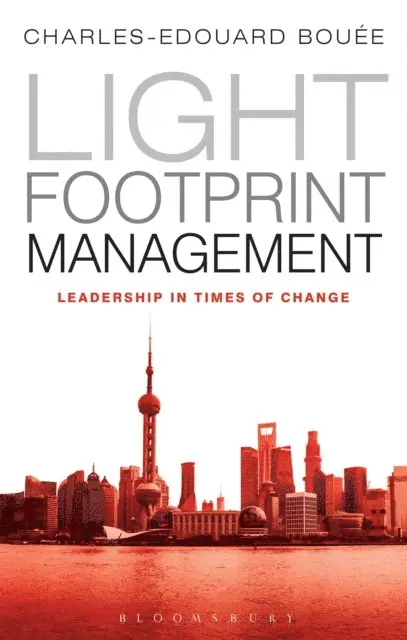
What can managers in today’s uncertain, unimaginably complex world learn from President Obama and top Chinese executives? Charles-Edouard Bouée proposes “light footprint” management – comparable to a new American military doctrine and similar to a recently emerged Chinese management style that subordinates strategy to vision and tactics. Bouée explains how conventional management methodologies, techniques and tools can be adapted to the conditions of an increasingly ambiguous and apparently unmanageable world. Light Footprint Management explains the dynamics of the new business environment and describes the kinds of organization most likely to succeed in it.
E-bok
Engelska, 2013376 kr
Läs direkt efter köp
What can managers in today''s uncertain, unimaginably complex world learn from President Obama and top Chinese executives? Charles-Edouard Bouée proposes “light footprint” management – comparable to a new American military doctrine and similar to a recently emerged Chinese management style that subordinates strategy to vision and tactics. Bouée explains how conventional management methodologies, techniques and tools can be adapted to the conditions of an increasingly ambiguous and apparently unmanageable world. Light Footprint Management explains the dynamics of the new business environment and describes the kinds of organization most likely to succeed in it.
E-bok
PDF, Engelska, 2018376 kr
Läs direkt efter köp
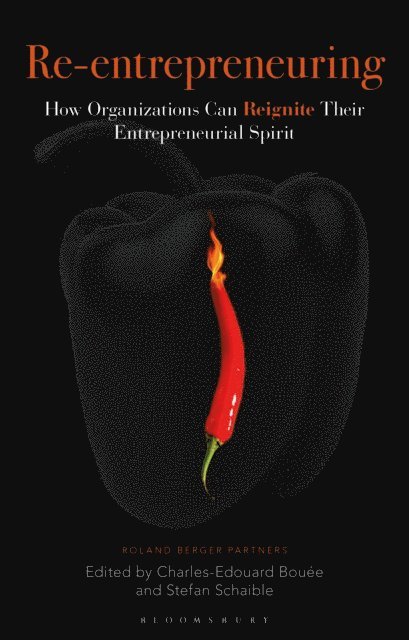
Re-entrepreneuring shows how organizations must re-invigorate entrepreneurial spirit at all levels to create new value and stay ahead in turbulent times.It has long been assumed that, in the development of any organization, the time for entrepreneurial activity is right at the beginning. Once an organization is established, qualities that were virtues in the organization''s start-up and early stages can become vices, and the entrepreneurial founders must cede control to professional managers who can nurture the fruits of their original vision more efficiently.One unintended consequence of this assumption is that large, established organizations tend to be entrepreneur-free zones. Entrepreneurial thinking is tacitly discouraged because it can create novelty, and novelty is a threat to established organizations with large market shares.Re-entrepreneuring argues that organizations must revive the entrepreneurial out-look of their founders in order to survive in today''s market. In an organization that encourages and nurtures an entrepreneurial outlook, everyone has the potential to unleash their inner entrepreneur and bring new and dynamic ways of thinking into their work environment. It has more to do with the ways of thinking encouraged by the organizational culture than by any inherent differences in talent or aptitude.The solution presented in this new book from ROLAND BERGER, edited by Charles-Edouard Bouée and Stefan Schaible, is piecemeal yet targeted ''re-entrepreneuring''. With the help of international case studies and first-hand testimony from business leaders, the authors show how the entrepreneurial approach can be applied to any organization and at all levels, in order to spark innovation, remove operational obstacles and – ultimately – to create new value.
380 kr
Läs direkt efter köp
Re-entrepreneuring shows how organizations must re-invigorate entrepreneurial spirit at all levels to create new value and stay ahead in turbulent times.It has long been assumed that, in the development of any organization, the time for entrepreneurial activity is right at the beginning. Once an organization is established, qualities that were virtues in the organization''s start-up and early stages can become vices, and the entrepreneurial founders must cede control to professional managers who can nurture the fruits of their original vision more efficiently.One unintended consequence of this assumption is that large, established organizations tend to be entrepreneur-free zones. Entrepreneurial thinking is tacitly discouraged because it can create novelty, and novelty is a threat to established organizations with large market shares.Re-entrepreneuring argues that organizations must revive the entrepreneurial out-look of their founders in order to survive in today''s market. In an organization that encourages and nurtures an entrepreneurial outlook, everyone has the potential to unleash their inner entrepreneur and bring new and dynamic ways of thinking into their work environment. It has more to do with the ways of thinking encouraged by the organizational culture than by any inherent differences in talent or aptitude.The solution presented in this new book from ROLAND BERGER, edited by Charles-Edouard Bouée and Stefan Schaible, is piecemeal yet targeted ''re-entrepreneuring''. With the help of international case studies and first-hand testimony from business leaders, the authors show how the entrepreneurial approach can be applied to any organization and at all levels, in order to spark innovation, remove operational obstacles and – ultimately – to create new value.
E-bok
PDF, Engelska, 2019248 kr
Läs direkt efter köp
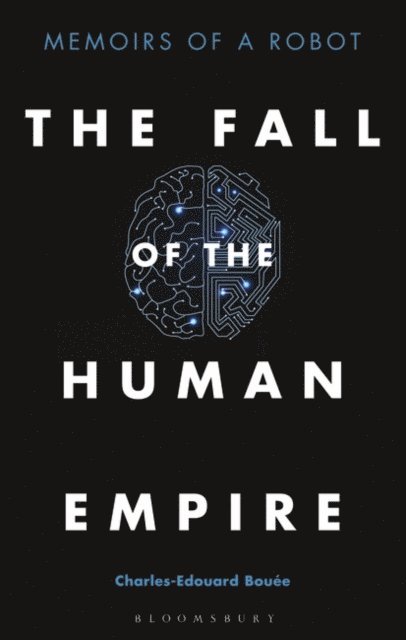
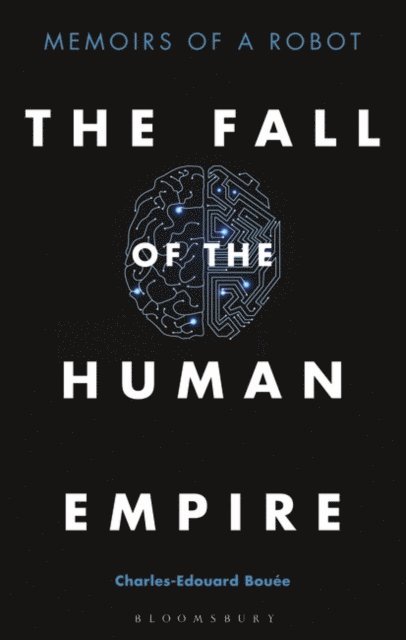
Machines that are smarter than people? A utopian dream of science-fiction novelists and Hollywood screenwriters perhaps, but one which technological progress is turning into reality. Two trends are coming together: exponential growth in the processing power of supercomputers, and new software which can copy the way neurons in the human brain work and give machines the ability to learn. Smart systems will soon be commonplace in homes, businesses, factories, administrations, hospitals and the armed forces. How autonomous will they be? How free to make decisions? What place will human beings still have in a world controlled by robots? After the atom bomb, is artificial intelligence the second lethal weapon capable of destroying mankind, its inventor? The Fall of the Human Empire traces the little-known history of artificial intelligence from the standpoint of a robot called Lucy. She – or it? – recounts her adventures and reveals the mysteries of her long journey with humans, and provides a thought-provoking storyline of what developments in A.I. may mean for both humans and robots.
E-bok
Engelska, 2019248 kr
Läs direkt efter köp
Machines that are smarter than people? A utopian dream of science-fiction novelists and Hollywood screenwriters perhaps, but one which technological progress is turning into reality. Two trends are coming together: exponential growth in the processing power of supercomputers, and new software which can copy the way neurons in the human brain work and give machines the ability to learn. Smart systems will soon be commonplace in homes, businesses, factories, administrations, hospitals and the armed forces. How autonomous will they be? How free to make decisions? What place will human beings still have in a world controlled by robots? After the atom bomb, is artificial intelligence the second lethal weapon capable of destroying mankind, its inventor? The Fall of the Human Empire traces the little-known history of artificial intelligence from the standpoint of a robot called Lucy. She – or it? – recounts her adventures and reveals the mysteries of her long journey with humans, and provides a thought-provoking storyline of what developments in A.I. may mean for both humans and robots.