Charles Elachi – författare
1 570 kr
Skickas inom 10-15 vardagar
**2026 PROSE Award Finalist in Chemistry, Physics, Astronomy, and Cosmology**Titan After Cassini-Huygens is the most up-to-date and comprehensive coverage of our knowledge on Titan, including results and insights from the joint NASA/European Space Agency/Italian Space Agency mission Cassini-Huygens and the conclusions drawn by experts following detailed analysis of the mission data. Our knowledge of Titan has increased substantially due to observations from the Cassini-Huygens mission, which ended in 2017. Since then, observations from Earth, as well as laboratory and theoretical studies, have continued to add to our knowledge. These conclusions, combined with the latest ground-based and theoretical research, provide the most recent understanding of the science of Titan, covering the origin and evolution of Titan, its magnetic and plasma environment, surface, interior structure, geology, atmosphere, and the astrobiological potential for the oceans on the moon.The first book of the new COSPAR book series, Titan After Cassini-Huygens, is an integral reference for scientists, researchers, and academics working on Titan or ocean worlds.Part of the COSPAR Book SeriesEdited by Jean-Louis Fellous, former Executive Director of COSPAR (Committee on Space Research; 2008-2019)
Details the total knowledge of Titan from Cassini-Huygens and subsequent observations from Earth, as well as laboratory and theoretical studies from the last decadeCovers all aspects of Titan, including origin and evolution, magnetic and plasma environment, surface, interior structure, geology, atmospheric science and astrobiological potentialProvides detailed, referenceable data from investigators of the Cassini spacecraft and Huygens probe, as well as the ALMA radio telescope observatory1 985 kr
Läs direkt efter köp
2 397 kr
Läs direkt efter köp
1 862 kr
Skickas inom 5-8 vardagar
1 626 kr
Skickas inom 5-8 vardagar
1 816 kr
Läs direkt efter köp
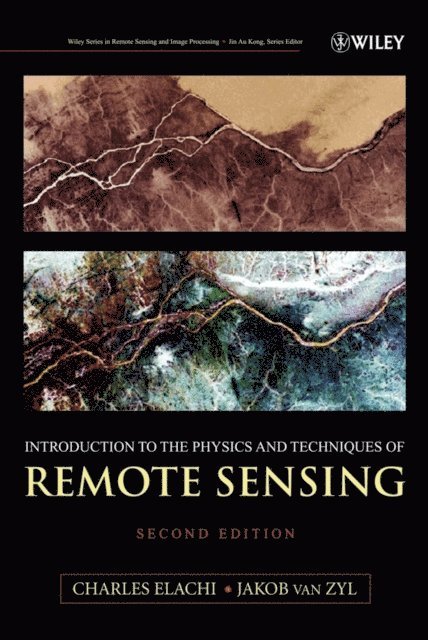
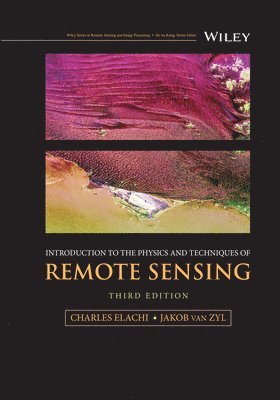
INTRODUCTION TO THE PHYSICS AND TECHNIQUES OF REMOTE SENSING
DISCOVER CUTTING EDGE THEORY AND APPLICATIONS OF MODERN REMOTE SENSING IN GEOLOGY, OCEANOGRAPHY, ATMOSPHERIC SCIENCE, IONOSPHERIC STUDIES, AND MORE
The thoroughly revised third edition of the Introduction to the Physics and Techniques of Remote Sensing delivers a comprehensive update to the authoritative textbook, offering readers new sections on radar interferometry, radar stereo, and planetary radar. It explores new techniques in imaging spectroscopy and large optics used in Earth orbiting, planetary, and astrophysics missions. It also describes remote sensing instruments on, as well as data acquired with, the most recent Earth and space missions.
Readers will benefit from the brand new and up-to-date concept examples and full-color photography, 50% of which is new to the series. You’ll learn about the basic physics of wave/matter interactions, techniques of remote sensing across the electromagnetic spectrum (from ultraviolet to microwave), and the concepts behind the remote sensing techniques used today and those planned for the future.
The book also discusses the applications of remote sensing for a wide variety of earth and planetary atmosphere and surface sciences, like geology, oceanography, resource observation, atmospheric sciences, and ionospheric studies. This new edition also incorporates:
A fulsome introduction to the nature and properties of electromagnetic waves An exploration of sensing solid surfaces in the visible and near infrared spectrums, as well as thermal infrared, microwave, and radio frequencies A treatment of ocean surface sensing, including ocean surface imaging and the mapping of ocean topography A discussion of the basic principles of atmospheric sensing and radiative transfer, including the radiative transfer equationPerfect for senior undergraduate and graduate students in the field of remote sensing instrument development, data analysis, and data utilization, Introduction to the Physics and Techniques of Remote Sensing will also earn a place in the libraries of students, faculty, researchers, engineers, and practitioners in fields like aerospace, electrical engineering, and astronomy.
1 816 kr
Läs direkt efter köp
INTRODUCTION TO THE PHYSICS AND TECHNIQUES OF REMOTE SENSING
DISCOVER CUTTING EDGE THEORY AND APPLICATIONS OF MODERN REMOTE SENSING IN GEOLOGY, OCEANOGRAPHY, ATMOSPHERIC SCIENCE, IONOSPHERIC STUDIES, AND MORE
The thoroughly revised third edition of the Introduction to the Physics and Techniques of Remote Sensing delivers a comprehensive update to the authoritative textbook, offering readers new sections on radar interferometry, radar stereo, and planetary radar. It explores new techniques in imaging spectroscopy and large optics used in Earth orbiting, planetary, and astrophysics missions. It also describes remote sensing instruments on, as well as data acquired with, the most recent Earth and space missions.
Readers will benefit from the brand new and up-to-date concept examples and full-color photography, 50% of which is new to the series. You’ll learn about the basic physics of wave/matter interactions, techniques of remote sensing across the electromagnetic spectrum (from ultraviolet to microwave), and the concepts behind the remote sensing techniques used today and those planned for the future.
The book also discusses the applications of remote sensing for a wide variety of earth and planetary atmosphere and surface sciences, like geology, oceanography, resource observation, atmospheric sciences, and ionospheric studies. This new edition also incorporates:
A fulsome introduction to the nature and properties of electromagnetic waves An exploration of sensing solid surfaces in the visible and near infrared spectrums, as well as thermal infrared, microwave, and radio frequencies A treatment of ocean surface sensing, including ocean surface imaging and the mapping of ocean topography A discussion of the basic principles of atmospheric sensing and radiative transfer, including the radiative transfer equationPerfect for senior undergraduate and graduate students in the field of remote sensing instrument development, data analysis, and data utilization, Introduction to the Physics and Techniques of Remote Sensing will also earn a place in the libraries of students, faculty, researchers, engineers, and practitioners in fields like aerospace, electrical engineering, and astronomy.