Charles F. Sabel - Böcker
Visar alla böcker från författaren Charles F. Sabel. Handla med fri frakt och snabb leverans.
8 produkter
8 produkter
1 235 kr
Skickas inom 5-8 vardagar
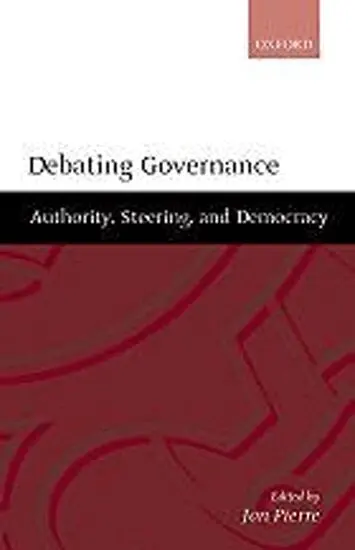
Leading scholars in the field of governance examine the effectiveness of the different non-institutional strategies at the disposal of modern governments in tackling issues of urban decline, public administrations, governmental regionalization, budget deficits and global economics. The governance approach to political science yields a new perspective on the role of the state, domestically as well as in the international arena. Globalization, internationalization, and the growing influence of networks in domestic politics means that the notions of state strength and the role of the state in society must re-examined.
1 147 kr
Skickas inom 3-6 vardagar
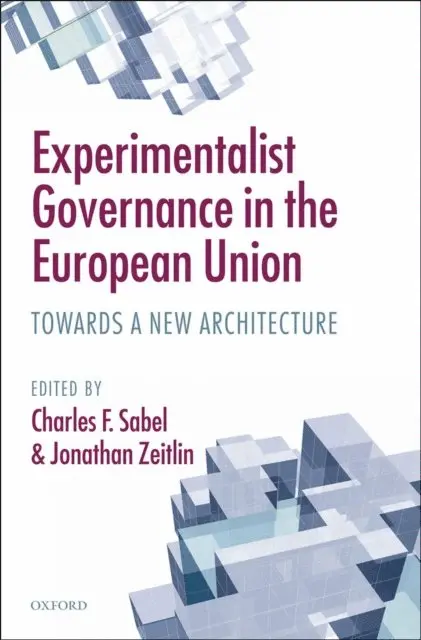
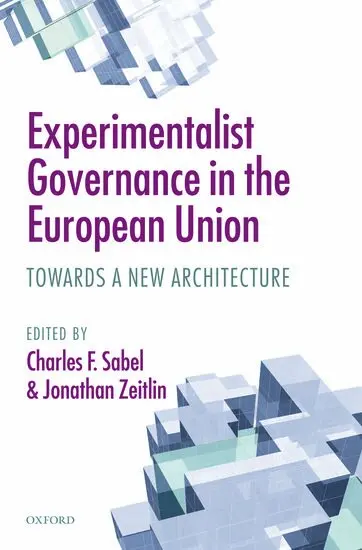
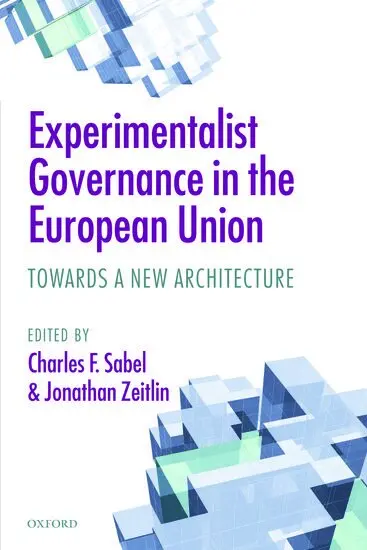
This book advances a novel interpretation of EU governance. Its central claim is that the EU's regulatory successes within-and increasingly beyond-its borders rest on the emergence of a recursive process of framework rule making and revision by European and national actors across a wide range of policy domains. In this architecture, framework goals and measures for gauging their achievement are established by joint action of the Member States and EU institutions. Lower-level units are given the freedom to advance these ends as they see fit. But in return for this autonomy, they must report regularly on their performance and participate in a peer review in which their results are compared with those of others pursuing different means to the same general ends. The framework goals, performance measures, and decision-making procedures are themselves periodically revised by the actors, including new participants whose views come to be seen as indispensable to full and fair deliberation. The editors' introduction sets out the core features of this experimentalist architecture and contrasts it to conventional interpretations of EU governance, especially the principal-agent conceptions underpinning many contemporary theories of democratic sovereignty and effective, legitimate law making. Subsequent chapters by an interdisciplinary group of European and North American scholars explore the architecture's applicability across a series of key policy domains, including data privacy, financial market regulation, energy, competition, food safety, GMOs, environmental protection, anti-discrimination, fundamental rights, justice and home affairs, and external relations. Their authoritative studies show both how recent developments often take an experimentalist turn but also admit of multiple, contrasting interpretations or leave open the possibility of reversion to more familiar types of governance. The results will be indispensable for all those concerned with the nature of the EU and its contribution to contemporary governance beyond the nation-state.
494 kr
Skickas inom 5-8 vardagar
Experimentalist Governance in the European Union advances a novel interpretation of EU governance. Its central claim is that the EU's regulatory successes within-and increasingly beyond-its borders rest on the emergence of a recursive process of framework rule making and revision by European and national actors across a wide range of policy domains. In this architecture, framework goals and measures for gauging their achievement are established by joint action of the Member States and EU institutions. Lower-level units are given the freedom to advance these ends as they see fit. But in return for this autonomy, they must report regularly on their performance and participate in a peer review in which their results are compared with those of others pursuing different means to the same general ends. The framework goals, performance measures, and decision-making procedures are themselves periodically revised by the actors, including new participants whose views come to be seen as indispensable to full and fair deliberation.The editors' introduction sets out the core features of this experimentalist architecture and contrasts it to conventional interpretations of EU governance, especially the principal-agent conceptions underpinning many contemporary theories of democratic sovereignty and effective, legitimate law making. Subsequent chapters by an interdisciplinary group of European and North American scholars explore the architecture's applicability across a series of key policy domains, including data privacy, financial market regulation, energy, competition, food safety, GMOs, environmental protection, anti-discrimination, fundamental rights, justice and home affairs, and external relations. Their authoritative studies show both how recent developments often take an experimentalist turn but also admit of multiple, contrasting interpretations or leave open the possibility of reversion to more familiar types of governance. The results will be indispensable for all those concerned with the nature of the EU and its contribution to contemporary governance beyond the nation-state.
428 kr
Skickas inom 7-10 vardagar
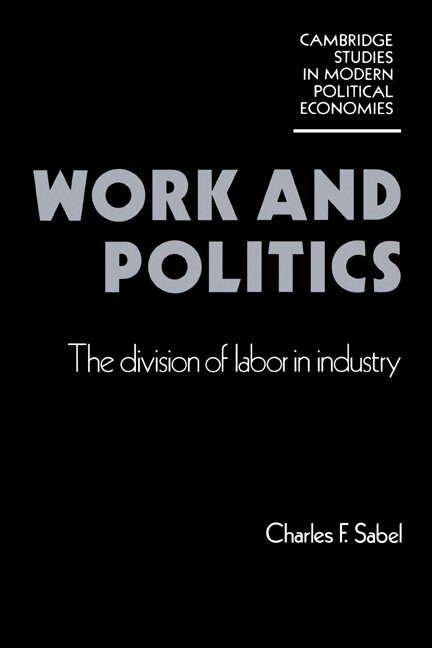
Work and Politics develops a historical and comparative sociology of workplace relations in industrial capitalist societies. Professor Sabel argues that the system of mass production using specialized machines and mostly unskilled workers was the result of the distribution of power and wealth in eighteenth- and nineteenth-century Great Britain and the United States, not of an inexorable logic of technological advance. Once in place, this system created the need for workers with systematically different ideas about the acquisition of skill and the desirability of long-term employment. Professor Sabel shows how capitalists have played on naturally existing division in the workforce in order to match workers with diverse ambitions to jobs in different parts of the labor market. But he also demonstrates the limits, different from work group to work group, of these forms of collaboration.
World of Possibilities
Flexibility and Mass Production in Western Industrialization
Inbunden, Engelska, 1997
1 729 kr
Skickas inom 7-10 vardagar
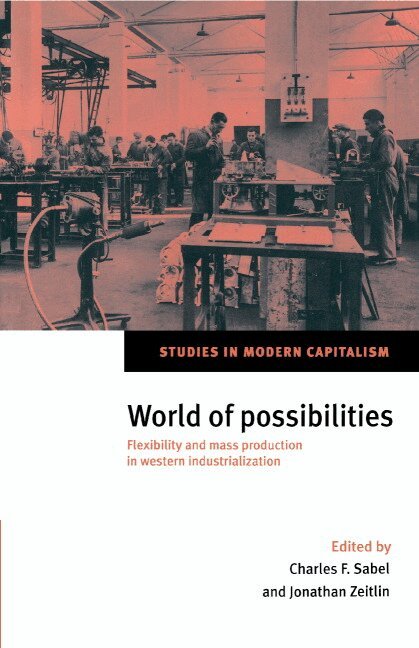
This book retells the history of Western industrialization, revealing possibilities unexplored in the nineteenth century, variants of which have come to transform present day economies. It shows that economic actors have historically been more aware of the great strategic choices they faced than standard theory credits them with being, and this surprising acuity allows them to imagine and put into practice solutions which current theories of industrial organization have scarcely anticipated. The book is therefore at one and the same time a contribution to a substantive revision of the history of mechanized production and a propaedeutic in a form of explanation that approximates the knowledge of the actor to the knowledge of the theorist. The volume groups essays presented by a multinational team of historians and social scientists drawing on intensive primary research on a wide range of firms, regions, sectors and national economies in Western Europe and the United States from the eighteenth century to the 1990s.
World of Possibilities
Flexibility and Mass Production in Western Industrialization
Häftad, Engelska, 2002
645 kr
Skickas inom 7-10 vardagar
This book retells the history of Western industrialization, revealing possibilities unexplored in the nineteenth century, variants of which have come to transform present day economies. It shows that economic actors have historically been more aware of the great strategic choices they faced than standard theory credits them with being, and this surprising acuity allows them to imagine and put into practice solutions which current theories of industrial organization have scarcely anticipated. The book is therefore at one and the same time a contribution to a substantive revision of the history of mechanized production and a propaedeutic in a form of explanation that approximates the knowledge of the actor to the knowledge of the theorist. The volume groups essays presented by a multinational team of historians and social scientists drawing on intensive primary research on a wide range of firms, regions, sectors and national economies in Western Europe and the United States from the eighteenth century to the 1990s.
164 kr
Skickas inom 7-10 vardagar
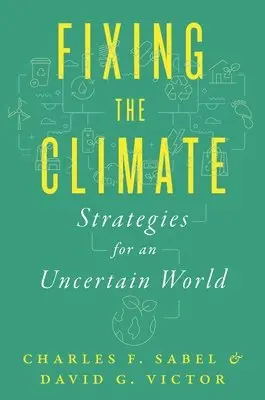
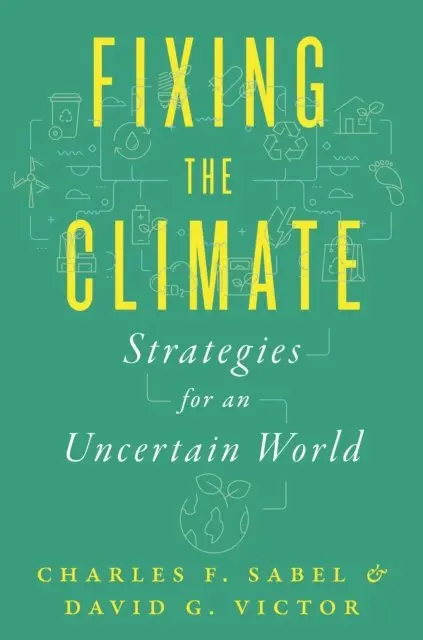
Solving the global climate crisis through local partnerships and experimentationGlobal climate diplomacy—from the Kyoto Protocol to the Paris Agreement—is not working. Despite decades of sustained negotiations by world leaders, the climate crisis continues to worsen. The solution is within our grasp—but we will not achieve it through top-down global treaties or grand bargains among nations.Charles Sabel and David Victor explain why the profound transformations needed for deep cuts in emissions must arise locally, with government and business working together to experiment with new technologies, quickly learn the best solutions, and spread that information globally. Sabel and Victor show how some of the most iconic successes in environmental policy were products of this experimentalist approach to problem solving, such as the Montreal Protocol on the ozone layer, the rise of electric vehicles, and Europe’s success in controlling water pollution. They argue that the Paris Agreement is at best an umbrella under which local experimentation can push the technological frontier and help societies around the world learn how to deploy the technologies and policies needed to tackle this daunting global problem.A visionary book that fundamentally reorients our thinking about the climate crisis, Fixing the Climate is a road map to institutional design that can finally lead to self-sustaining reductions in emissions that years of global diplomacy have failed to deliver.
219 kr
Skickas inom 7-10 vardagar
Solving the global climate crisis through local partnerships and experimentationGlobal climate diplomacy—from the Kyoto Protocol to the Paris Agreement—is not working. Despite decades of sustained negotiations by world leaders, the climate crisis continues to worsen. The solution is within our grasp—but we will not achieve it through top-down global treaties or grand bargains among nations.Charles Sabel and David Victor explain why the profound transformations needed for deep cuts in emissions must arise locally, with government and business working together to experiment with new technologies, quickly learn the best solutions, and spread that information globally. Sabel and Victor show how some of the most iconic successes in environmental policy were products of this experimentalist approach to problem solving, such as the Montreal Protocol on the ozone layer, the rise of electric vehicles, and Europe’s success in controlling water pollution. They argue that the Paris Agreement is at best an umbrella under which local experimentation can push the technological frontier and help societies around the world learn how to deploy the technologies and policies needed to tackle this daunting global problem.A visionary book that fundamentally reorients our thinking about the climate crisis, Fixing the Climate is a road map to institutional design that can finally lead to self-sustaining reductions in emissions that years of global diplomacy have failed to deliver.