Charles Ford - Böcker
Visar alla böcker från författaren Charles Ford. Handla med fri frakt och snabb leverans.
15 produkter
15 produkter
266 kr
Skickas inom 5-8 vardagar
355 kr
Skickas inom 5-8 vardagar
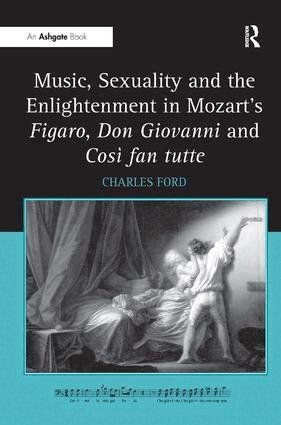
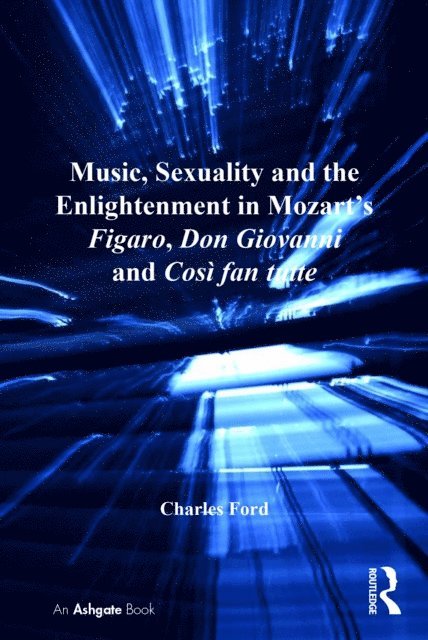
Music, Sexuality and the Enlightenment in Mozart's Figaro, Don Giovanni and Così fan tutte
Inbunden, Engelska, 2012
2 176 kr
Skickas inom 10-15 vardagar
Music, Sexuality and the Enlightenment explains how Mozart's music for Le nozze di Figaro, Don Giovanni and Così fan tutte 'sounds' the intentions of Da Ponte's characters and their relationships with one another. Mozart, by way of the infinitely generative and beautiful logic of the sonata principle, did not merely interpret Da Ponte's characterizations but lent them temporal, musical forms. Charles Ford's analytic interpretation of these musical forms concerns processes and structures in detail and at medium- to long-term levels. He addresses the music of a wide range of arias and ensembles, and develops original ways to interpret the two largely overlooked operatic genres of secco recitative and finales. Moreover, Ford presents a new method by which to relate musical details directly to philosophical concepts, and thereby, the music of the operas to the inwardly contradictory thinking of the European Enlightenment. This involves close readings of late eighteenth-century understandings of 'man' and nature, self and other, morality and transgression, and gendered identities and sexuality, with particular reference to contemporary writers, especially Goethe, Kant, Laclos, Rousseau, Sade, Schiller, Sterne and Wollstonecraft. The concluding discussion of the implied futures of the operas argues that their divided sexualities, which are those of the Enlightenment as a whole, have come to form our own unquestioned assumptions about gender differences and sexuality. This, along with the elegant and eloquent precision of Mozart's music, is why Figaro, Giovanni and Così still maintain their vital immediacy for audiences today.
673 kr
Skickas inom 5-8 vardagar
When the Lumiere brothers introduced the motion picture in 1895, Poland was a divided and suffering nation--yet Polish artists found their way into the new world of cinema. Boleslaw Matuszewski created his first documentary films in 1896, and Poland's first movie house was established in 1908. Despite war and repression, Polish cinema continued to grow and to reach for artistic heights. The twentieth century closed with new challenges, but a new generation of Polish filmmakers stood ready to meet them.Here is a complete history of the Polish cinema through the end of the twentieth century, with special attention to political and economic contexts.
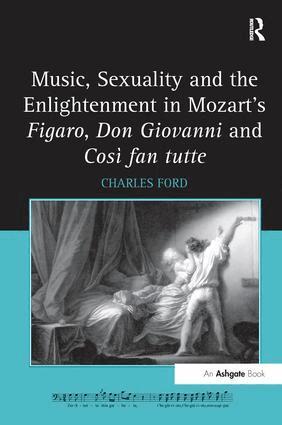
Music, Sexuality and the Enlightenment in Mozart's Figaro, Don Giovanni and Così fan tutte
Häftad, Engelska, 2016
749 kr
Skickas inom 10-15 vardagar
Music, Sexuality and the Enlightenment explains how Mozart's music for Le nozze di Figaro, Don Giovanni and Così fan tutte 'sounds' the intentions of Da Ponte's characters and their relationships with one another. Mozart, by way of the infinitely generative and beautiful logic of the sonata principle, did not merely interpret Da Ponte's characterizations but lent them temporal, musical forms. Charles Ford's analytic interpretation of these musical forms concerns processes and structures in detail and at medium- to long-term levels. He addresses the music of a wide range of arias and ensembles, and develops original ways to interpret the two largely overlooked operatic genres of secco recitative and finales. Moreover, Ford presents a new method by which to relate musical details directly to philosophical concepts, and thereby, the music of the operas to the inwardly contradictory thinking of the European Enlightenment. This involves close readings of late eighteenth-century understandings of 'man' and nature, self and other, morality and transgression, and gendered identities and sexuality, with particular reference to contemporary writers, especially Goethe, Kant, Laclos, Rousseau, Sade, Schiller, Sterne and Wollstonecraft. The concluding discussion of the implied futures of the operas argues that their divided sexualities, which are those of the Enlightenment as a whole, have come to form our own unquestioned assumptions about gender differences and sexuality. This, along with the elegant and eloquent precision of Mozart's music, is why Figaro, Giovanni and Così still maintain their vital immediacy for audiences today.
189 kr
Skickas inom 3-6 vardagar
222 kr
Skickas inom 5-8 vardagar
266 kr
Skickas inom 5-8 vardagar
616 kr
Skickas inom 3-6 vardagar
290 kr
Skickas inom 5-8 vardagar
290 kr
Skickas inom 5-8 vardagar
290 kr
Skickas inom 5-8 vardagar
313 kr
Skickas inom 5-8 vardagar
290 kr
Skickas inom 5-8 vardagar
131 kr
Skickas
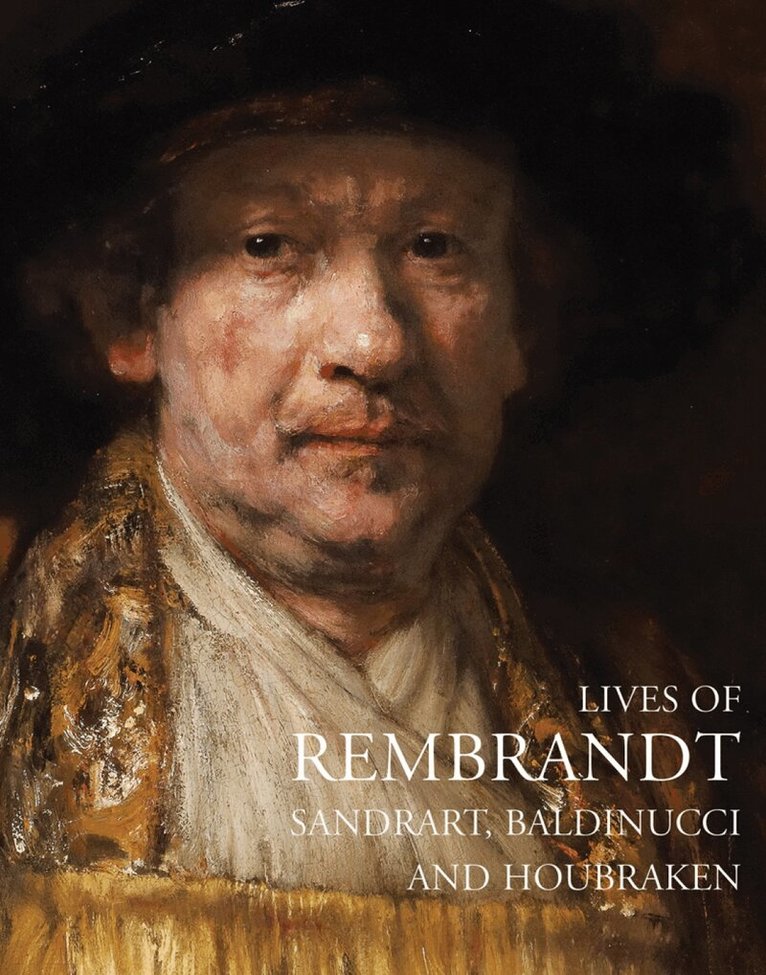
Rembrandt Harmensz. van Rijn (c.1606-1669) was the most talked-about painter of the 17th-century - and quite possibly of the following centuries too. His prodigious talent, extraordinary emotional truth, and reckless disregard of artistic convention astonished, delighted and often dismayed his contemporaries; and the full gamut of these reactions is revealed in the three early biographies published here for the first time in their entirety in English. Sandrart, a German painter and writer on painting, actually knew Rembrandt in Amsterdam; Baldinucci, also an artist contemporary with Rembrandt, was one of the greatest early connoisseurs of prints; and Arnold Houbraken, who studied under some of Rembrandt's pupils, wrote the earliest major biographical account of the artists of Holland. These extraordinary documents give a vivid picture of Rembrandt's shattering impact on the art world of his time - not only as a painter, but as a supremely successful manipulator of the market, a dangerous example to the young, and an unavoidable challenge to any sense of decorum and rule-giving. Rooted firmly in the 17-century realities of Rembrandt's life, they bring into sharper focus the qualities of originality and psychological acuity that remain Rembrandt's trademark to this day. The introduction by Charles Ford situates these biographies in the context of 17th-century appreciation of art, and the trajectory of Rembrandt's career. The translations have been specially prepared for this edition by Charles Ford, aided by Ulrike Kern and Francesca Migliorini, and in part following the work of Tancred Borenius.