Charles Rappleye – författare
Visar alla böcker från författaren . Handla med fri frakt och snabb leverans.
6 produkter
6 produkter
Häftad, Engelska, 2007
329 kr
Skickas inom 3-6 vardagar
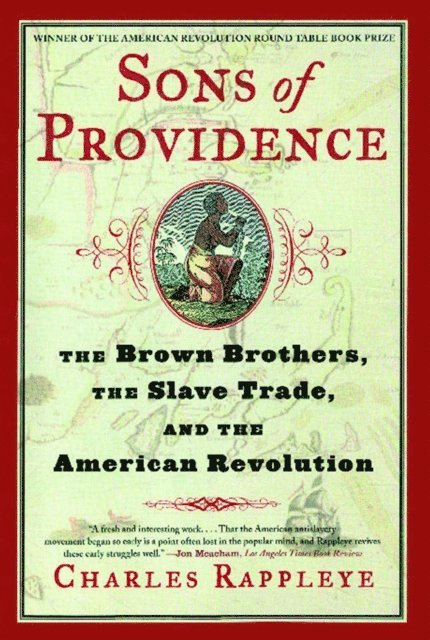
Here in trade paperback, Rappleye's fresh and panoramic view of the American founding fathers' era, told through the lives of John and Moses Brown of Providence, one a slaver, the other an abolitionist. In 1774, as the New World simmered with tensions that would lead to the violent birth of a new nation, two Rhode Island brothers were heading toward their own war over the issue that haunts America to this day: slavery. Set against a racial backdrop teeming with radicals and reactionaries, visionaries, spies, and salty sea captains, Sons of Providence is the biography of John and Moses Brown, two classic American archetypes bound by blood yet divided by the specter of more than half a millions Africans enslaved throughout the colonies. John is a profit-driven robber-baron running slave galleys from his wharf on the Providence waterfront; his younger brother Moses is an idealist, a conscientious Quaker hungry for social reform who--with blood on his own hands--strikes out against the hypocrisy of slavery in a land of liberty.Their story spans a century, from John's birth in 1736, through the revolution, to Moses' death in 1836. The brothers were partners in business and politics and in founding the university that bears their name, but for the Browns as for the nation, the institution of slavery was the one question that admitted no middle ground. The brothers' dispute takes the reader from the sweltering decks of the slave ships to the taverns and town halls of the colonies and shows just how close America came to ending slavery eighty years before the conflagration of civil war. This dual biography is drawn from voluminous family papers and other primary sources and is a dramatic story of an epic struggle for primacy between two very different brothers. The story of their collaboration and their conflict has a startlingly contemporary feel. And like any good yarn, the story of the Browns tells us something about ourselves.About the AuthorCharles Rappleye grew up in New England, attended school in Wisconsin, and lives in Los Angeles. He spent most of the past decade as news editor at LA Weekly, where he won awards as a columnist and for investigative journalism. This is his second book.
E-bok
Engelska, 2006208 kr
Läs direkt efter köp
In 1774, as the new world simmered with tensions that would lead to the violent birth of a new nation, two Rhode Island brothers were heading toward their own war over the issue that haunts America to this day: slavery. Set against a colonial backdrop teeming with radicals and reactionaries, visionaries, spies, and salty sea captains, Sons of Providence is the biography of John and Moses Brown, two classic American archetypes bound by blood yet divided by the specter of more than half a million Africans enslaved throughout the colonies. John is a profit-driven robber baron running slave galleys from his wharf on the Providence waterfront; his younger brother Moses is an idealist, a conscientious Quaker hungry for social reform who -- with blood on his own hands -- strikes out against the hypocrisy of slavery in a land of liberty. Their story spans a century, from John''s birth in 1736, through the Revolution, to Moses'' death in 1836. The brothers were partners in business and politics and in founding the university that bears their name. They joined in the struggle against England, attending secret sessions of the Sons of Liberty and, in John''s case, leading a midnight pirate raid against a British revenue cutter. But for the Browns as for the nation, the institution of slavery was the one question that admitted no middle ground. Moses became an early abolitionist while John defended the slave trade and broke the laws written to stop it. The brothers'' dispute takes the reader from the sweltering decks of the slave ships to the taverns and town halls of the colonies and shows just how close America came to ending slavery eighty years before the conflagration of civil war. This dual biography is drawn from voluminous family papers and other primary sources and is a dramatic story of an epic struggle for primacy between two very different brothers. It also provides a fresh and panoramic view of the founding era. Samuel Adams and Nathanael Greene take turns here, as do Stephen Hopkins, Rhode Island''s great revolutionary leader and theorist, and his brother Esek, first commodore of the United States Navy. We meet the Philadelphia abolitionists Anthony Benezet and James Pemberton, and Providence printer John Carter, one of the pioneers of the American press. For all the chronicles of America''s primary patriarch, none documents, as this book does, George Washington''s sole public performance in opposition to the slave trade. Charles Rappleye brings the skills of an investigative journalist to mine this time and place for vivid detail and introduce the reader to fascinating new characters from the members of our founding generation. Raised in a culture of freedom and self-expression, Moses and John devoted their lives to the pursuit of their own visions of individual liberty. In so doing, each emerges as an American archetype -- Moses as the social reformer, driven by conscience and dedicated to an enlightened sense of justice; John as the unfettered capitalist, defiant of any effort to constrain his will. The story of their collaboration and their conflict has a startlingly contemporary feel. And like any good yarn, the story of the Browns tells us something about ourselves.
Häftad, Engelska, 2011
288 kr
Skickas inom 3-6 vardagar
E-bok
Engelska, 2010221 kr
Läs direkt efter köp
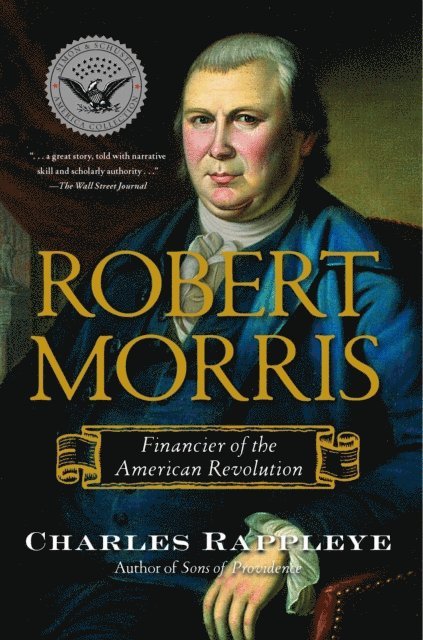
In this biography, the acclaimed author of Sons of Providence, winner of the 2007 George Wash- ington Book Prize, recovers an immensely important part of the founding drama of the country in the story of Robert Morris, the man who financed Washington’s armies and the American Revolution. Morris started life in the colonies as an apprentice in a counting house. By the time of the Revolution he was a rich man, a commercial and social leader in Philadelphia. He organized a clandestine trading network to arm the American rebels, joined the Second Continental Congress, and financed George Washington’s two crucial victories—Valley Forge and the culminating battle at Yorktown that defeated Cornwallis and ended the war. The leader of a faction that included Benjamin Franklin, Alexander Hamilton, James Madison, and Washington, Morris ran the executive branches of the revolutionary government for years. He was a man of prodigious energy and adroit management skills and was the most successful businessman on the continent. He laid the foundation for public credit and free capital markets that helped make America a global economic leader. But he incurred powerful enemies who considered his wealth and influence a danger to public "virtue" in a democratic society. After public service, he gambled on land speculations that went bad, and landed in debtors prison, where George Washington, his loyal friend, visited him. This once wealthy and powerful man ended his life in modest circumstances, but Rappleye restores his place as a patriot and an immensely important founding father.
Häftad, Engelska, 2017
421 kr
Skickas inom 3-6 vardagar
E-bok
Engelska, 2016208 kr
Läs direkt efter köp
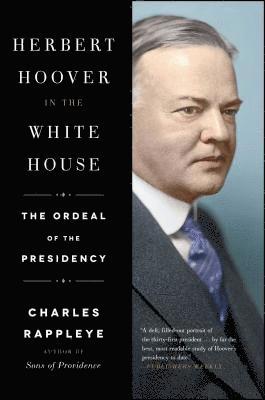
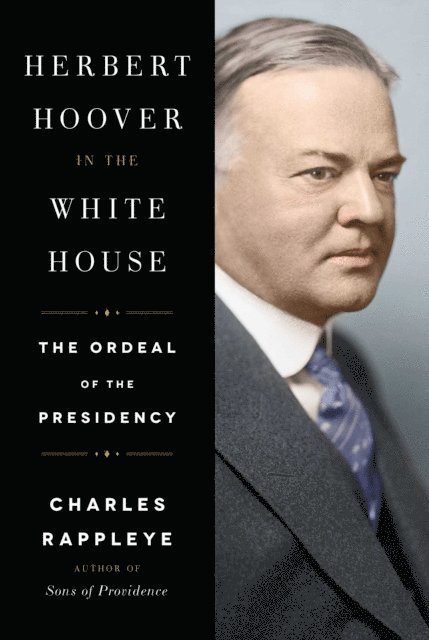
“A deft, filled-out portrait of the thirty-first president…by far the best, most readable study of Herbert Hoover’s presidency to date” (Publishers Weekly) that draws on rare and intimate sources to show he was temperamentally unsuited for the job.Herbert Clark Hoover was the thirty-first President of the United States. He served one term, from 1929 to 1933. Often considered placid, passive, unsympathetic, and even paralyzed by national events, Hoover faced an uphill battle in the face of the Great Depression. Many historians dismiss him as merely ineffective. But in Herbert Hoover in the White House, Charles Rappleye investigates memoirs and diaries and thousands of documents kept by members of his cabinet and close advisors to reveal a very different figure than the one often portrayed. This “gripping” (Christian Science Monitor) biography shows that the real Hoover lacked the tools of leadership. In public Hoover was shy and retiring, but in private Rappleye shows him to be a man of passion and sometimes of fury, a man who intrigued against his enemies while fulminating over plots against him. Rappleye describes him as more sophisticated and more active in economic policy than is often acknowledged. We see Hoover watching a sunny (and he thought ignorant) FDR on the horizon, experimenting with steps to relieve the Depression. The Hoover we see here—bright, well meaning, energetic—lacked the single critical element to succeed as president. He had a first-class mind and a second-class temperament. Herbert Hoover in the White House is an object lesson in the most, perhaps only, talent needed to be a successful president—the temperament of leadership. This “fair-handed, surprisingly sympathetic new appraisal of the much-vilified president who was faced with the nation''s plunge into the Great Depression…fills an important niche in presidential scholarship” (Kirkus Reviews).