Charles W. Kegley – författare
Visar alla böcker från författaren Charles W. Kegley. Handla med fri frakt och snabb leverans.
6 produkter
Great Powers and World Order
Patterns and Prospects
Av Charles W. Kegley, Gregory A. Raymond
Häftad, 2020
1031 kr
Lägg i varukorg
Great Powers and World Order encourages critical thinking about the nature of world order by presenting the historical information and theoretical concepts needed to make projections about the global future. Charles W. Kegley and Gregory Raymond ask students to compare retrospective cases and …
Great Powers and World Order
Patterns and Prospects
Av Gregory A. Raymond, Charles W. Kegley
E-bok, 2020
685 kr
Lägg i varukorg
Great Powers and World Order encourages critical thinking about the nature of world order by presenting the historical information and theoretical concepts needed to make projections about the global future. Charles W. Kegley and Gregory Raymond ask students to compare retrospective cases and …
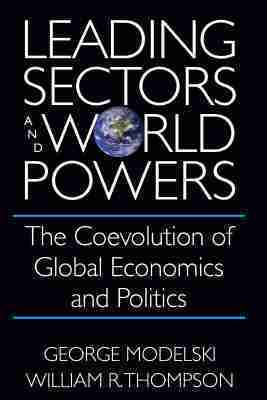
Leading Sectors and World Powers
Coevolution of Global Economics and Politics
Av George Modelski, William R. Thompson m. fl.
Inbunden, 1996
574 kr
Lägg i varukorg
Democracy and International Conflict
An Evolution of the Democratic Peace Proposition
Av James Lee Ray, Donald James Puchala m. fl.
Häftad, 1998
245 kr
Lägg i varukorg
In this text, the author defends the idea that democratic states do not initiate war against one another and therefore offer an avenue to universal peace. He examines the criticisms levelled against the democratic peace proposition and offers a systematic analysis of each.
Introduction to Logic
Av Charles W. Kegley, Jacquelyn Ann Kegley
Häftad, 1984
471 kr
Tillfälligt slut
This book, originally published in 1978 by Charles E. Merrill Publishing Co., provides a comprehensive treatment of topics generally covered in introductory courses in logic. It covers language uses, definition, informal fallacies, scientific method, categorical logic, sentential logic, and …