Chaur Wu – författare
Visar alla böcker från författaren Chaur Wu. Handla med fri frakt och snabb leverans.
4 produkter
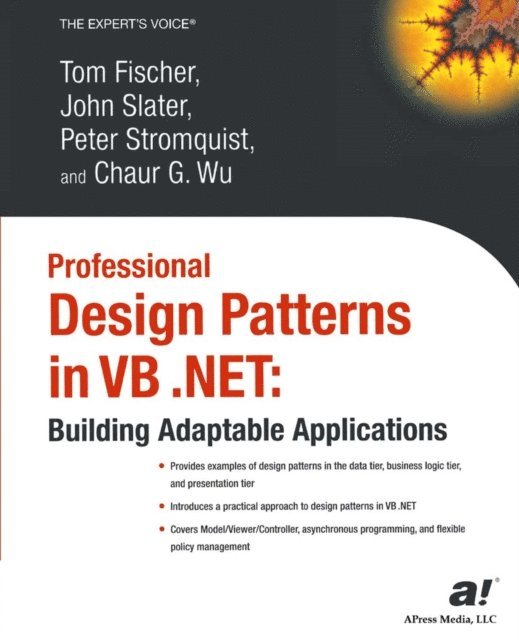
Professional Design Patterns in VB .NET
Building Adaptable Applications
Av John Slater, Peter Stromquist m. fl.
E-bok, 2008
650 kr
Lägg i varukorg
Professional Design Patterns in VB .NET: Building Adaptable Applications is not merely design pattern theory. No, no. Instead, the authors show design patterns applied to real-world architectural scenarios, so you can witness the patterns in action, reaping benefits along the way! The core of this …
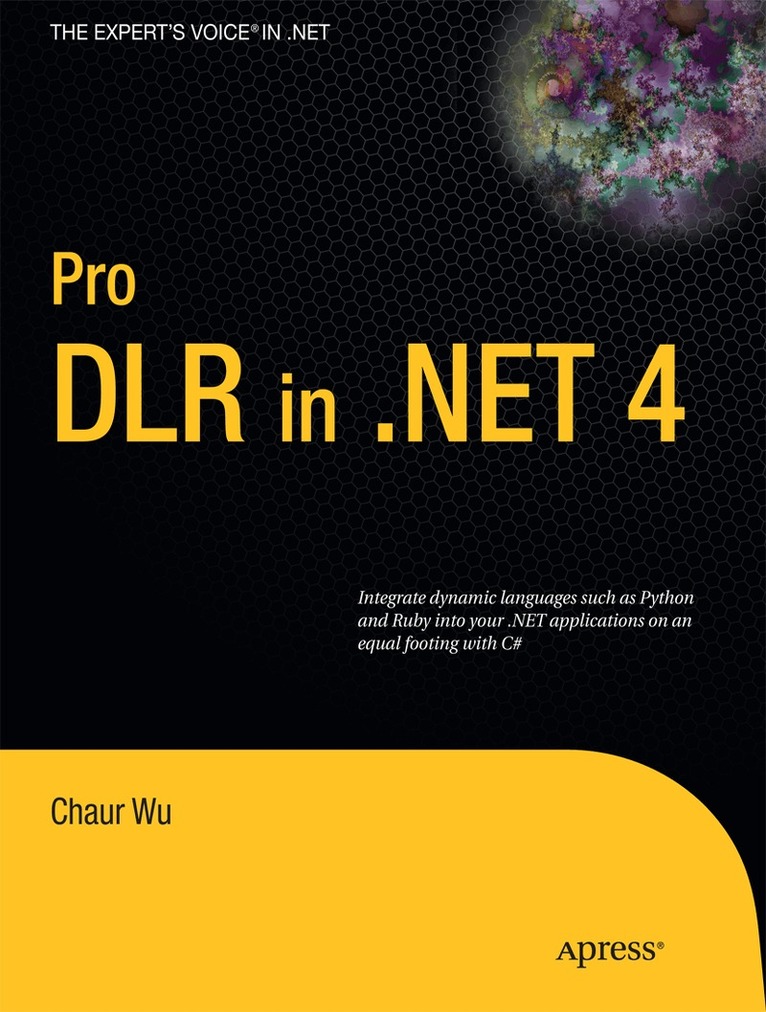
Pro DLR in .NET 4
Av Chaur Wu
Häftad, 2010
624 kr
Lägg i varukorg
Microsoft’s Dynamic Language Runtime (DLR) is a platform for running dynamic languages such as Ruby and Python on an equal footing with compiled languages such as C#. Furthermore, the runtime is the foundation for many useful software design and architecture techniques you can apply as you develop …
Pro DLR in .NET 4
Av Chaur Wu
E-bok, 2011
821 kr
Lägg i varukorg
Microsoft’s Dynamic Language Runtime (DLR) is a platform for running dynamic languages such as Ruby and Python on an equal footing with compiled languages such as C#. Furthermore, the runtime is the foundation for many useful software design and architecture techniques you can apply as you develop …
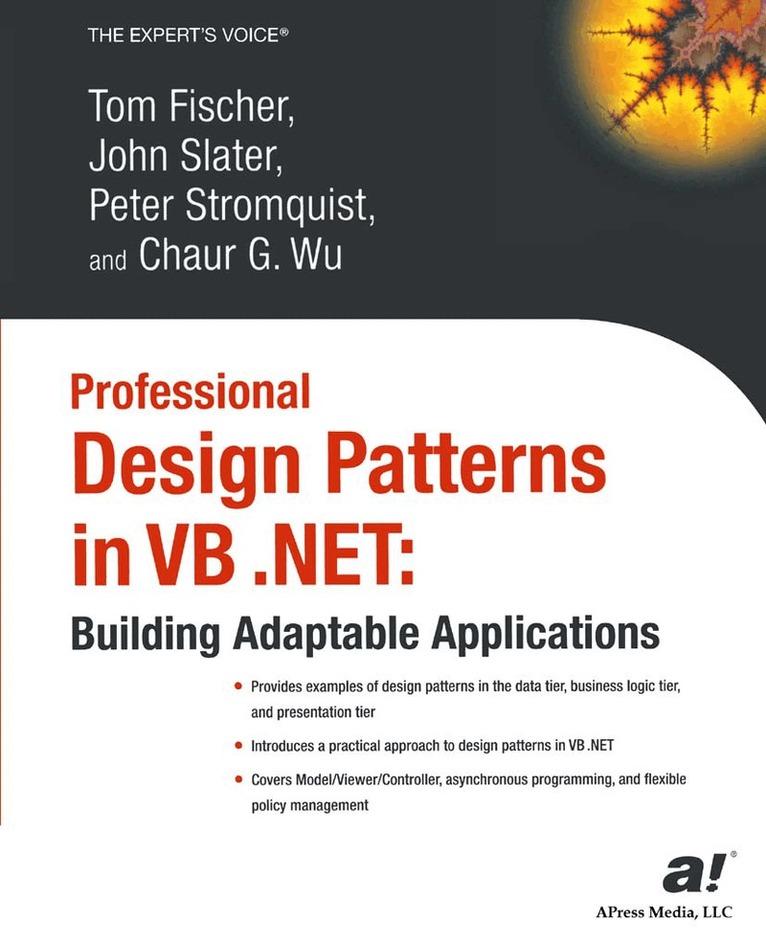
Professional Design Patterns in VB .NET
Building Adaptable Applications
Av Chaur Wu, Tom Fischer m. fl.
Häftad, 2003
495 kr
Lägg i varukorg
Professional Design Patterns in VB .NET: Building Adaptable Applications is not merely design pattern theory. No, no. Instead, the authors show design patterns applied to real-world architectural scenarios, so you can witness the patterns in action, reaping benefits along the way! The core of this …