Chee-Wooi Ten - Böcker
Visar alla böcker från författaren Chee-Wooi Ten. Handla med fri frakt och snabb leverans.
6 produkter
6 produkter
1 953 kr
Skickas inom 10-15 vardagar
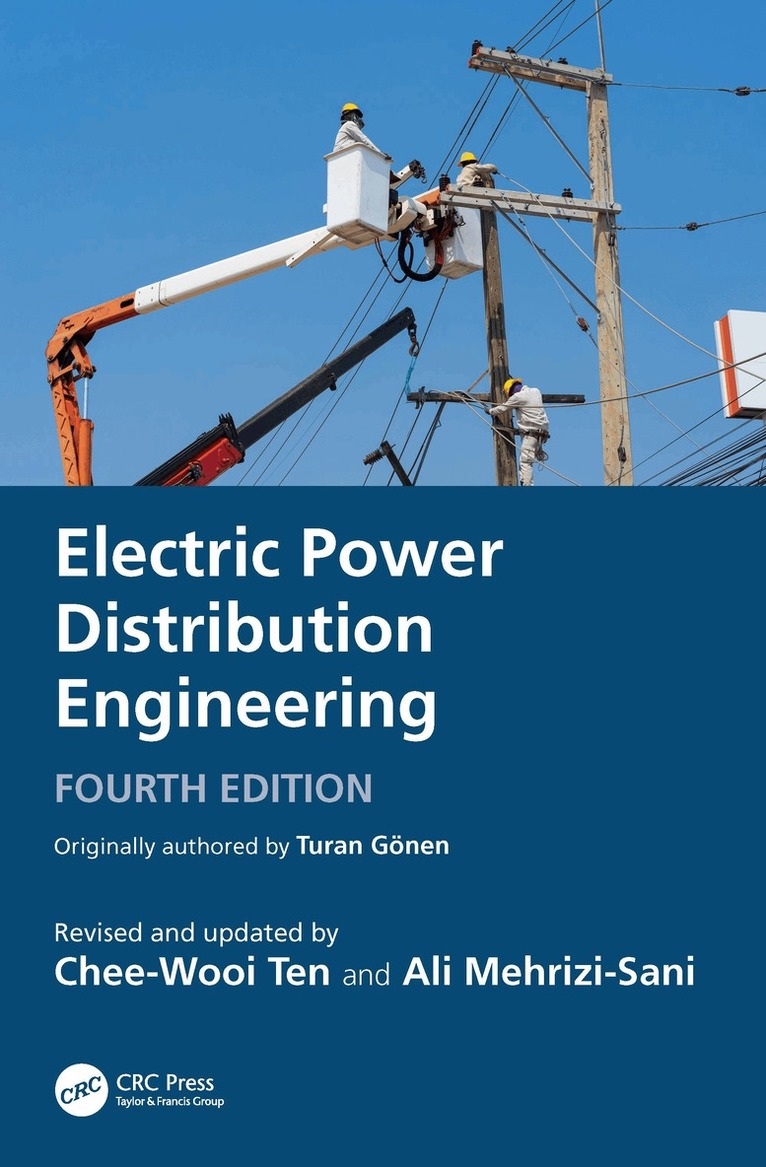
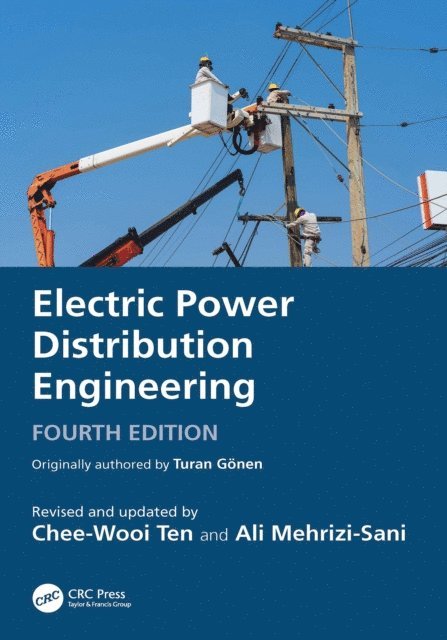
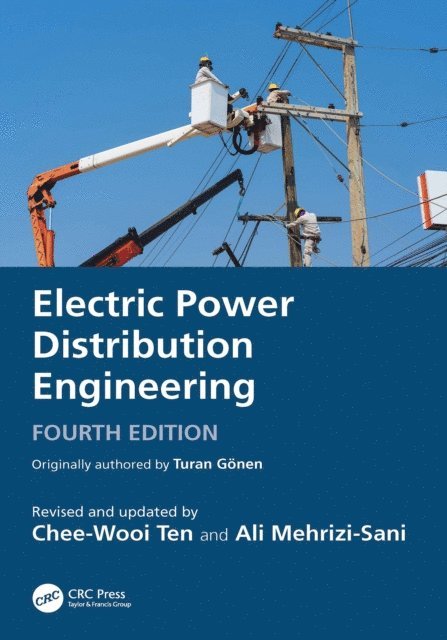
Are you fascinated by the complex web of electrical power that illuminates our modern world? Do you want to understand the intricate systems responsible for delivering electricity to our homes, businesses, and industries? Look no further than Electric Power Distribution System Engineering, Fourth Edition by renowned author Turan Gönen, revised and updated by Chee-Wooi Ten and Ali Mehrizi-Sani. This captivating book takes you on a journey through the fascinating realm of electric power distribution, offering a comprehensive yet accessible exploration of the engineering principles, technologies, and practices that underpin this vital aspect of our daily lives. Whether you're a curious non-specialist, an avid reader with a thirst for knowledge, or a librarian or bookseller seeking an invaluable resource, Gönen's masterwork will both enlighten and captivate you.An early leader in the academic market, this book provides an overview of classical planning for electric power distribution systems, which has been used for many years in designing and analyzing electric power distribution systems. The authors have taken a bold initiative to update the content, incorporating relevant aspects reflecting the advancements of today's evolving smart grid. Within its pages, readers will discover detailed discussions on the principles of power distribution, including the fundamentals of power generation, transmission, and distribution. The authors provide detailed explanations of the various components and equipment used in distribution systems, such as transformers, circuit breakers, switches, and protective devices. As part of the book, planning for the distribution network involves sizing and considering candidate geographical locations/regions in relation to the capacity of existing infrastructure, allowing for new additions to be built. For example, this includes locations either extending another feeder from distribution substations or building new distribution substations, depending on what makes more sense. Many assumptions have been made for non-existing distribution feeders to calculate ballpark figures for determining voltage profile and power losses if they were to be constructed. Readers will gain insights into how these considerations translate into net positive, net negative, or net-zero loads. All of these aspects can be gradually integrated with renewable energy sources, innovative grid technologies, and distribution automation over time.The authors involved in this book have made significant contributions to the state-of-the-art development by incorporating recent updates from the literature, thereby addressing the latest advancements. One remarkable feature of Turan Gönen's Electric Power Distribution System Engineering is its strong focus on practical applications and real-world scenarios. In addition to providing theoretical knowledge, the book also offers numerous examples that effectively bridge the gap between theory and practice. This unique approach enables readers to comprehend the intricacies of distribution system engineering and apply their newfound knowledge to solve complex problems in the field. By seamlessly blending theoretical foundations with practical insights, Gonen's book emerges as an indispensable resource for aspiring engineers, professionals, and researchers, as it offers a comprehensive understanding of electric power distribution systems and their practical implications.
777 kr
Kommande
Are you fascinated by the complex web of electrical power that illuminates our modern world? Do you want to understand the intricate systems responsible for delivering electricity to our homes, businesses, and industries? Look no further than Electric Power Distribution System Engineering, Fourth Edition by renowned author Turan Gönen, revised and updated by Chee-Wooi Ten and Ali Mehrizi-Sani. This captivating book takes you on a journey through the fascinating realm of electric power distribution, offering a comprehensive yet accessible exploration of the engineering principles, technologies, and practices that underpin this vital aspect of our daily lives. Whether you're a curious non-specialist, an avid reader with a thirst for knowledge, or a librarian or bookseller seeking an invaluable resource, Gönen's masterwork will both enlighten and captivate you.An early leader in the academic market, this book provides an overview of classical planning for electric power distribution systems, which has been used for many years in designing and analyzing electric power distribution systems. The authors have taken a bold initiative to update the content, incorporating relevant aspects reflecting the advancements of today's evolving smart grid. Within its pages, readers will discover detailed discussions on the principles of power distribution, including the fundamentals of power generation, transmission, and distribution. The authors provide detailed explanations of the various components and equipment used in distribution systems, such as transformers, circuit breakers, switches, and protective devices. As part of the book, planning for the distribution network involves sizing and considering candidate geographical locations/regions in relation to the capacity of existing infrastructure, allowing for new additions to be built. For example, this includes locations either extending another feeder from distribution substations or building new distribution substations, depending on what makes more sense. Many assumptions have been made for non-existing distribution feeders to calculate ballpark figures for determining voltage profile and power losses if they were to be constructed. Readers will gain insights into how these considerations translate into net positive, net negative, or net-zero loads. All of these aspects can be gradually integrated with renewable energy sources, innovative grid technologies, and distribution automation over time.The authors involved in this book have made significant contributions to the state-of-the-art development by incorporating recent updates from the literature, thereby addressing the latest advancements. One remarkable feature of Turan Gönen's Electric Power Distribution System Engineering is its strong focus on practical applications and real-world scenarios. In addition to providing theoretical knowledge, the book also offers numerous examples that effectively bridge the gap between theory and practice. This unique approach enables readers to comprehend the intricacies of distribution system engineering and apply their newfound knowledge to solve complex problems in the field. By seamlessly blending theoretical foundations with practical insights, Gonen's book emerges as an indispensable resource for aspiring engineers, professionals, and researchers, as it offers a comprehensive understanding of electric power distribution systems and their practical implications.
1 953 kr
Skickas inom 10-15 vardagar
Step into the captivating world of power systems with Modern Power System Analysis, Third Edition by acclaimed author Turan Gönen, and revised and updated by Chee-Wooi Ten and Yunhe Hou. This illuminating book offers a comprehensive examination of power system analysis. Whether you're a curious non-specialist, a voracious reader seeking knowledge, or a librarian or bookseller searching for a valuable resource, Gönen's masterpiece is sure to captivate you. This book is an excellent source to begin your journey.An in-depth understanding of the concepts and techniques involved in power system analysis is provided in this comprehensive guide. The book covers a wide range of topics, including fundamental modeling of power transmission networks, power flow analysis, and fault analysis. Gönen elucidates the mathematical foundations and computational methods necessary for analyzing and optimizing power systems. Readers will gain insights into advanced topics such as power system harmonics, transient stability, and power system protection. Furthermore, the book explores emerging areas like renewable energy integration, smart grid technologies, and the application of artificial intelligence in power system analysis. Gönen's meticulous approach combines theoretical explanations, practical examples, and real-world case studies to provide readers with a comprehensive and up-to-date resource. With its focus on modern techniques and advancements, this book is an invaluable reference for engineers, researchers, and students venturing into the exciting realm of power system analysis. The text also includes a new chapter on power system restoration, which reviews methodologies corresponding to different utilities and practices.A cutting-edge compilation of the latest developments in power system analysis is presented in this book. While the challenges and issues have evolved, the text emphasizes the enduring importance of classical methods as the foundation for understanding. It integrates today's advancements and addresses contemporary issues, and provides readers with a comprehensive grasp of the most current techniques and approaches for analyzing, optimizing, and managing complex power systems. With practical examples, real-world case studies, and a strong focus on emerging areas like renewable energy integration and smart grids, this invaluable resource empowers engineers, researchers, and students to navigate the dynamic landscape of modern power system analysis confidently.
725 kr
Skickas inom 10-15 vardagar
Step into the captivating world of power systems with Modern Power System Analysis, Third Edition by acclaimed author Turan Gönen, and revised and updated by Chee-Wooi Ten and Yunhe Hou. This illuminating book offers a comprehensive examination of power system analysis. Whether you're a curious non-specialist, a voracious reader seeking knowledge, or a librarian or bookseller searching for a valuable resource, Gönen's masterpiece is sure to captivate you. This book is an excellent source to begin your journey.An in-depth understanding of the concepts and techniques involved in power system analysis is provided in this comprehensive guide. The book covers a wide range of topics, including fundamental modeling of power transmission networks, power flow analysis, and fault analysis. Gönen elucidates the mathematical foundations and computational methods necessary for analyzing and optimizing power systems. Readers will gain insights into advanced topics such as power system harmonics, transient stability, and power system protection. Furthermore, the book explores emerging areas like renewable energy integration, smart grid technologies, and the application of artificial intelligence in power system analysis. Gönen's meticulous approach combines theoretical explanations, practical examples, and real-world case studies to provide readers with a comprehensive and up-to-date resource. With its focus on modern techniques and advancements, this book is an invaluable reference for engineers, researchers, and students venturing into the exciting realm of power system analysis. The text also includes a new chapter on power system restoration, which reviews methodologies corresponding to different utilities and practices.A cutting-edge compilation of the latest developments in power system analysis is presented in this book. While the challenges and issues have evolved, the text emphasizes the enduring importance of classical methods as the foundation for understanding. It integrates today's advancements and addresses contemporary issues, and provides readers with a comprehensive grasp of the most current techniques and approaches for analyzing, optimizing, and managing complex power systems. With practical examples, real-world case studies, and a strong focus on emerging areas like renewable energy integration and smart grids, this invaluable resource empowers engineers, researchers, and students to navigate the dynamic landscape of modern power system analysis confidently.
766 kr
Skickas inom 10-15 vardagar
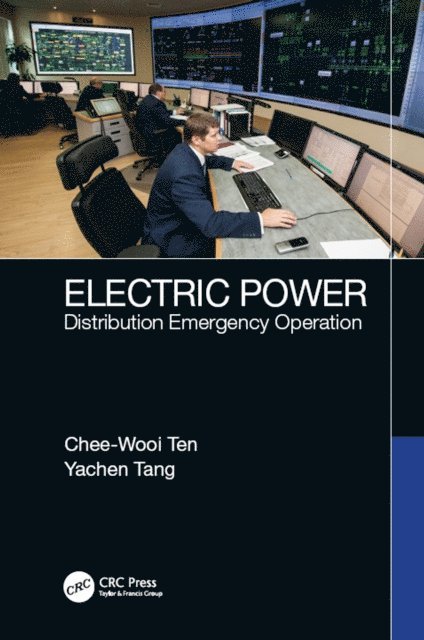
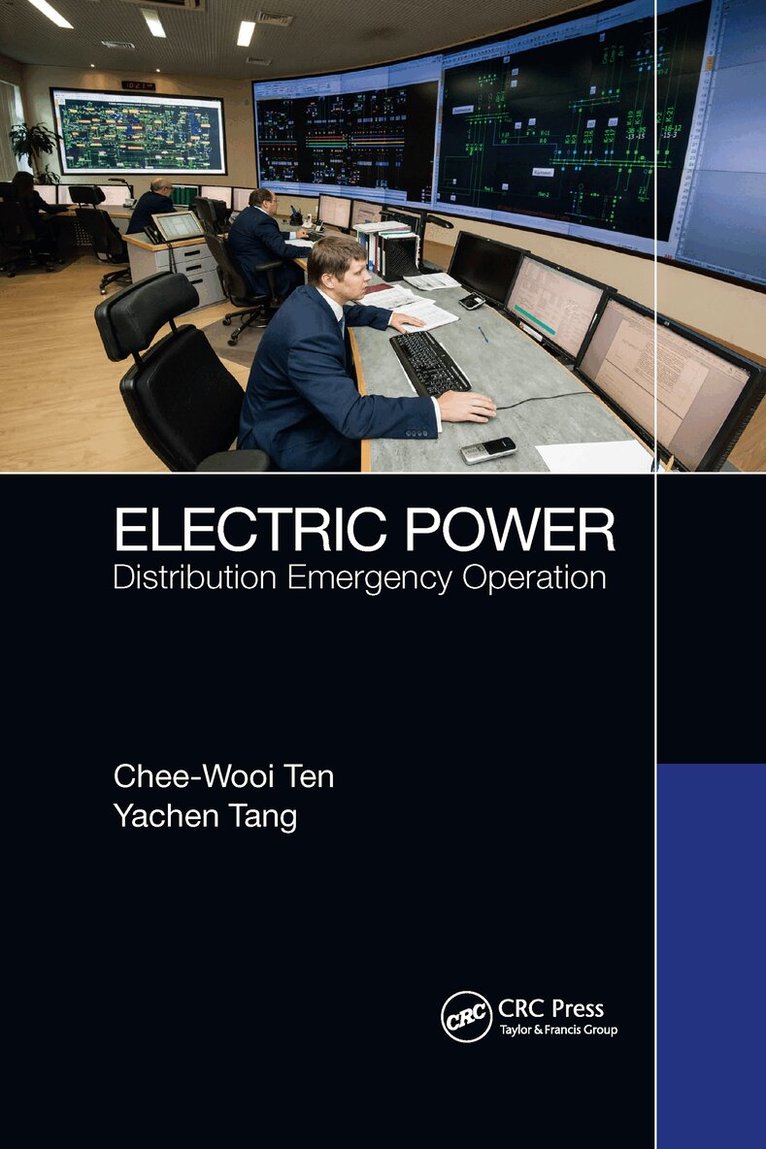
Reducing power outage time to each customer is essential to the overall distribution reliability. This book provides the fundamentals of emergency operation using a graph-theoretic approach and exploration of the subsystem(s) that address the operational aspects of electrical fault occurrence to determine possible feeder reconfiguration. The localization of a faulted segment within a feeder involves remote-controlled normally open (NO) and normally closed (NC) switches through supervisory control and data acquisition (SCADA) between radially energized, interconnected feeders. Topics cover: (1) Data extraction from geographic information systems (GIS), (2) Graph modeling of distribution feeders, (3) Programming for backward/forward sweeping unbalanced power flow, (4) Short circuit analysis and fault localization, (5) Fault isolation, temporary and full service restoration, (6) Outage management and crew coordination, (7) Trouble call tickets and escalation to search for fault, and (8) Emerging subject of distribution management systems (DMS). FEATURES•Novel and practical textbook that will help to understand distribution operation in graph theory•Show how to convert GIS coordinate datasets to graph and how to troubleshoot the geometry errors•Explain how to troubleshoot power flow divergence due to the bad metering datasets and allocation factor (AF) for each load within primary and secondary networks•Similar platform as DMS environment, but the graduate students have their hands-on experience to implement the applications in the MATLAB environment•Detailed modeling in graph theory of distribution feeders and possible reconfiguration to locate power outage
2 088 kr
Skickas inom 10-15 vardagar
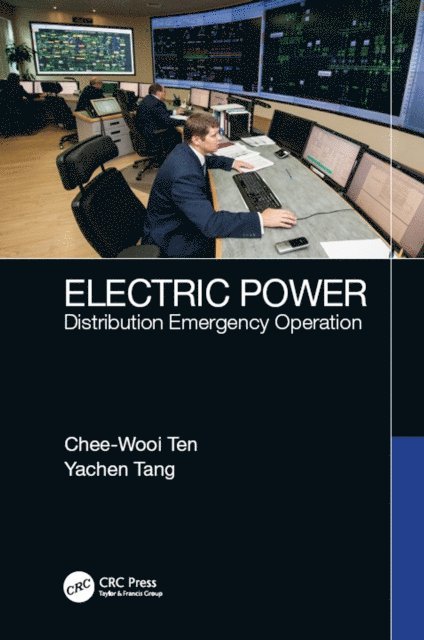
Reducing power outage time to each customer is essential to the overall distribution reliability. This book provides the fundamentals of emergency operation using a graph-theoretic approach and exploration of the subsystem(s) that address the operational aspects of electrical fault occurrence to determine possible feeder reconfiguration. The localization of a faulted segment within a feeder involves remote-controlled normally open (NO) and normally closed (NC) switches through supervisory control and data acquisition (SCADA) between radially energized, interconnected feeders. Topics cover: (1) Data extraction from geographic information systems (GIS), (2) Graph modeling of distribution feeders, (3) Programming for backward/forward sweeping unbalanced power flow, (4) Short circuit analysis and fault localization, (5) Fault isolation, temporary and full service restoration, (6) Outage management and crew coordination, (7) Trouble call tickets and escalation to search for fault, and (8) Emerging subject of distribution management systems (DMS). FEATURES•Novel and practical textbook that will help to understand distribution operation in graph theory•Show how to convert GIS coordinate datasets to graph and how to troubleshoot the geometry errors•Explain how to troubleshoot power flow divergence due to the bad metering datasets and allocation factor (AF) for each load within primary and secondary networks•Similar platform as DMS environment, but the graduate students have their hands-on experience to implement the applications in the MATLAB environment•Detailed modeling in graph theory of distribution feeders and possible reconfiguration to locate power outage