Chi-Ming Lam – författare
Visar alla böcker från författaren Chi-Ming Lam. Handla med fri frakt och snabb leverans.
11 produkter
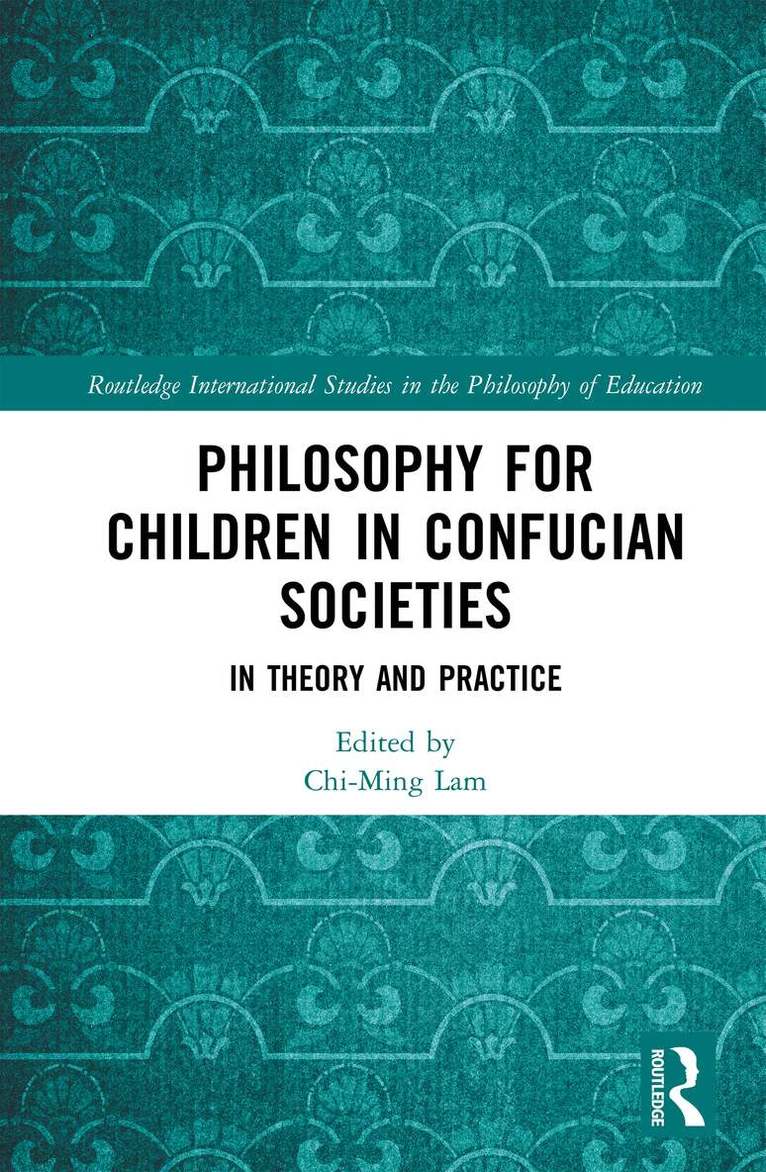
Philosophy for Children in Confucian Societies
In Theory and Practice
Av Chi-Ming Lam
Inbunden, 2019
2512 kr
Lägg i varukorg
This book contributes to the theory and practice of Philosophy for Children (P4C), with a special emphasis on theoretical and practical issues confronting researchers and practitioners working in contexts that are strongly influenced by Confucian values and norms. It includes writings by prominent …
Philosophy for Children in Confucian Societies
In Theory and Practice
Av Chi-Ming Lam
E-bok, 2019
741 kr
Lägg i varukorg
This book contributes to the theory and practice of Philosophy for Children (P4C), with a special emphasis on theoretical and practical issues confronting researchers and practitioners working in contexts that are strongly influenced by Confucian values and norms. It includes writings by prominent …
Philosophy for Children in Confucian Societies
In Theory and Practice
Av Chi-Ming Lam
E-bok, 2019
741 kr
Lägg i varukorg
This book contributes to the theory and practice of Philosophy for Children (P4C), with a special emphasis on theoretical and practical issues confronting researchers and practitioners working in contexts that are strongly influenced by Confucian values and norms. It includes writings by prominent …
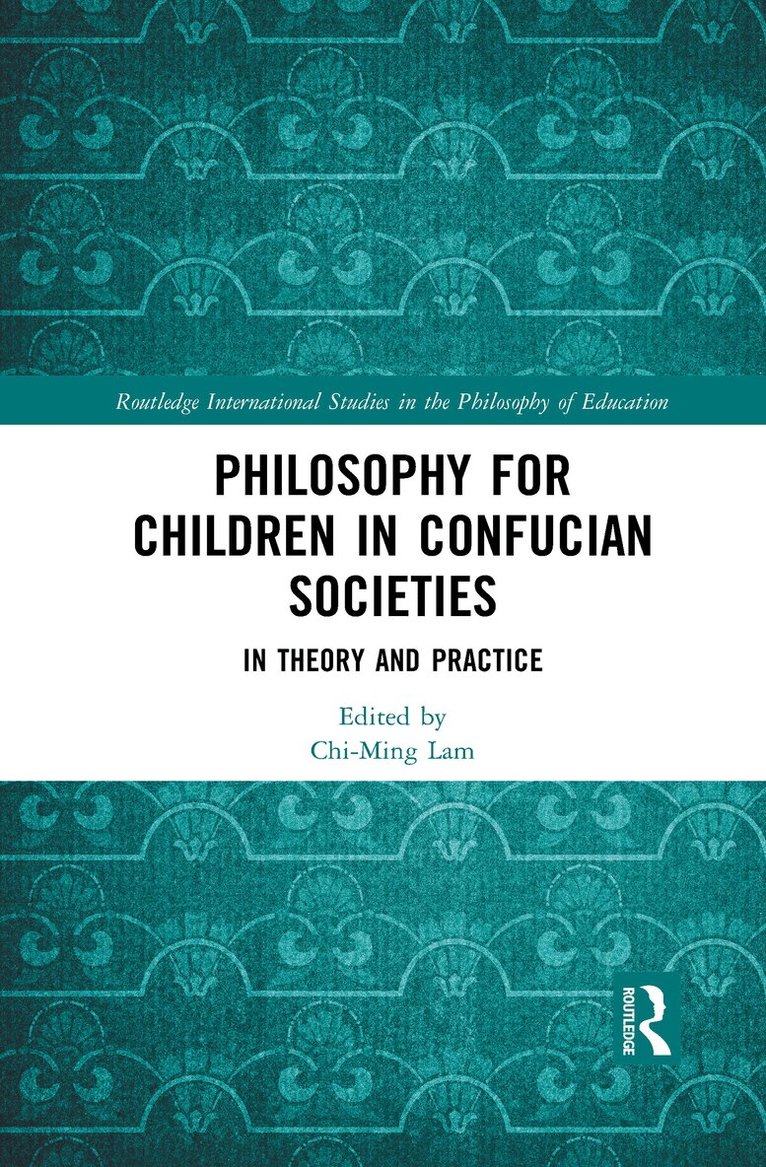
Philosophy for Children in Confucian Societies
In Theory and Practice
Av Chi-Ming Lam
Häftad, 2021
648 kr
Lägg i varukorg
This book contributes to the theory and practice of Philosophy for Children (P4C), with a special emphasis on theoretical and practical issues confronting researchers and practitioners working in contexts that are strongly influenced by Confucian values and norms. It includes writings by prominent …
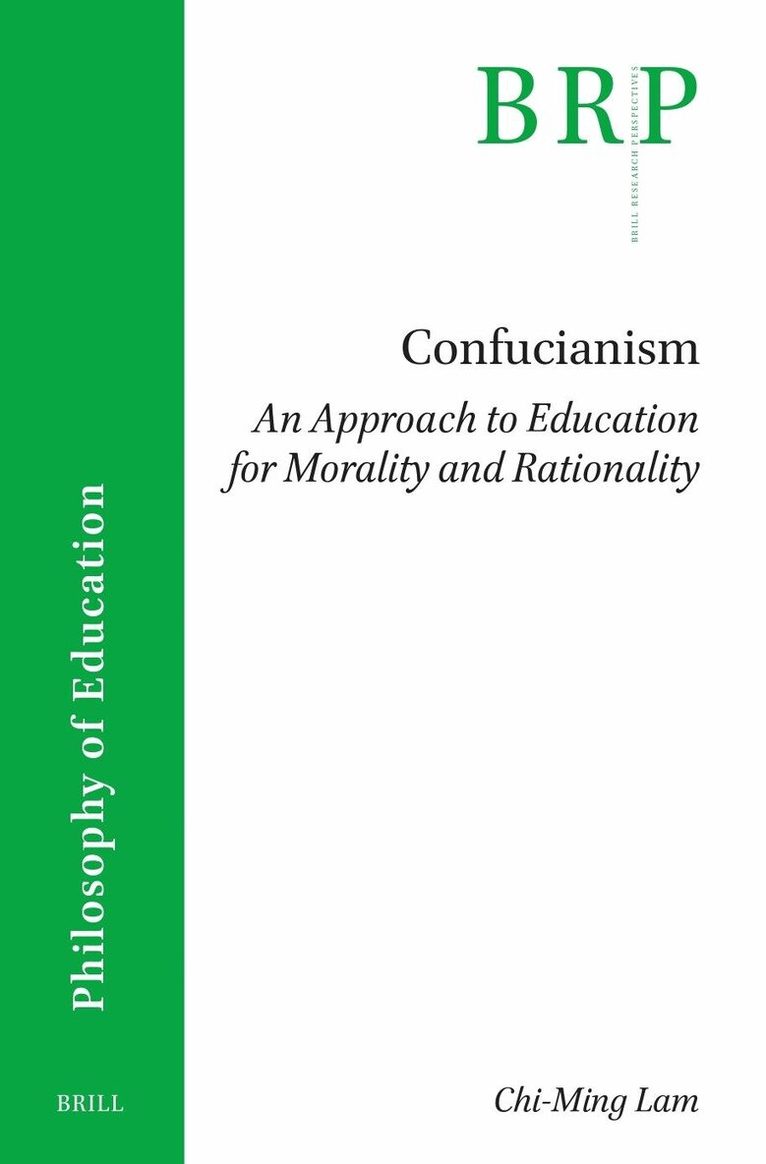
Confucianism: An Approach to Education for Morality and Rationality
Av Chi-Ming Lam
Häftad, 2025
1175 kr
Lägg i varukorg
How can ancient Confucian wisdom shape today’s education for morality and rationality? This book bridges the past and present, examining Confucian virtues such as humility and reflection alongside Karl Popper’s falsificationism to uncover pathways for fostering critical thinking and ethical …
Sociological and Philosophical Perspectives on Education in the Asia-Pacific Region
Av Chi-Ming Lam, Jae PARK
Häftad, 2018
1067 kr
Lägg i varukorg
This book demonstrates the value of approaching education from a sociological and philosophical perspective. Specifically, it addresses current and long-standing educational issues in the Asia-Pacific region, integrating sociological and philosophical insights with practical applications in four …
Sociological and Philosophical Perspectives on Education in the Asia-Pacific Region
Av Chi-Ming Lam, Jae PARK
Inbunden, 2015
1067 kr
Lägg i varukorg
This book demonstrates the value of approaching education from a sociological and philosophical perspective. Specifically, it addresses current and long-standing educational issues in the Asia-Pacific region, integrating sociological and philosophical insights with practical applications in four …
Sociological and Philosophical Perspectives on Education in the Asia-Pacific Region
Av Jae PARK, Chi-Ming Lam
E-bok, 2015
1418 kr
Lägg i varukorg
This book demonstrates the value of approaching education from a sociological and philosophical perspective. Specifically, it addresses current and long-standing educational issues in the Asia-Pacific region, integrating sociological and philosophical insights with practical applications in four …
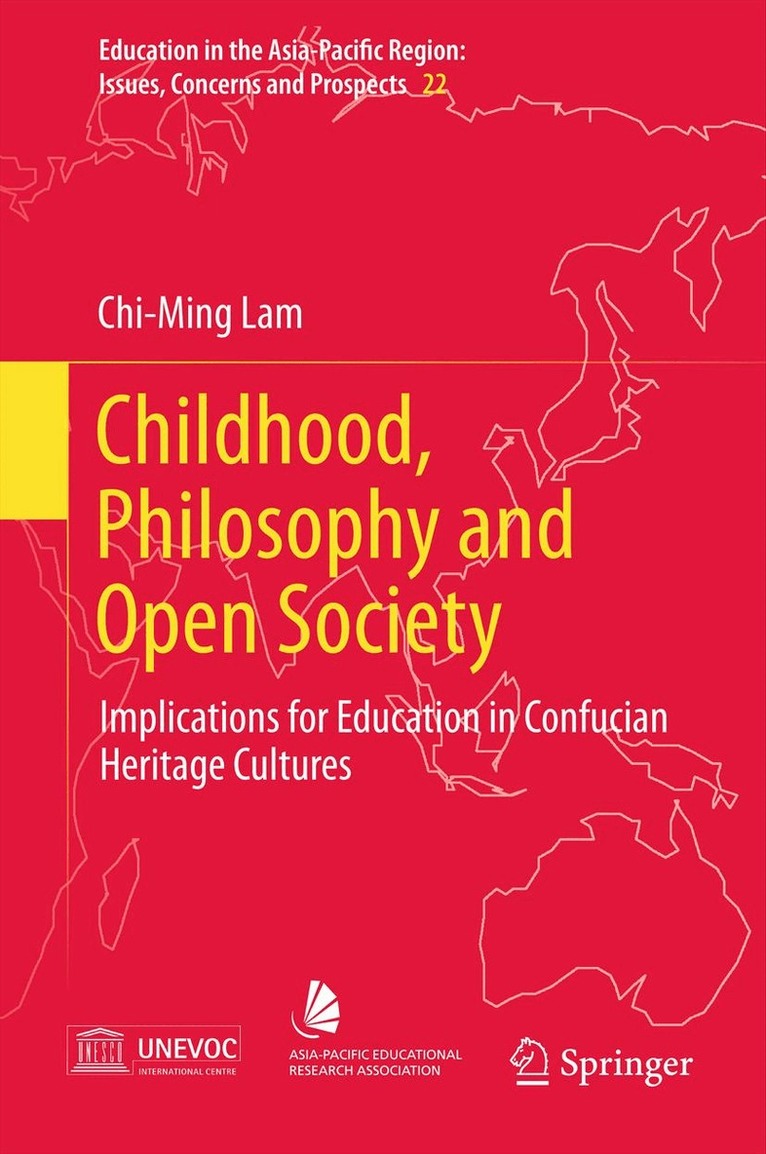
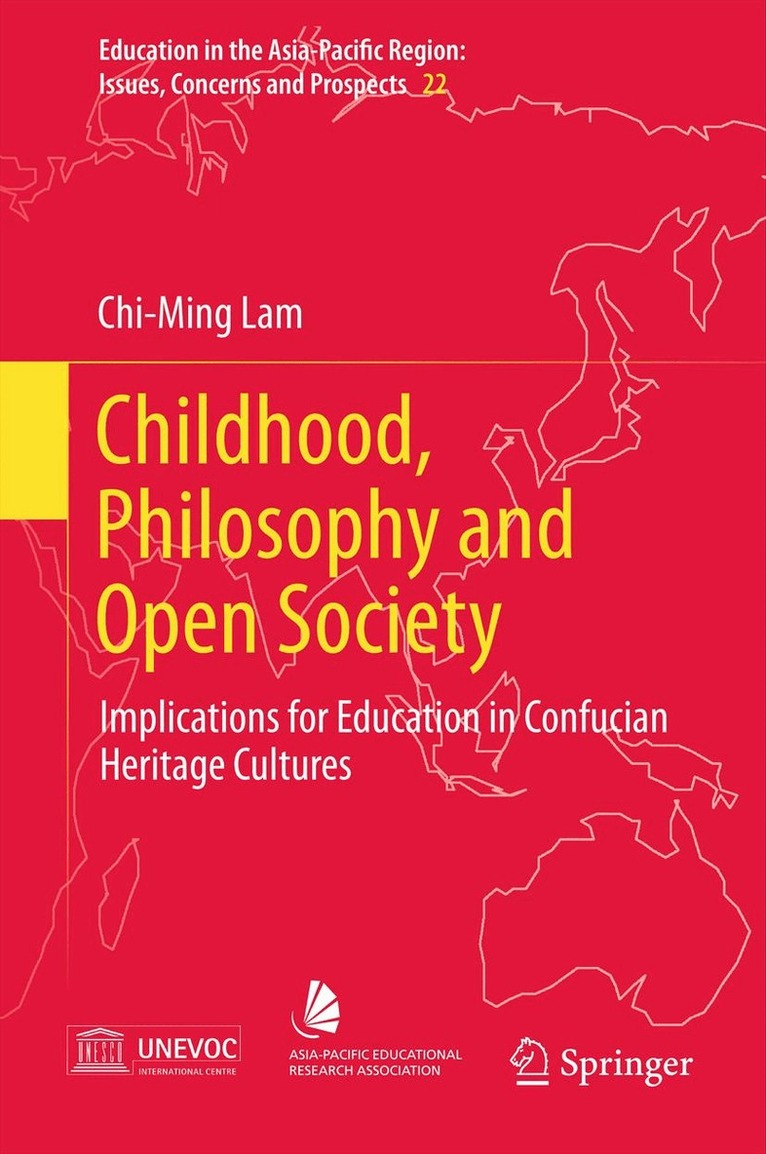
Childhood, Philosophy and Open Society
Implications for Education in Confucian Heritage Cultures
Av Chi-Ming Lam
Inbunden, 2013
1067 kr
Lägg i varukorg
The purpose of this book is to develop a theory and practice of education from Karl Popper’s non-justificationist philosophy for promoting an open society. Specifically, the book is designed to develop an educational programme for fostering critical thinking in children, particularly when they are …
Childhood, Philosophy and Open Society
Implications for Education in Confucian Heritage Cultures
Av Chi-Ming Lam
E-bok, 2013
1418 kr
Lägg i varukorg
The purpose of this book is to develop a theory and practice of education from Karl Popper’s non-justificationist philosophy for promoting an open society. Specifically, the book is designed to develop an educational programme for fostering critical thinking in children, particularly when they are …
Childhood, Philosophy and Open Society
Implications for Education in Confucian Heritage Cultures
Av Chi-Ming Lam
Häftad, 2015
1067 kr
Lägg i varukorg
The purpose of this book is to develop a theory and practice of education from Karl Popper’s non-justificationist philosophy for promoting an open society. Specifically, the book is designed to develop an educational programme for fostering critical thinking in children, particularly when they are …