Chi Yen – författare
2 176 kr
Skickas inom 10-15 vardagar
2 741 kr
Läs direkt efter köp
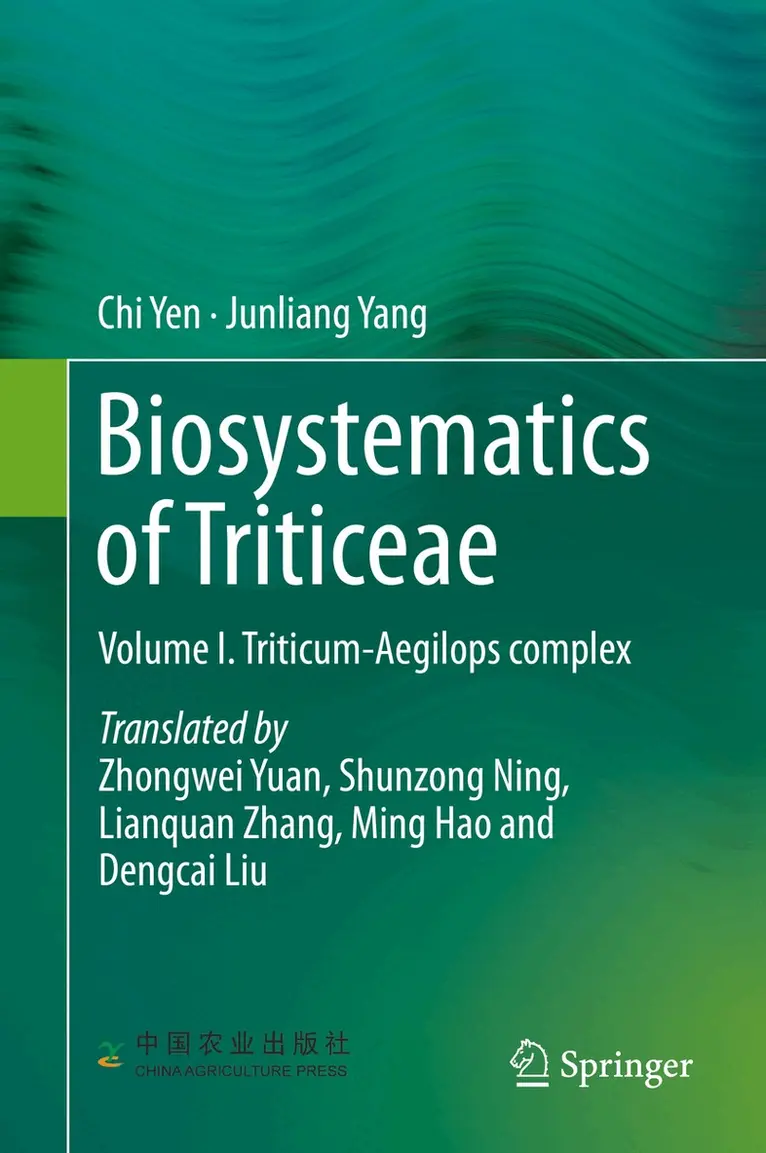
This book discusses the natural classification and biosystematics of Triticeae, and presents the most significant findings of comprehensive studies on the Triticeae, an important tribe in the grass family (Poaceae) that includes major crops such as wheat, barley, rye and triticale, as well as various forage crops found in different genera. The five-volume Chinese version of Biosystematics of Triticeae was published in 1998, 2004, 2006, 2011, and 2013, and included the 30 genera, 2 subgenera, 464 species, 9 subspecies, and 186 varieties of Triticeae identified to date. This completely revised English edition features up-to-date international research and the latest advances in the field.
The book is divided into five volumes, covering a wide range of disciplines from traditional taxonomy and cytogenetics, to molecular phylogeny. Volume I, Triticum-Aegilops complex focuses on the taxonomy and generic relationships of Triticum and Aegilops, discussing the origin of common wheat as a crop. Volume II highlights the taxonomy and systematics of Secale, Tritiosecale, Pseudosecale, Eremopyrum, Henrardia, Taeniantherum, Heteranthelium, Crithopsis, and Hordeum.Volume III describes perennial genera and species including Kengyilia, Douglasdeweya, Agropyron, Australopyrum, and Anthosachne. Volume IV addresses perennial genera and species including Stenostachys, Psathyrostachys, Leymus, Pseudoroegneria, and Roegeneria. Volume V presents perennial genera and species such as Campeiostachys, Elymus,Pascopyrum, Lophopyrum, Trichopyrum, Hordelymus, Festucopsis, Peridictyon, and Psammopyrum.2 176 kr
Skickas inom 10-15 vardagar
1 742 kr
Skickas inom 10-15 vardagar
2 138 kr
Läs direkt efter köp
This book discusses the natural classification and biosystematics of Triticeae and presents the most significant findings of comprehensive studies on the Triticeae, an important tribe in the grass family (Poaceae) that includes major crops such as wheat, barley, rye, and triticale, as well as various forage crops found in different genera. The five-volume Chinese version of Biosystematics of Triticeae was published in 1998, 2004, 2006, 2011, and 2013, and included the 30 genera, two subgenera, 464 species, nine subspecies, and 186 varieties of Triticeae identified to date. This is their English edition.
The book is divided into five volumes, covering a wide range of disciplines from traditional taxonomy and cytogenetics to molecular phylogeny. Volume I, Triticum-Aegilops complex focuses on the taxonomy and generic relationships of Triticum and Aegilops, discussing the origin of common wheat as a crop. Volume II, Genera: Secale, Tritiosecale, Pseudosecale, Eremopyrum, Henrardia, Taeniantherum, Heteranthelium, Crithopsis, and Hordeum highlights a number of genera that are closely related based on their morphological classification and that contain only one unique genome.
Volume III describes perennial genera and species including Kengyilia, Douglasdeweya, Agropyron, Australopyrum, and Anthosachne. Volume IV addresses perennial genera and species including Stenostachys, Psathyrostachys, Leymus, Pseudoroegneria, and Roegeneria. Volume V presents perennial genera and species such as Campeiostachys, Elymus, Pascopyrum, Lophopyrum, Trichopyrum, Hordelymus, Festucopsis, Peridictyon, and Psammopyrum.
1 742 kr
Skickas inom 10-15 vardagar
1 091 kr
Skickas inom 10-15 vardagar
1 379 kr
Läs direkt efter köp
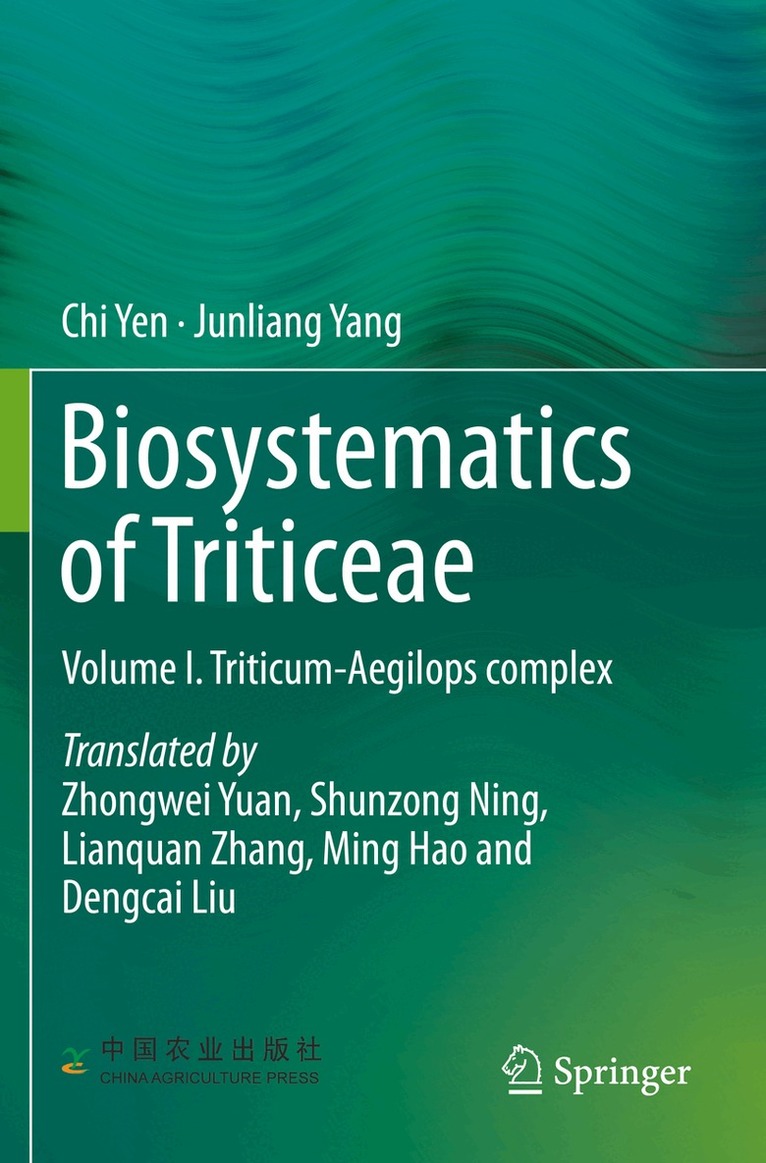
This book review and rearrange the research data of Triticeae published over hundreds of years, applying a modern scientific approach. Triticeae is an important tribe in the grass family (Peaceae). It includes the major cereal crops, such as wheat, barley and rye, in addition to many valuable forage crops found in different genera, such as Elymus, Agropyron, Pasthyrostachys, and Leymus. The knowledge of appropriate Triticeae taxonomy and biosystematics will serve as genetic breeding of wheat, barley, rye and forage grass. The authors attempted to remain the truth and remove the false for deriving a more natural biosystematics of Triticeae.
This book covers taxonomy, cytogenetics, and molecular phylogeny. It summarizes the biosystematics of Triticeae with comprehensive and updated data. This book is divided into five volumes (Volumes 1- 5), and includes 30 genera, 2 subgenera, 464 species, 9 subspecies, and 186 varieties in Triticeae. Volume 5 introduces nine perennial genera in Triticeae: Campeiostachys, Elymus, Pascopyrum, Lophopyrum, Trichopyrum, Hordelymus, Festucopsis, Peridictyon, and Psammopyrum.
Elymus (StH), Campeiostachys (StYH), Lophopyrum (E), and Trichopyrum (ESt)are polymorphic genus. They show similar morphological characters, and it is difficult to distinguish them based merely on morphological variation. Pascopyrum (StHNsXm), Hordelymus (XoXr), Festucopsis (L), Peridictyon (Xp), and Psammopyrum (EL) are small genera, mostly monotypic genera.
This book can serve as highly qualified, valuable, and convenient handbooks for audiences who are interested in Triticeae. This book also includes many illustrations, in addition to the description, to help the audience understand, morphological features of the concerned taxa, which makes the explanation more precise andobvious. It is a useful tool to understand the relationship among species in Triticeae.
1 091 kr
Skickas inom 10-15 vardagar
1 525 kr
Skickas inom 10-15 vardagar
1 825 kr
Läs direkt efter köp
This book written by Professor Chi Yen of Sichuan Agricultural University in Chinese was published by China Agriculture Press (ISBN 978-7-109-22791-0). It describes a new theory on the constitution of organs of the higher plants based on experimental evidence, the multiple secondary axis theory. This theory states that all organs of the higher plants are the constitution of multiple secondary axes. The primary axis extends bipolarly to initiate the above- and the below-ground parts of a plant, from which secondary axes develop. Leaves are split, expanded upper ends of terminal secondary axes. Stems are merged lower ends of the secondary axes, Vascular bundles are secondary structures developed within the axes which interconnect with each other to form the central core of the stem and branches and the veins in the leaves. Roots form through the downward extension of the lower ends of the axes toward or within the underground and branch roots are unsplit secondary axes. All new axes emerge from the inner side of existing, split axes. All floral organs including fruits, seeds and vegetative reproduction organs such as bulbils and plantlets, are deformed axes. This theory is significant in guiding the scientific design of the ideotype of crops to optimize the development of the economically important organ(s) of a crop.
1 525 kr
Skickas inom 10-15 vardagar
1 851 kr
Skickas inom 10-15 vardagar
2 283 kr
Läs direkt efter köp
1 851 kr
Skickas inom 10-15 vardagar
2 283 kr
Läs direkt efter köp
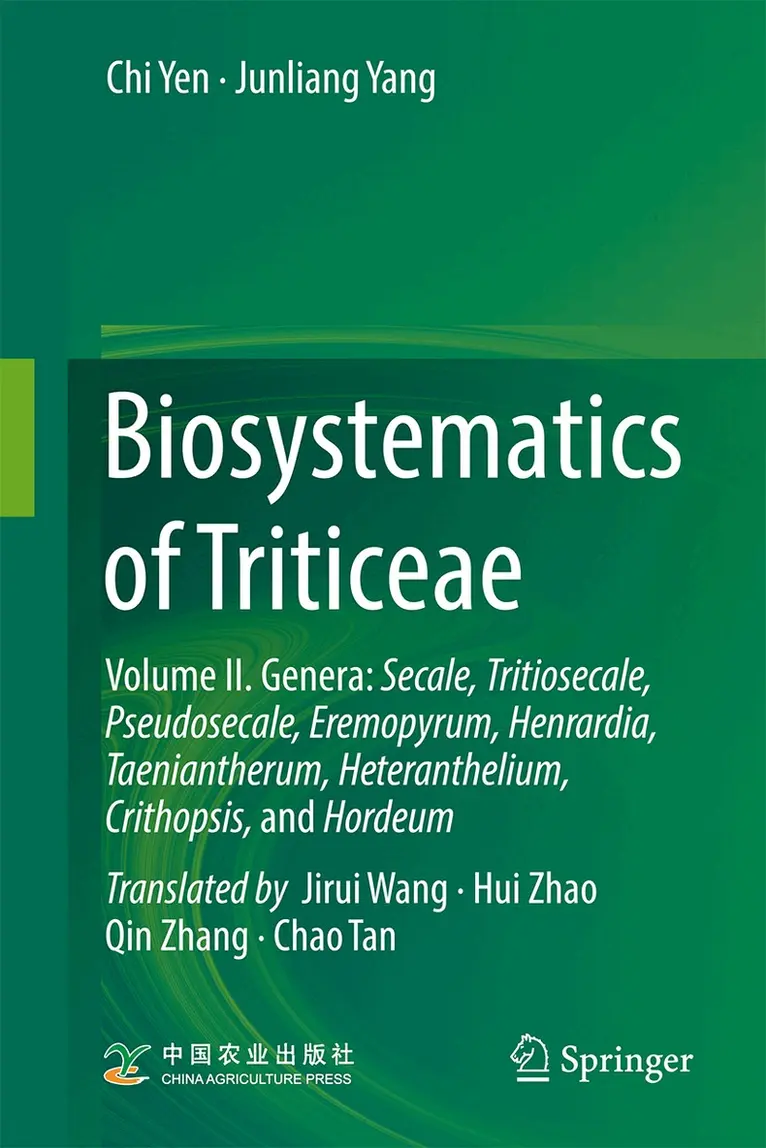
This book discusses the natural classification and biosystematics of Triticeae and presents the most significant findings of comprehensive studies on the Triticeae, an important tribe in the grass family (Poaceae) that includes major crops such as wheat, barley, rye, and triticale, as well as various forage crops found in different genera. The five-volume Chinese version of Biosystematics of Triticeae was published in 1998, 2004, 2006, 2011, and 2013, and included the 30 genera, two subgenera, 464 species, nine subspecies, and 186 varieties of Triticeae identified to date. This is their English edition.
The volumes cover a wide range of disciplines from traditional taxonomy and cytogenetics to molecular phylogeny. They are designed for biologists, plant breeders, taxonomists, geneticists, biogeographic researchers, historians, biotechnologists, agriculturalists, and evolutionists.
Volume I, Triticum-Aegilops complex focuses on the taxonomy and generic relationships of Triticum and Aegilops, discussing the origin of common wheat as a crop.
Volume II, Genera: Secale, Tritiosecale, Pseudosecale, Eremopyrum, Henrardia, Taeniantherum, Heteranthelium, Crithopsis, and Hordeum highlights a number of genera that are closely related based on their morphological classification and that contain only one unique genome.
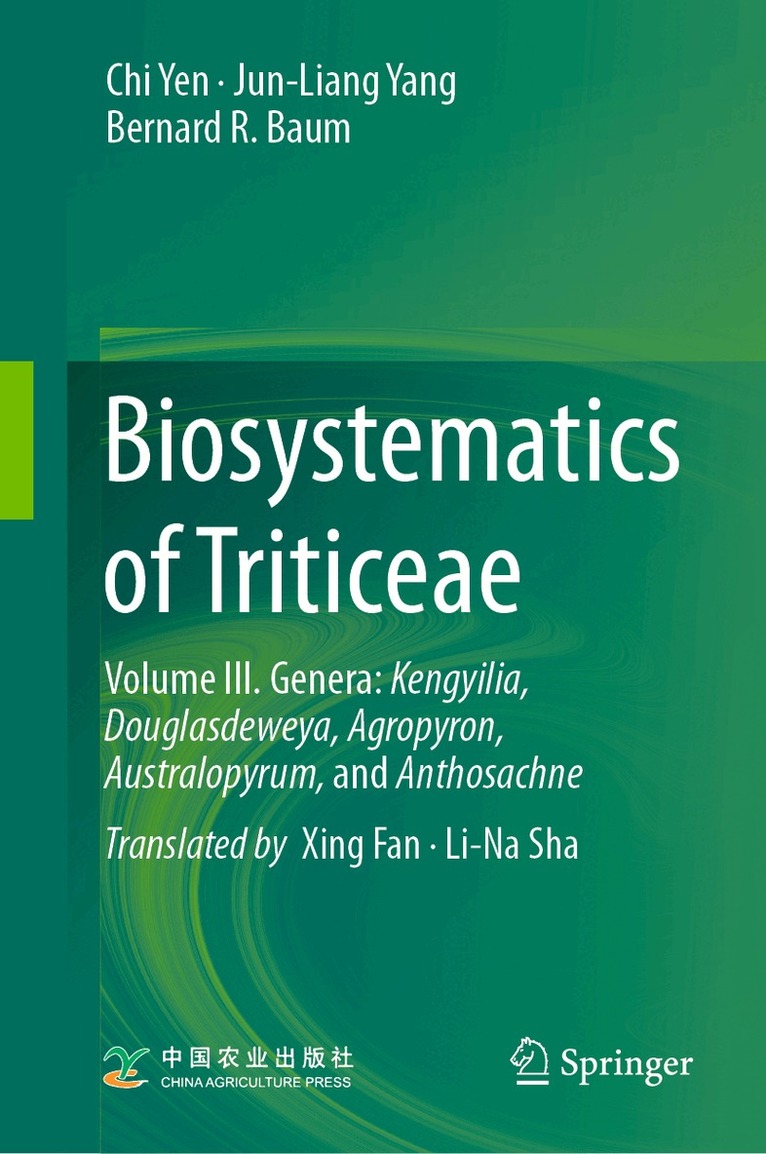
Volume III describes perennial genera and species including Kengyilia, Douglasdeweya, Agropyron, Australopyrum, and Anthosachne.
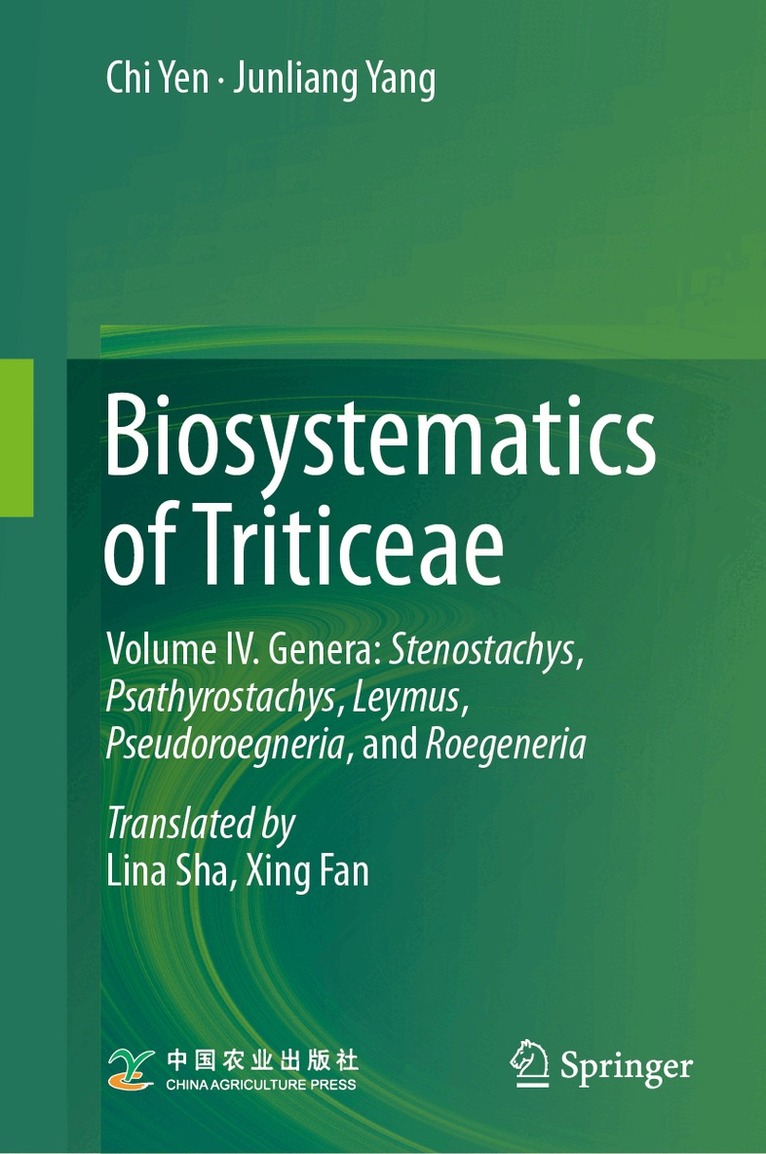
Volume IV addresses perennial genera and species including Stenostachys, Psathyrostachys, Leymus, Pseudoroegneria, and Roegeneria.
Volume V presents perennial genera and species such as Campeiostachys, Elymus, Pascopyrum, Lophopyrum, Trichopyrum, Hordelymus, Festucopsis, Peridictyon, and Psammopyrum.
1 851 kr
Skickas inom 10-15 vardagar