Chihab El Khachab - Böcker
Visar alla böcker från författaren Chihab El Khachab. Handla med fri frakt och snabb leverans.
4 produkter
4 produkter
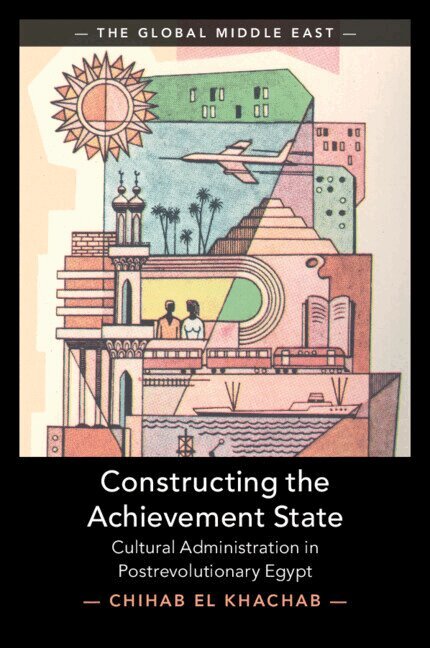
Constructing the Achievement State
Cultural Administration in Postrevolutionary Egypt
Häftad, Engelska, 2026
441 kr
Skickas inom 7-10 vardagar
After the 1952 revolution, the Egyptian state became an ideological project promoted by national cultural and media institutions. Focusing particularly on the years under the leadership of Gamal Abdel Nasser (1954-1970), Chihab El Khachab uses official written and visual sources produced by different governmental departments to show how low- and mid-ranking bureaucrats represented and embodied the Egyptian state through a praxis of 'achievement' (ingāz, pl. ingazāt). This study demonstrates how a successful anti-colonial nationalist movement built its own state apparatus. El Khachab argues that the state's 'achievements' are neither the tangible outcome of governmental work nor the self-evident metrics needed to evaluate national progress, but an ideological category deployed by bureaucrats. Conceiving achievements in this way allows us to understand how everyday bureaucratic work represents and embodies 'the state', and why this idea remains an important force in contemporary Egypt.
Constructing the Achievement State
Cultural Administration in Postrevolutionary Egypt
Inbunden, Engelska, 2026
1 295 kr
Skickas inom 7-10 vardagar
After the 1952 revolution, the Egyptian state became an ideological project promoted by national cultural and media institutions. Focusing particularly on the years under the leadership of Gamal Abdel Nasser (1954-1970), Chihab El Khachab uses official written and visual sources produced by different governmental departments to show how low- and mid-ranking bureaucrats represented and embodied the Egyptian state through a praxis of 'achievement' (ingāz, pl. ingazāt). This study demonstrates how a successful anti-colonial nationalist movement built its own state apparatus. El Khachab argues that the state's 'achievements' are neither the tangible outcome of governmental work nor the self-evident metrics needed to evaluate national progress, but an ideological category deployed by bureaucrats. Conceiving achievements in this way allows us to understand how everyday bureaucratic work represents and embodies 'the state', and why this idea remains an important force in contemporary Egypt.
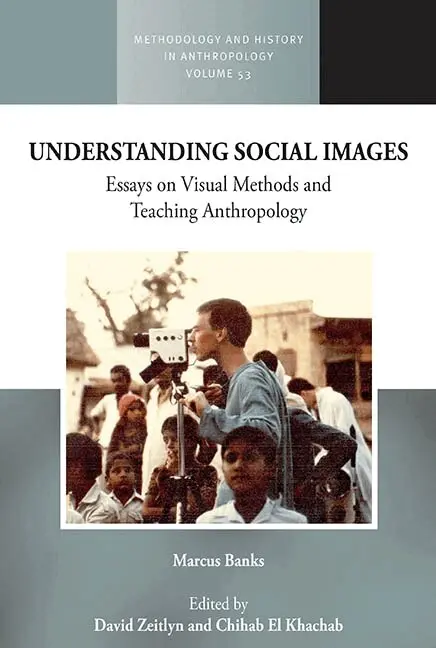
Understanding Social Images
Essays on Visual Methods and Teaching Anthropology
Inbunden, Engelska, 2025
1 956 kr
Skickas inom 3-6 vardagar
Marcus Banks was one of the scholars who changed the way visual anthropology and visual methods were regarded in social and cultural anthropology. This collection of Banks’ essays considers the role of collaboration in the making of ethnographic films and makes the case for slow research. It discusses the meaning of anthropological research in film archives and illustrates how to analyse a wide range of visual material like maps, diagrams and enigmatic photographs. Howard Morphy’s afterword is written in response to the essays in the book and as a part of an interrupted dialogue with Marcus. It focuses on how visual anthropology’s distinctive methodology engages with the central theoretical issues of contemporary anthropology.
547 kr
Skickas inom 5-8 vardagar
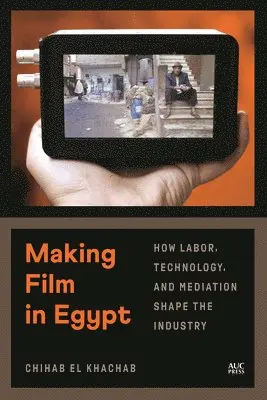
An ethnographic study of the Egyptian film industryThe enormous influence of the Egyptian film industry on popular culture and collective imagination across the Arab world is widely acknowledged, but little is known about its concrete workings behind the scenes. Making Film in Egypt provides a fascinating glimpse into the lived reality of commercial film production in today’s Cairo, with an emphasis on labor hierarchies, production practices, and the recent transition to digital technologies. Drawing on in-depth interviews and participant observation among production workers, on-set technicians, and artistic crew members, Chihab El Khachab sets out to answer a simple question: how do filmmakers deal with the unpredictable future of their films? The answer unfolds through a journey across the industry’s political economy, its labor processes, its technological infrastructure, its logistical and artistic work, and its imagined audiences. The result is a complex and nuanced portrait of the Arab world’s largest film industry, rich in ethnographic detail and theoretical innovations in media anthropology, media studies, and Middle East anthropology.