Chloe Paver – författare
Visar alla böcker från författaren Chloe Paver. Handla med fri frakt och snabb leverans.
5 produkter
5 produkter
E-bok
PDF, Engelska, 2007830 kr
Läs direkt efter köp
Six decades after the defeat of National Socialism, commemoration and mourning are ongoing, open-ended projects in Germany and Austria, and continue to generate a steady stream of literature and film about the Nazi past that, while comparatively modest in volume, is often disproportionately influential in public debates. At the same time, new museums and memorials are being established all the time in what Andreas Huyssen has called a ''memory boom'', while what isremembered and how it is remembered is subject to continuous change. Scholars have to keep pace with each new development in this culture of commemoration. Rather than add to the growing body of surveys of literature and film about the Third Reich, this study instead puts scholars'' critical approachesunder the microscope. Chloe Paver considers how far the object of the study is not just analysed but also constructed by the scholar''s approach and identifies the criteria by which academics judge the values of works that deal with the Third Reich.This book brings aspects of film, fiction, and memorial culture together in a single study that pays as much attention to images (and in the case of film to sound) as it does to text. The study of film, historical exhibitions, and sites of memory also demands consideration of social contexts and practices. A case study of memory at two of Austria''s sites of terror demonstrates the methods used in the study of memorials and museums and considers the ways in which memory attaches itself toplace.
Inbunden, Engelska, 2007
1 723 kr
Skickas inom 3-6 vardagar
Six decades after the defeat of National Socialism, commemoration and mourning are ongoing, open-ended projects in Germany and Austria, and continue to generate a steady stream of literature and film about the Nazi past that, while comparatively modest in volume, is often disproportionately influential in public debates. At the same time, new museums and memorials are being established all the time in what Andreas Huyssen has called a 'memory boom', while what is remembered and how it is remembered is subject to continuous change. Scholars have to keep pace with each new development in this culture of commemoration. Rather than add to the growing body of surveys of literature and film about the Third Reich, this study instead puts scholars' critical approaches under the microscope. Chloe Paver considers how far the object of the study is not just analysed but also constructed by the scholar's approach and identifies the criteria by which academics judge the values of works that deal with the Third Reich.This book brings aspects of film, fiction, and memorial culture together in a single study that pays as much attention to images (and in the case of film to sound) as it does to text. The study of film, historical exhibitions, and sites of memory also demands consideration of social contexts and practices. A case study of memory at two of Austria's sites of terror demonstrates the methods used in the study of memorials and museums and considers the ways in which memory attaches itself to place.
Häftad, Engelska, 2019
880 kr
Skickas inom 5-8 vardagar
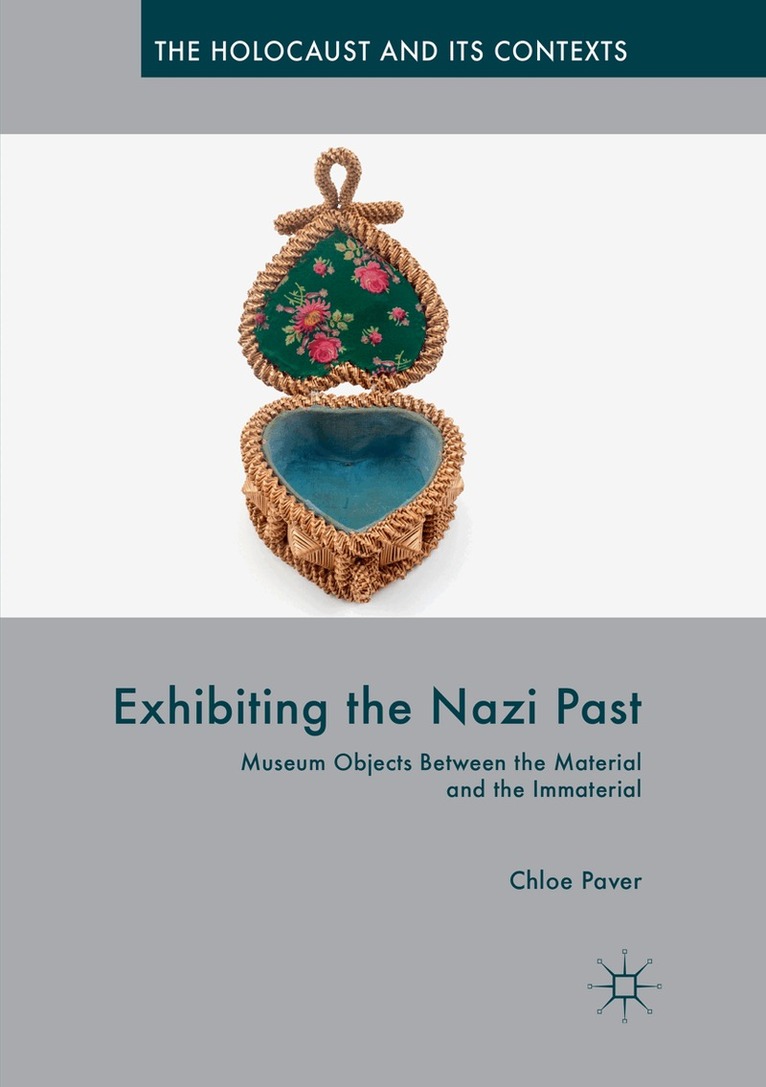
This book is the first full-length study of the museum object as a memory medium in history exhibitions about the Nazi era, the Second World War, and the Holocaust.
Inbunden, Engelska, 2018
1 003 kr
Skickas inom 10-15 vardagar
This book is the first full-length study of the museum object as a memory medium in history exhibitions about the Nazi era, the Second World War, and the Holocaust.
1 261 kr
Läs direkt efter köp
This book is the first full-length study of the museum object as a memory medium in history exhibitions about the Nazi era, the Second World War, and the Holocaust. Over recent decades, German and Austrian exhibition-makers have engaged in significant programmes of object collection, often in collaboration with witnesses and descendants. At the same time, exhibition-makers have come to recognise the degree to which the National Socialist era was experienced materially, through the loss, acquisition, imposition, destruction, and re-purposing of objects. In the decades after 1945, encounters with material culture from the Nazi past continued, both within the family and in the public sphere. In analysing how these material engagements are explored in the museum, the book not only illuminates a key aspect of German and Austrian cultural memory but contributes to wider debates about relationships between the human and object worlds.