Chong-Won Lee – författare
Visar alla böcker från författaren Chong-Won Lee. Handla med fri frakt och snabb leverans.
3 produkter
3 produkter
Inbunden, Engelska, 1993
2 480 kr
Skickas inom 10-15 vardagar
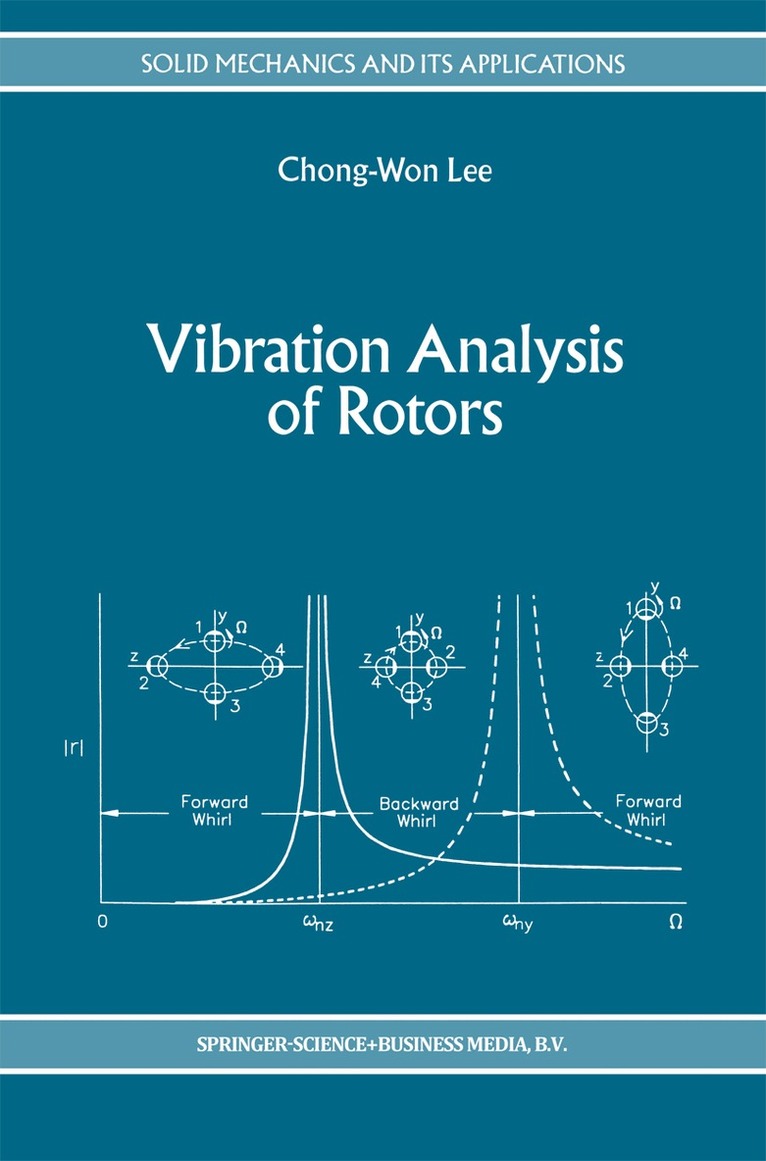
This text is intended for use as an advanced course in either rotordynamics or vibration at the graduate level. This text has mostly grown out of the research work in my laboratory and the lectures given to graduate students in the Mechanical Engineering Department, KAIST. The text contains a variety of topics not normally found in rotordynamics or vibration textbooks. The text emphasizes the analytical aspects and is thus quite different from conventional rotordynamics texts; potential readers are expected to have a firm background in elementary rotordynamics and vibration. In most previously published rotordynamics texts, the behavior of simple rotors has been of a primary concern, while more realistic, multi-degree-f-freedom or continuous systems are seldom treated in a rigorous way, mostly due to the difficulty of a mathematical treatment of such complicated systems. When one wanted to gain a deep insight into dynamic phenomena of complicated rotor systems, one has, in the past, either had to rely on computational techniques, such as the transfer matrix and finite element methods, or cautiously to extend ideas learned from simple rotors whose analytical solutions are readily available. The former methods are limited in the interpretation of results, since the calculations relate only to the simulated case, not to more general system behavior. Ideas learned from simple rotors can, fortunately, often be extended to many practical rotor systems, but there is of course no guarantee of their validity.
Häftad, Engelska, 2010
2 312 kr
Skickas inom 10-15 vardagar
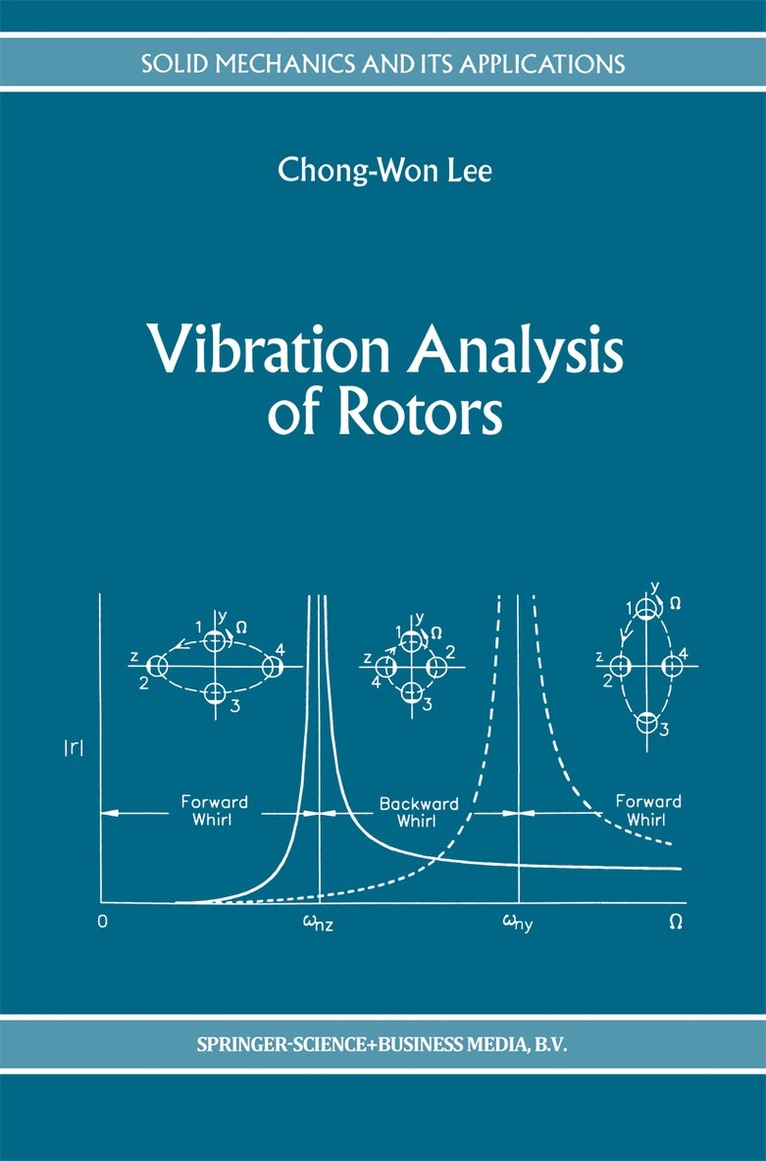
This text is intended for use as an advanced course in either rotordynamics or vibration at the graduate level. This text has mostly grown out of the research work in my laboratory and the lectures given to graduate students in the Mechanical Engineering Department, KAIST. The text contains a variety of topics not normally found in rotordynamics or vibration textbooks. The text emphasizes the analytical aspects and is thus quite different from conventional rotordynamics texts; potential readers are expected to have a firm background in elementary rotordynamics and vibration. In most previously published rotordynamics texts, the behavior of simple rotors has been of a primary concern, while more realistic, multi-degree-f-freedom or continuous systems are seldom treated in a rigorous way, mostly due to the difficulty of a mathematical treatment of such complicated systems. When one wanted to gain a deep insight into dynamic phenomena of complicated rotor systems, one has, in the past, either had to rely on computational techniques, such as the transfer matrix and finite element methods, or cautiously to extend ideas learned from simple rotors whose analytical solutions are readily available. The former methods are limited in the interpretation of results, since the calculations relate only to the simulated case, not to more general system behavior. Ideas learned from simple rotors can, fortunately, often be extended to many practical rotor systems, but there is of course no guarantee of their validity.
E-bok
PDF, Engelska, 20123 157 kr
Läs direkt efter köp
This text is intended for use as an advanced course in either rotordynamics or vibration at the graduate level. This text has mostly grown out of the research work in my laboratory and the lectures given to graduate students in the Mechanical Engineering Department, KAIST. The text contains a variety of topics not normally found in rotordynamics or vibration textbooks. The text emphasizes the analytical aspects and is thus quite different from conventional rotordynamics texts; potential readers are expected to have a firm background in elementary rotordynamics and vibration. In most previously published rotordynamics texts, the behavior of simple rotors has been of a primary concern, while more realistic, multi-degree-f-freedom or continuous systems are seldom treated in a rigorous way, mostly due to the difficulty of a mathematical treatment of such complicated systems. When one wanted to gain a deep insight into dynamic phenomena of complicated rotor systems, one has, in the past, either had to rely on computational techniques, such as the transfer matrix and finite element methods, or cautiously to extend ideas learned from simple rotors whose analytical solutions are readily available. The former methods are limited in the interpretation of results, since the calculations relate only to the simulated case, not to more general system behavior. Ideas learned from simple rotors can, fortunately, often be extended to many practical rotor systems, but there is of course no guarantee of their validity.