Chris Yogerst - Böcker
Visar alla böcker från författaren Chris Yogerst. Handla med fri frakt och snabb leverans.
5 produkter
5 produkter
216 kr
Skickas inom 7-10 vardagar
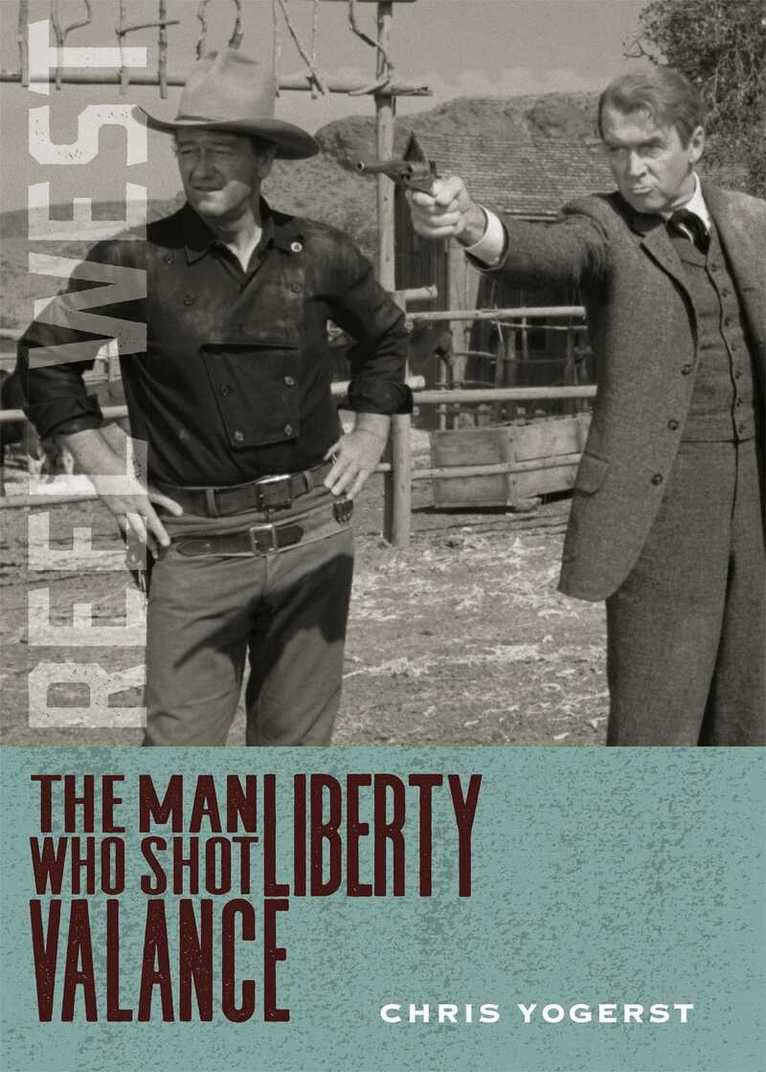
A new offering in the nascent Reel West film history series that focuses on that quintessentially American cinematic art form, the western. Few lines of movie dialogue have had greater impact than the most famous line from John Ford’s 1962 masterpiece The Man Who Shot Liberty Valance: “This is the West, sir. When the legend becomes fact, print the legend.” Although critics of the day did not realize its magnitude, with time The Man Who Shot Liberty Valance has become cemented in our popular culture. This film connects to nearly every Western before or after, from Ford’s own Stagecoach (1939) to Clint Eastwood’s Unforgiven (1992). Coming six years after The Searchers, Ford’s other great late-career masterpiece, The Man Who Shot Liberty Valance may be even more archetypal of a changing West. In this first-ever book on the subject, Chris Yogerst unpacks one of the signature films of the post-classic Western period and one of the greatest works of director John Ford and actors John Wayne, James Stewart, Lee Marvin, and Woody Strode.
589 kr
Skickas inom 10-15 vardagar
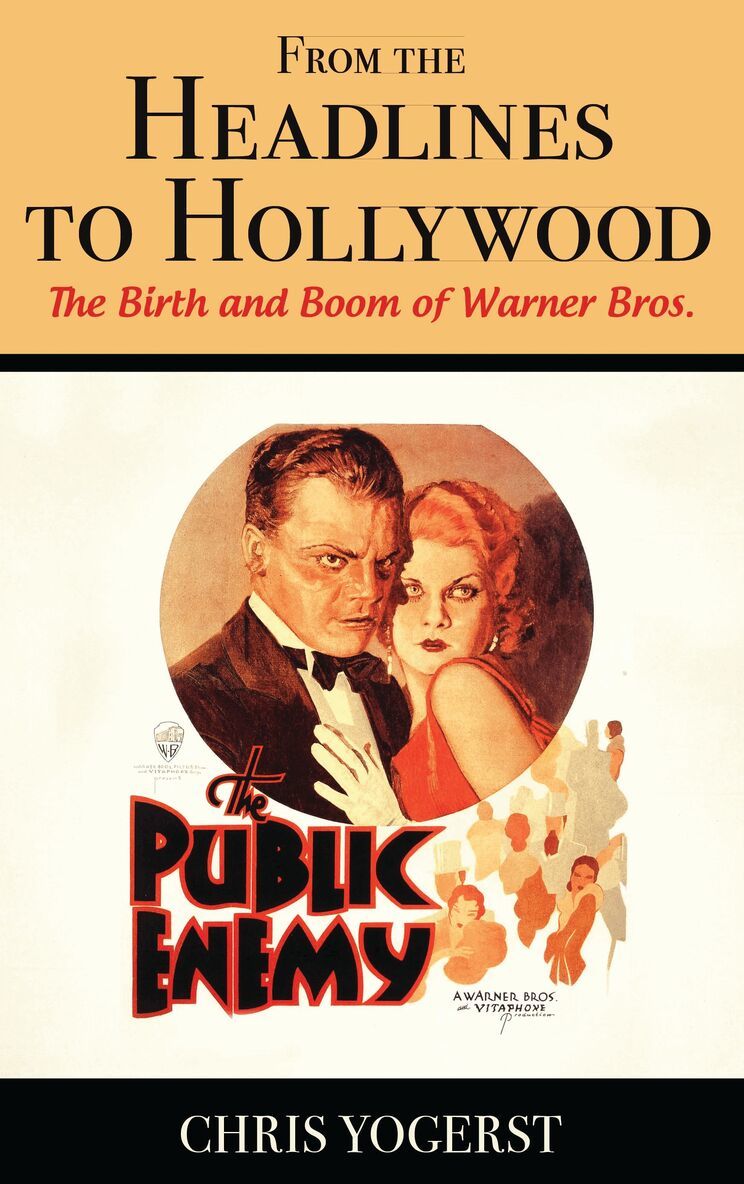
More than any other studio, Warner Bros. used edgy, stylistic, and brutally honest films to construct a view of America that was different from the usual buoyant Hollywood fare. The studio took seriously Harry Warner’s mandate that their films had a duty to educate and demonstrate key values of free speech, religious tolerance, and freedom of the press. This attitude was most aptly demonstrated in films produced by the studio between 1927 and 1941—a period that saw not only the arrival of sound in film but also the Great Depression, the rise of crime, and increased concern about fascism in the lead-up to World War II.In From the Headlines to Hollywood: The Birth and Boom of Warner Bros.,Chris Yogerstexplores how “the only studio with any guts” established the groundwork and perfected formulas for social romance dramas, along with gangster, war, espionage, and adventure films. In this book, the author discusses such films as ThePublic Enemy, Little Caesar, G-Men, The Life of Emile Zola, Angels with Dirty Faces,and Confessions of a Nazi Spy, illustrating the ways in which their plots truly were “ripped from the headlines.”While much of what has been written about Warner Bros. has focused on the plots of popular films or broad overviews of the studio’s output, this volume sets these in the larger context of the period, an era in which lighthearted fare competed with gritty realism. From the Headlines to Hollywood will appeal to readers with interests in film history, social history, politics, and entertainment.
Hollywood Hates Hitler!
Jew-Baiting, Anti-Nazism, and the Senate Investigation Into Warmongering in Motion Pictures
Inbunden, Engelska, 2020
1 213 kr
Skickas inom 10-15 vardagar
In September 1941, a handful of isolationist senators set out to tarnish Hollywood for warmongering. The United States was largely divided on the possibility of entering the European War, yet the immigrant moguls in Hollywood were acutely aware of the conditions in Europe. After Kristallnacht (the Night of Broken Glass), the gloves came off. Warner Bros. released the first directly anti-Nazi film in 1939 with Confessions of a Nazi Spy. Other studios followed with such films as The Mortal Storm (MGM), Man Hunt (Fox), The Man I Married (Fox), and The Great Dictator (United Artists). While these films represented a small percentage of Hollywood's output, senators took aim at the Jews in Hollywood who were supposedly "agitating us for war" and launched an investigation that resulted in Senate Resolution 152. The resolution was aimed at both radio and movies that "have been extensively used for propaganda purposes designed to influence the public mind in the direction of participation in the European War". When the Senate approved a subcommittee to investigate the intentions of these films, studio bosses were ready and willing to stand up against the government to defend their beloved industry. What followed was a complete embarrassment of the United States Senate and a large victory for Hollywood as well as freedom of speech.Many works of American film history only skim the surface of the 1941 investigation of Hollywood. In Hollywood Hates Hitler! Jew-Baiting, Anti-Nazism, and the Senate Investigation into Warmongering in Motion Pictures, author Chris Yogerst examines the years leading up to and through the Senate Investigation into Motion Picture War Propaganda, detailing the isolationist senators' relationship with the America First movement. Through his use of primary documents and lengthy congressional records, Yogerst paints a picture of the investigation's daily events both on Capitol Hill and in the national press.
Hollywood Hates Hitler!
Jew-Baiting, Anti-Nazism, and the Senate Investigation Into Warmongering in Motion Pictures
Häftad, Engelska, 2020
264 kr
Skickas inom 7-10 vardagar
In September 1941, a handful of isolationist senators set out to tarnish Hollywood for warmongering. The United States was largely divided on the possibility of entering the European War, yet the immigrant moguls in Hollywood were acutely aware of the conditions in Europe. After Kristallnacht (the Night of Broken Glass), the gloves came off. Warner Bros. released the first directly anti-Nazi film in 1939 with Confessions of a Nazi Spy. Other studios followed with such films as The Mortal Storm (MGM), Man Hunt (Fox), The Man I Married (Fox), and The Great Dictator (United Artists). While these films represented a small percentage of Hollywood's output, senators took aim at the Jews in Hollywood who were supposedly "agitating us for war" and launched an investigation that resulted in Senate Resolution 152. The resolution was aimed at both radio and movies that "have been extensively used for propaganda purposes designed to influence the public mind in the direction of participation in the European War". When the Senate approved a subcommittee to investigate the intentions of these films, studio bosses were ready and willing to stand up against the government to defend their beloved industry. What followed was a complete embarrassment of the United States Senate and a large victory for Hollywood as well as freedom of speech.Many works of American film history only skim the surface of the 1941 investigation of Hollywood. In Hollywood Hates Hitler! Jew-Baiting, Anti-Nazism, and the Senate Investigation into Warmongering in Motion Pictures, author Chris Yogerst examines the years leading up to and through the Senate Investigation into Motion Picture War Propaganda, detailing the isolationist senators' relationship with the America First movement. Through his use of primary documents and lengthy congressional records, Yogerst paints a picture of the investigation's daily events both on Capitol Hill and in the national press.
324 kr
Skickas inom 3-6 vardagar
One of the oldest and most recognizable studios in Hollywood, Warner Bros. is considered a juggernaut of the entertainment industry. Since its formation in the early twentieth century, the studio has been a constant presence in cinema history, responsible for the creation of acclaimed films, blockbuster brands, and iconic superstars. _x000D_These days, the studio is best known as a media conglomerate with a broad range of intellectual property, spanning movies, TV shows, and streaming content. Despite popular interest in the origins of this empire, the core of the Warner Bros. saga cannot be found in its commercial successes. It is the story of four brothers—Harry, Albert, Sam, and Jack—whose vision for Hollywood helped shape the world of entertainment as we know it. _x000D_In The Warner Brothers, Chris Yogerst follows the siblings from their family's humble origins in Poland, through their young adulthood in the American Midwest, to the height of fame and fortune in Hollywood. With unwavering resolve, the brothers soldiered on against the backdrop of an America reeling from the aftereffects of domestic and global conflict. The Great Depression would not sink the brothers, who churned out competitive films that engaged audiences and kept their operations afloat—and even expanding. During World War II, they used their platform to push beyond the limits of the Production Code and create important films about real-world issues, openly criticizing radicalism and the evils of the Nazi regime. At every major cultural turning point in their lifetime, the Warners held a front-row seat. _x000D_Paying close attention to the brothers' identities as cultural and economic outsiders, Yogerst chronicles how the Warners built a global filmmaking powerhouse. Equal parts family history and cinematic journey, The Warner Brothers is an empowering story of the American dream and the legacy four brothers left behind for generations of filmmakers and film lovers to come.