Christelle Fischer-Bovet - Böcker
Visar alla böcker från författaren Christelle Fischer-Bovet. Handla med fri frakt och snabb leverans.
4 produkter
4 produkter
1 702 kr
Skickas inom 7-10 vardagar
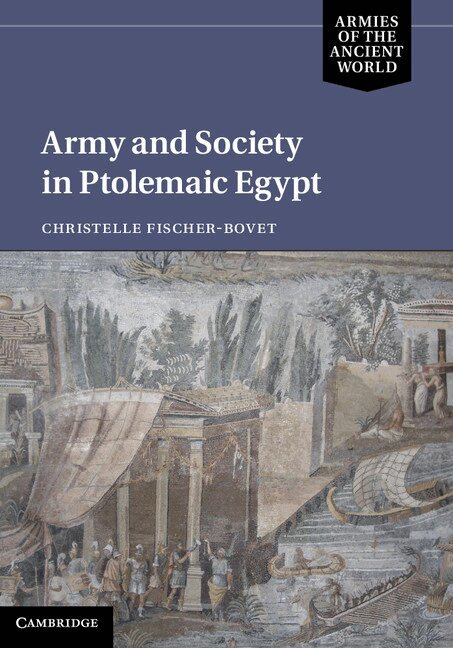
This is the only substantial and up-to-date reference work on the Ptolemaic army. Employing Greek and Egyptian papyri and inscriptions, and building on approaches developed in state-formation theory, it offers a coherent account of how the changing structures of the army in Egypt after Alexander's conquest led to the development of an ethnically more integrated society. A new tripartite division of Ptolemaic history challenges the idea of gradual decline, and emphasizes the reshaping of military structures that took place between c.220 and c.160 BC in response to changes in the nature of warfare, mobilization and demobilization, and financial constraints. An investigation of the socio-economic role played by soldiers permits a reassessment of the cleruchic system and shows how soldiers' associations generated interethnic group solidarity. By integrating Egyptian evidence, Christelle Fischer-Bovet also demonstrates that the connection between the army and local temples offered new ways for Greeks and Egyptians to interact.
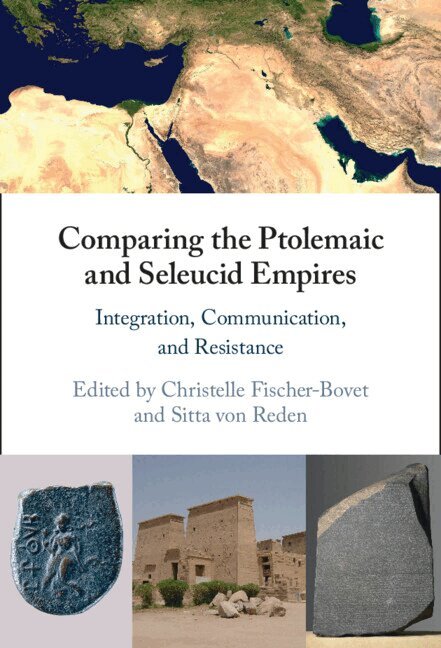
Comparing the Ptolemaic and Seleucid Empires
Integration, Communication, and Resistance
Inbunden, Engelska, 2021
1 282 kr
Skickas inom 7-10 vardagar
The Ptolemaic and Seleucid empires are usually studied separately, or else included in broader examinations of the Hellenistic world. This book provides a systematic comparison of the roles of local elites and local populations in the construction, negotiation, and adaptation of political, economic, military and ideological power within these states in formation. The two states, conceived as multi-ethnic empires, are sufficiently similar to make comparisons valid, while the process of comparison highlights and better explains differences. Regions that were successively incorporated into the Ptolemaic and then Seleucid state receive particular attention, and are understood within the broader picture of the ruling strategies of both empires. The book focusses on forms of communication through coins, inscriptions and visual culture; settlement policies and the relationship between local and immigrant populations; and the forms of collaboration with and resistance of local elites against immigrant populations and government institutions.
523 kr
Skickas inom 7-10 vardagar
This is the only substantial and up-to-date reference work on the Ptolemaic army. Employing Greek and Egyptian papyri and inscriptions, and building on approaches developed in state-formation theory, it offers a coherent account of how the changing structures of the army in Egypt after Alexander's conquest led to the development of an ethnically more integrated society. A new tripartite division of Ptolemaic history challenges the idea of gradual decline, and emphasizes the reshaping of military structures that took place between c.220 and c.160 BC in response to changes in the nature of warfare, mobilization and demobilization, and financial constraints. An investigation of the socio-economic role played by soldiers permits a reassessment of the cleruchic system and shows how soldiers' associations generated interethnic group solidarity. By integrating Egyptian evidence, Christelle Fischer-Bovet also demonstrates that the connection between the army and local temples offered new ways for Greeks and Egyptians to interact.
Comparing the Ptolemaic and Seleucid Empires
Integration, Communication, and Resistance
Häftad, Engelska, 2023
401 kr
Skickas inom 7-10 vardagar
The Ptolemaic and Seleucid empires are usually studied separately, or else included in broader examinations of the Hellenistic world. This book provides a systematic comparison of the roles of local elites and local populations in the construction, negotiation, and adaptation of political, economic, military and ideological power within these states in formation. The two states, conceived as multi-ethnic empires, are sufficiently similar to make comparisons valid, while the process of comparison highlights and better explains differences. Regions that were successively incorporated into the Ptolemaic and then Seleucid state receive particular attention, and are understood within the broader picture of the ruling strategies of both empires. The book focusses on forms of communication through coins, inscriptions and visual culture; settlement policies and the relationship between local and immigrant populations; and the forms of collaboration with and resistance of local elites against immigrant populations and government institutions.