From the 12th to the 15th September 1985 the International Symposium on Methods of Presurgical Evaluation of Epileptic Patients: Basics, Techniques, and Implications for Epileptology and Surgical Epilepsy Therapy was held in Zurich. This symposium was a consequence of the increasing recognition by Europeans, especially from Ger man-speaking countries, of a growing need for surgical therapy of epileptics. The main aim was to provide a venue for critical review and lively discussion of presurgical eval uation protocols, with special emphasis on the electrophysiological aspects, including in vasive techniques. To provide a necessary background, some basic aspects along with postsurgical results had to be dealt with by leading experts in the different fields of ex perimental and clinical epileptology and neurosurgery. It was intended to be an inter national but moderately scaled meeting. Finally, however, in addition to the European contingent, there were participants from Australia, Brazil, Canada, Israel, Japan, Korea, and the United States of America, including pioneers from the surgically active centers. This international discussion was surely facilitated by the close temporal relation ship to the International Congresses (XIIIth World Congress of Neurology and XVIth Epilepsy International Congress) which took place in Hamburg. And, probably most important, is the fact that the Zurich symposium was dedicated to Prof. Rudolf Hess and his lifelong devotion to epilepsy diagnosis and treatment in Switzerland, as out lined in the Honorary Address by his eminent colleague and personal friend, Prof. Henri Gastaut.


Neue Erkenntnisse zeigen: Bei der Kaufentscheidung für eine Aktie oder einen Fonds wirkt sich bei den meisten Anlegern die Aversion gegen Verluste stärker aus als das Gewinnversprechen. Und: Im Hirnscanner ist deutlich erkennbar, dass Verlustängste einen anderen Teil des Gehirns aktiv werden lassen, als die Freude über einen Gewinn. Daher reagieren viele Anleger bei fallenden Aktienkursen nicht logisch, sondern panisch und verkaufen.Inhalte:- Jetzt erstmals aus neurowissenschaftlicher Sicht: Warum Geld für das Gehirn ein ganz besonderes Gut ist, warum wir im Umgang mit Geld immer wieder Fehler machen und wie wir sie vermeiden.- Wie Entscheidungen bei der Geldanlage und bei Investitionen getroffen werden und welche Rolle die Faktoren Risiko, Gier und Befriedigung des eigenen Belohnungssystems dabei spielen.- Welche spezifischen Prozesse im Gehirn beim Kunden zu risikoreichen bzw. risikoarmen Entscheidungen führen.
Nutzen Sie die Erkenntnisse der Neurowissenschaft, um Ihren eigenen Führungsstil zu analysieren und weiterzuentwickeln. Das Buch erklärt die Rolle der Hirnfunktionen bei der effektiven Kommunikation mit Mitarbeitern und bei der eigenen Entscheidungsfindung. Inhalte:- Was Führungskräfte über Neurowisssenschaft wissen sollten.- Die Grundlagen der Gehirnfunktionen für Neuroleadership in der Praxis.- Neuroleadership in typischen Situationen des Führungsalltags.
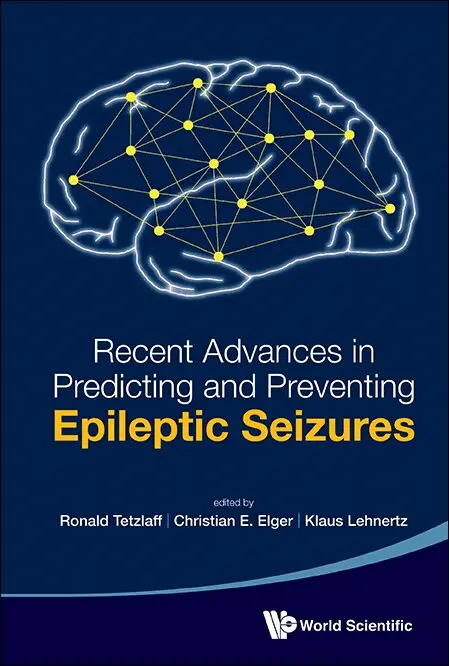
This book is to improve our understanding of mechanisms leading to seizures in humans and in developing new therapeutic options. The book covers topics such as recent approaches to seizure control, recent developments in signal processing of interest for seizure prediction, ictogenesis in complex epileptic brain networks, active probing of the pre-seizure state, non-EEG based approaches to the transition to seizures, microseizures and their role in the generation of clinical seizures, the impact of sleep and long-biological cycles on seizure prediction, as well as animal and computational models of seizures and epilepsy. Furthermore the book covers recent developments of international databases and of parallel computing structures based on Cellular Nonlinear Networks that can play an important role in the realization of a portable seizure warning device.