Christian Marx - Böcker
Visar alla böcker från författaren Christian Marx. Handla med fri frakt och snabb leverans.
9 produkter
9 produkter
2 088 kr
Skickas inom 10-15 vardagar
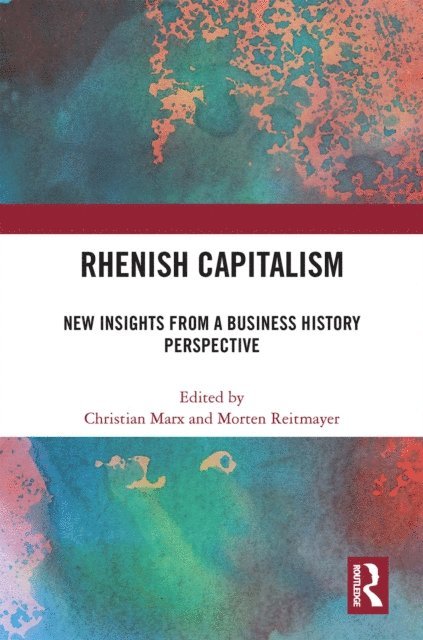
Rhenish capitalism is an ideal-typical model of capitalism which is characterised by a bank-centered financing system, close economic ties between banks and companies, a balance of power between shareholders and management, and a social partnership between unions and employers. The West German economy of the 1950s to the 1980s is the prime example of that model of capitalism which contrasts with the liberal Anglo-Saxon forms of capitalism. In accordance with recent debates about Varieties of Capitalism, the authors argue that research on capitalism should pay more attention to change over time. The book also claims to put the firm into the centre of analysis.The empirical contributions uncover the differences between French and German corporate governance practices comparing two European automobile producers (VW and Renault), analyse legal debates and practices of corporate control in post-war Germany, show the tension between national corporate governance and increasing internationalisation by reference to four major West German producers of chemicals, pharmaceuticals and fibres; and explore the opportunities encountered by German big banks vis-à-vis their customers from big industry. Furthermore, they show that coordinating culture in the supply relationship of the German automobile industry came under pressure at the end of the boom and stress the importance of communication processes as a basis for interest coordination in Rhenish capitalism.The chapters in this book were originally published as a special issue of the journal Business History.
617 kr
Skickas inom 10-15 vardagar
Rhenish capitalism is an ideal-typical model of capitalism which is characterised by a bank-centered financing system, close economic ties between banks and companies, a balance of power between shareholders and management, and a social partnership between unions and employers. The West German economy of the 1950s to the 1980s is the prime example of that model of capitalism which contrasts with the liberal Anglo-Saxon forms of capitalism. In accordance with recent debates about Varieties of Capitalism, the authors argue that research on capitalism should pay more attention to change over time. The book also claims to put the firm into the centre of analysis.The empirical contributions uncover the differences between French and German corporate governance practices comparing two European automobile producers (VW and Renault), analyse legal debates and practices of corporate control in post-war Germany, show the tension between national corporate governance and increasing internationalisation by reference to four major West German producers of chemicals, pharmaceuticals and fibres; and explore the opportunities encountered by German big banks vis-à-vis their customers from big industry. Furthermore, they show that coordinating culture in the supply relationship of the German automobile industry came under pressure at the end of the boom and stress the importance of communication processes as a basis for interest coordination in Rhenish capitalism.The chapters in this book were originally published as a special issue of the journal Business History.
2 150 kr
Skickas inom 10-15 vardagar
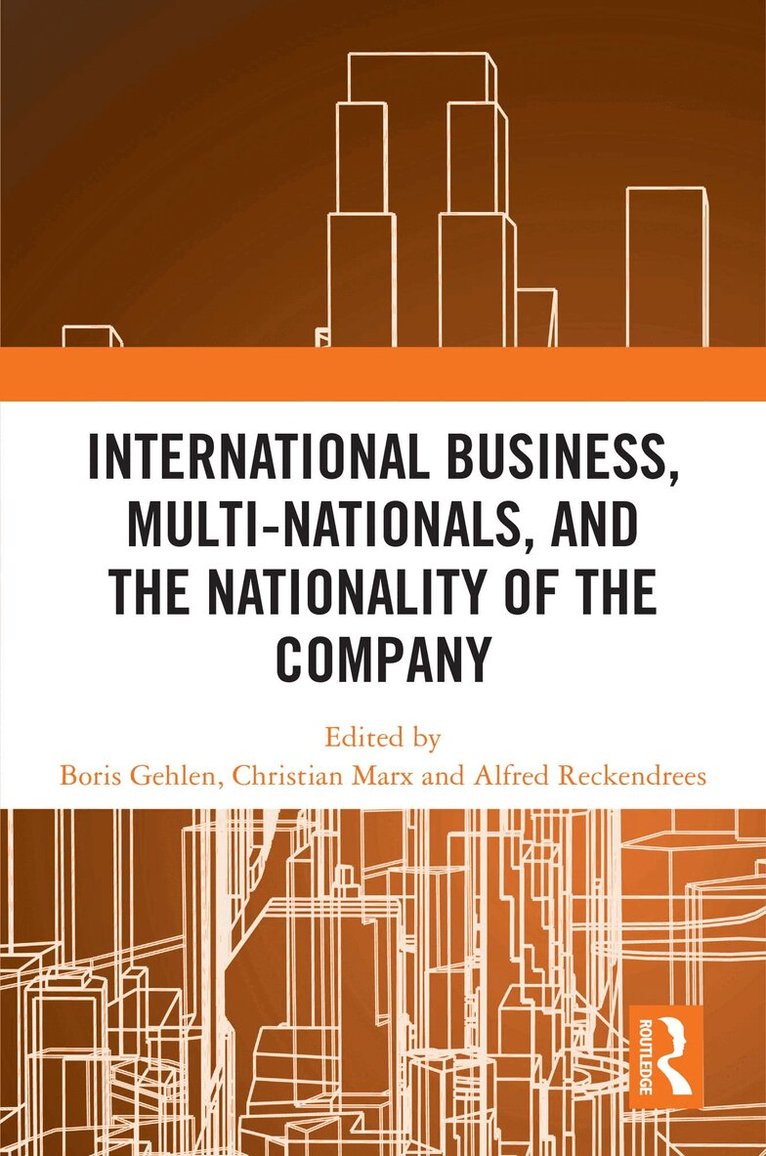
This book discusses challenges that arise for multinational companies from not having a single ‘nationality’ and being exposed to a variety of simultaneous country-specific, legally, and culturally constructed nationalities at home and abroad. Brexit, America First campaigns, Russia’s war against Ukraine, or the ever-tenser relationship between China and the US have led to raising concerns about foreign direct investments. Multinational companies are pressured to withdraw from countries and reorganise global value chains. The long-held confidence that ‘nationality’ does not matter for multinational companies in the globalised economy has dwindled. Today, companies doing business abroad are exposed to implications of their ‘nationality’ because governments and customers react upon the ‘nationality’ of a firm or a product as they did in the 20th century.The chapters in this book address many international business domains, covering political risk, liability of foreignness, cultural distance, headquarters change, and tax planning. They use different methodological approaches to analyse European and US-based MNEs in Europe, Africa, and South-East Asia from 1900 to 1980. The book argues that ‘nationality’ is not a ghost from the past in international business, it is a topic that requires substantial consideration.The chapters in this book were originally published in the journal Business History.
649 kr
Skickas inom 10-15 vardagar
This book discusses challenges that arise for multinational companies from not having a single ‘nationality’ and being exposed to a variety of simultaneous country-specific, legally, and culturally constructed nationalities at home and abroad. Brexit, America First campaigns, Russia’s war against Ukraine, or the ever-tenser relationship between China and the US have led to raising concerns about foreign direct investments. Multinational companies are pressured to withdraw from countries and reorganise global value chains. The long-held confidence that ‘nationality’ does not matter for multinational companies in the globalised economy has dwindled. Today, companies doing business abroad are exposed to implications of their ‘nationality’ because governments and customers react upon the ‘nationality’ of a firm or a product as they did in the 20th century.The chapters in this book address many international business domains, covering political risk, liability of foreignness, cultural distance, headquarters change, and tax planning. They use different methodological approaches to analyse European and US-based MNEs in Europe, Africa, and South-East Asia from 1900 to 1980. The book argues that ‘nationality’ is not a ghost from the past in international business, it is a topic that requires substantial consideration.The chapters in this book were originally published in the journal Business History.
Die offene Moderne - Gesellschaften im 20. Jahrhundert
Festschrift für Lutz Raphael zum 65. Geburtstag
Inbunden, Tyska, 2020
927 kr
Skickas inom 3-6 vardagar
During the 20th century, European societies were faced with the task of reacting to the new challenges posed by the basic processes of industrial modernity - such as high industrialization, the emergence of modern industrial workers, urbanization, mass migration, the emergence of a political mass market, scientification and 'Disenchantment of the World' - went out. To this end, they created different but comparable institutions, mechanisms, constellations of actors, patterns of interpretation, forms of knowledge and discourses. From a European perspective, the volume investigates the extent to which their specific forms were determined by the respective 'patterns of order' - as the largely nationally-specific ensemble of dominant ideas of order, key concepts, social and time-specific experiences and problems.
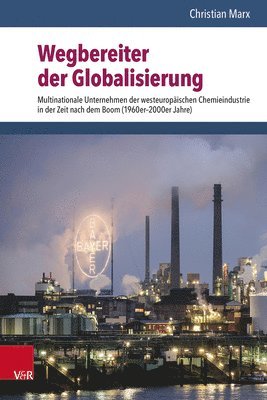
Wegbereiter der Globalisierung
Multinationale Unternehmen der westeuropaischen Chemieindustrie in der Zeit nach dem Boom (1960er2000er Jahre)
Inbunden, Tyska, 2023
1 465 kr
Skickas inom 3-6 vardagar
The study deals with the multinationalization of European companies in the last third of the 20th century. Using the example of four large chemical companies (Bayer, Hoechst, Rhône-Poulenc, Akzo), she asks about the importance of multinational companies for the most recent globalization processes and the increasing interdependence in the world economy from a European comparative perspective. She shows that the company's strategic guidelines as well as the political and economic order structures changed fundamentally from the 1970s, and reflects on the challenges of this structural change.
653 kr
Skickas inom 3-6 vardagar
511 kr
Skickas inom 3-6 vardagar
511 kr
Skickas inom 3-6 vardagar