Christina A. Christie – författare
339 kr
Läs direkt efter köp
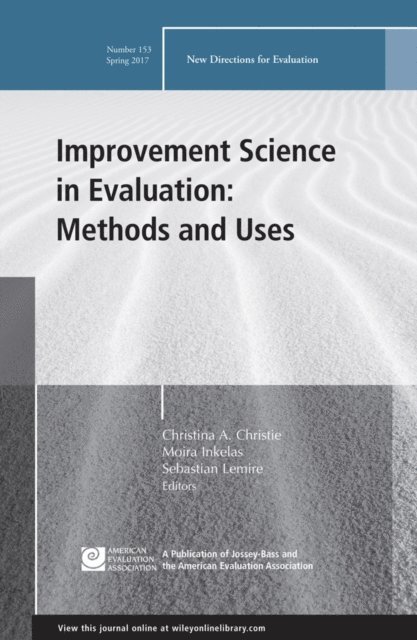
While improvement science has experienced a surge of interest over the past 30 years, applications of it are rare in the evaluation literature.
This issue promotes the cross-fertilization of ideas, techniques, and tools between evaluation and improvement science. There are at least four areas where this cross-fertilization is particularly relevant: learning from error, examining variation, appreciating context, and focusing on systems change. This volume considers:
the conceptual similarities and distinctions between improvement science and evaluation; the intellectual foundations, methods, and tools that collectively comprise improvement science; and case chapters that offer an inspiring review of state-of-the-art improvement science applications.Cutting across all of these applications is a shared grounding in systems thinking, a determination to capture and better understand variation and contextual complexity, as well as a sustained commitment to generative learning about projects and programs—all issues of great concern to evaluators. The issue offers producers and users of evaluations the potential benefits of a closer engagement with improvement science.
This is the 153rd issue in the New Directions for Evaluation series from Jossey-Bass. It is an official publication ofthe American Evaluation Association.
297 kr
Skickas inom 5-8 vardagar
339 kr
Läs direkt efter köp
While improvement science has experienced a surge of interest over the past 30 years, applications of it are rare in the evaluation literature.
This issue promotes the cross-fertilization of ideas, techniques, and tools between evaluation and improvement science. There are at least four areas where this cross-fertilization is particularly relevant: learning from error, examining variation, appreciating context, and focusing on systems change. This volume considers:
the conceptual similarities and distinctions between improvement science and evaluation; the intellectual foundations, methods, and tools that collectively comprise improvement science; and case chapters that offer an inspiring review of state-of-the-art improvement science applications.Cutting across all of these applications is a shared grounding in systems thinking, a determination to capture and better understand variation and contextual complexity, as well as a sustained commitment to generative learning about projects and programs—all issues of great concern to evaluators. The issue offers producers and users of evaluations the potential benefits of a closer engagement with improvement science.
This is the 153rd issue in the New Directions for Evaluation series from Jossey-Bass. It is an official publication ofthe American Evaluation Association.
1 777 kr
Skickas inom 3-6 vardagar
Evaluation in Action: Interviews With Expert Evaluators is the first book to go behind the scenes of real evaluations to explore the issues faced—and the decisions made—by notable evaluators in the field. Drawing from the popular "Exemplars" section in the American Journal of Evaluation (AJE), the book's twelve interviews with evaluators illustrate a variety of evaluation practices in different settings and include commentary and analysis on what the interviews teach about evaluation practice.
Praise for Evaluation in Action
"Evaluation in Action: Interviews With Expert Evaluators is a "must" read for those who want to know how evaluations really take place."—Marvin C. Alkin, University of California, Los Angeles
"This book offers a rare opportunity to glimpse the assumptions, values, logic, and reasoning behind evaluator choices. It models the reflection required of good practice. The interviews are accessible and engaging, like being invited to a conversation over coffee—a tribute to the power of storytelling. They drew me in and made me want to join the discussion and ask even more questions. The section on cultural competence in evaluation is a particularly significant contribution to the knowledge base of our field. —Karen Kirkhart, Syracuse University, former President of American Evaluation Association
"This book is unique in the breadth of evaluation types and settings covered and the interview format provides a personal, in-depth picture of the evaluator's thinking. I'm excited about using it with my students." —Katye M. Perry, Oklahoma State University, former Chair of the Topical Interest Group on Teaching of Evaluation
This book fills a major gap in evaluation literature. In addition to the cases, the introductory chapter is a masterful distillation of key issues in evaluation, while the last two chapters provide a concise analysis of the interaction of evaluation theory and practice.—Leslie Cooksy, University of Delaware
"A fresh and insightful glimpse into the deliberations and choices made by practicing evaluators. The questions asked of the evaluators are right on target and give students of evaluation, whether they are in the classroom or on the job, solid guidance on navigating around the dilemmas that arise when dealing with stakeholders and with sticky ethical challenges. This text fills a need in training evaluators not met by current textboooks." —Kathryn E. Newcomer, George Washington University
684 kr
Skickas inom 10-15 vardagar
1 023 kr
Skickas inom 5-8 vardagar
817 kr
Läs direkt efter köp
799 kr
Skickas inom 3-6 vardagar
1 016 kr
Skickas
752 kr
Läs direkt efter köp
750 kr
Läs direkt efter köp
1 727 kr
Skickas inom 3-6 vardagar
Addressing one of the most important and contentious issues challenging applied research and evaluation practice today—what constitutes credible and actionable evidence?—this volume offers a balanced and current context in which to analyze the long-debated quantitative-qualitative paradigms. In the Second Edition, the contributors, a veritable “who’s who” in evaluation, discuss the diversity and changing nature of credible and actionable evidence; offer authoritative guidance about using credible and actionable evidence; explain how to use it to provide rigorous and influential evaluations; and include lessons from their own applied research and evaluation to suggest ways to address the key issues and challenges. Reflecting the latest developments in the field and covering both experimental and non-experimental methods, the new edition includes revised and updated chapters, summaries of strengths and weaknesses across varied approaches, and contains diverse definitions of evidence. Also included are two new chapters on assessing credibility and synthesizing evidence for policy makers. This is a valuable resource for students and others interested in how to best study and evaluate programs, policies, organizations, and other initiatives designed to improve aspects of the human condition and societal well-being.
892 kr
Läs direkt efter köp
Addressing one of the most important and contentious issues challenging applied research and evaluation practice today—what constitutes credible and actionable evidence?—this volume offers a balanced and current context in which to analyze the long-debated quantitative-qualitative paradigms. In the Second Edition, the contributors, a veritable "who’s who" in evaluation, discuss the diversity and changing nature of credible and actionable evidence; offer authoritative guidance about using credible and actionable evidence; explain how to use it to provide rigorous and influential evaluations; and include lessons from their own applied research and evaluation to suggest ways to address the key issues and challenges. Reflecting the latest developments in the field and covering both experimental and non-experimental methods, the new edition includes revised and updated chapters, summaries of strengths and weaknesses across varied approaches, and contains diverse definitions of evidence. Also included are two new chapters on assessing credibility and synthesizing evidence for policy makers. This is a valuable resource for students and others interested in how to best study and evaluate programs, policies, organizations, and other initiatives designed to improve aspects of the human condition and societal well-being.
535 kr
Skickas inom 5-8 vardagar
997 kr
Skickas inom 5-8 vardagar
385 kr
Läs direkt efter köp
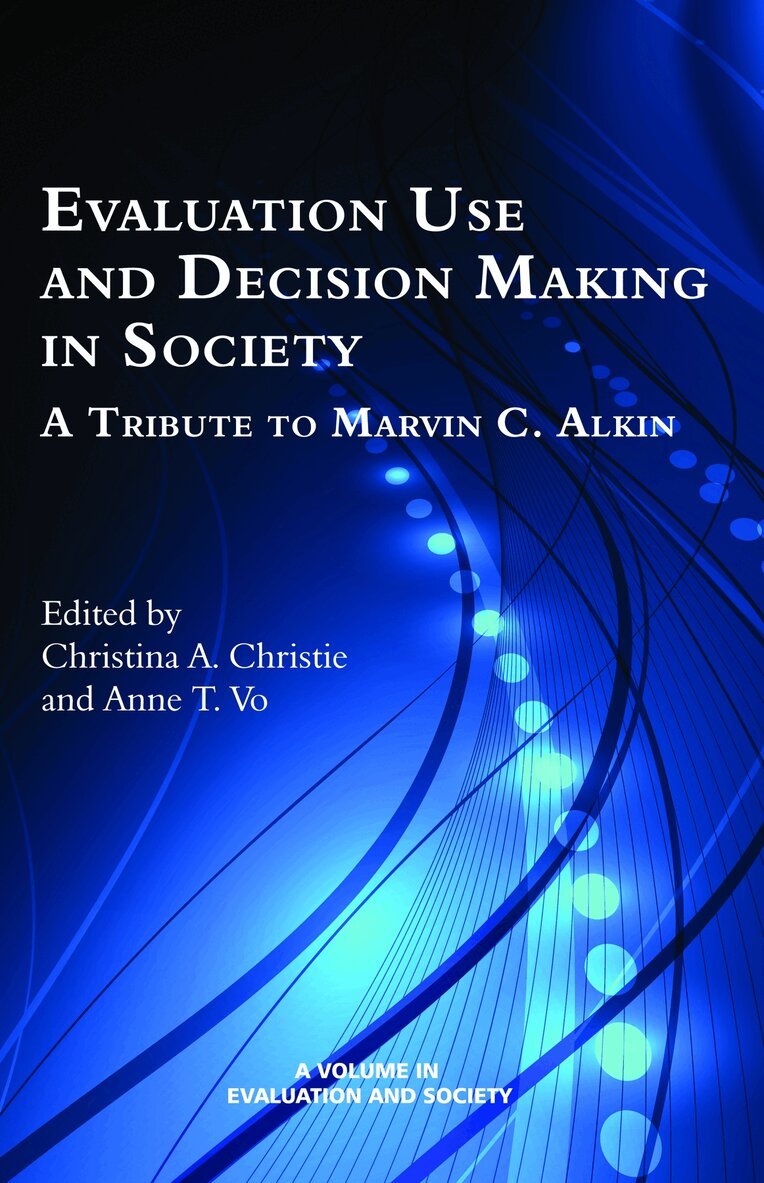
This volume addresses a fundamental and highly debated issue in the evaluation field – the use of evaluation information for decision-making. Chapter authors honor the contributions of Professor Marvin C. Alkin to the evaluation use literature and advance our thinking on the topic by exploring a wide range of issues related to the theoretical and practical challenges of using evaluation information to make informed, evidence-based decisions. Readers will come away from this volume with a new and clearer understanding of the theoretical, contextual, methodological, and political dimensions of use and with direction for practice. Chapters are written by leading evaluation scholars, including Ernest House; Stewart Donaldson and Tarek Azzam; Eric Barela; Richard D. Nunneley, Jr., Jean A. King, Kelli Johnson, and Laura Pejsa; Eleanor Chelimsky; Michael Quinn Patton; and Wanda D. Casillas, Rodney K. Hopson and Ricardo L. Gomez.
Evaluation Use and Decision-Making in Society: A Tribute to Marvin C. Alkin will be of great interest to evaluation students, scholars and practitioners. This volume has scholarly application for those who desire a state-of-the-art resource for the latest insights and perspectives on one of the most pressing issues that the evaluation field faces today, while also serving as a useful guide for both novice and experienced evaluation practitioners. It is appropriate for use in a variety of evaluation courses including Introduction to Evaluation and Procedural Issues in Evaluation as well as topical seminars such as Evaluation Use and Decision-Making.
557 kr
Läs direkt efter köp