Christina E. Bejarano – författare
Visar alla böcker från författaren Christina E. Bejarano. Handla med fri frakt och snabb leverans.
3 produkter
3 produkter
2 181 kr
Skickas inom 10-15 vardagar
Many questions remain unanswered about the observable differences in voting behavior, partisanship, and cultural attitudes among men and women. Latino political participation in the United States is generally lower than the rest of the population, mainly due to their high proportion of youth and foreign born populations that are ineligible to vote. This dynamic is slowing changing, partly as a result of the rapidly growing Latino population in the United States.This book delves deeper into the complex gender differences for Latino political behavior. More specifically, it is a political analysis of the diverse U.S. Latino population and the interacting factors that can influence male and female differences in voting and policy attitudes. Christina E. Bejarano carefully unpacks more aspects of the gender category for Latinos, including analyzing the gender differences in Latino political behavior across national origin, foreign born status, and generational status.The Latino gender gap can have far-reaching political implications on electoral politics. As the Latino population highlights their growing political sway, the major political parties have and will strategically mobilize and court the Latino electorate, Latinas in particular.
618 kr
Skickas inom 10-15 vardagar
Many questions remain unanswered about the observable differences in voting behavior, partisanship, and cultural attitudes among men and women. Latino political participation in the United States is generally lower than the rest of the population, mainly due to their high proportion of youth and foreign born populations that are ineligible to vote. This dynamic is slowing changing, partly as a result of the rapidly growing Latino population in the United States.This book delves deeper into the complex gender differences for Latino political behavior. More specifically, it is a political analysis of the diverse U.S. Latino population and the interacting factors that can influence male and female differences in voting and policy attitudes. Christina E. Bejarano carefully unpacks more aspects of the gender category for Latinos, including analyzing the gender differences in Latino political behavior across national origin, foreign born status, and generational status.The Latino gender gap can have far-reaching political implications on electoral politics. As the Latino population highlights their growing political sway, the major political parties have and will strategically mobilize and court the Latino electorate, Latinas in particular.
207 kr
Skickas inom 10-15 vardagar
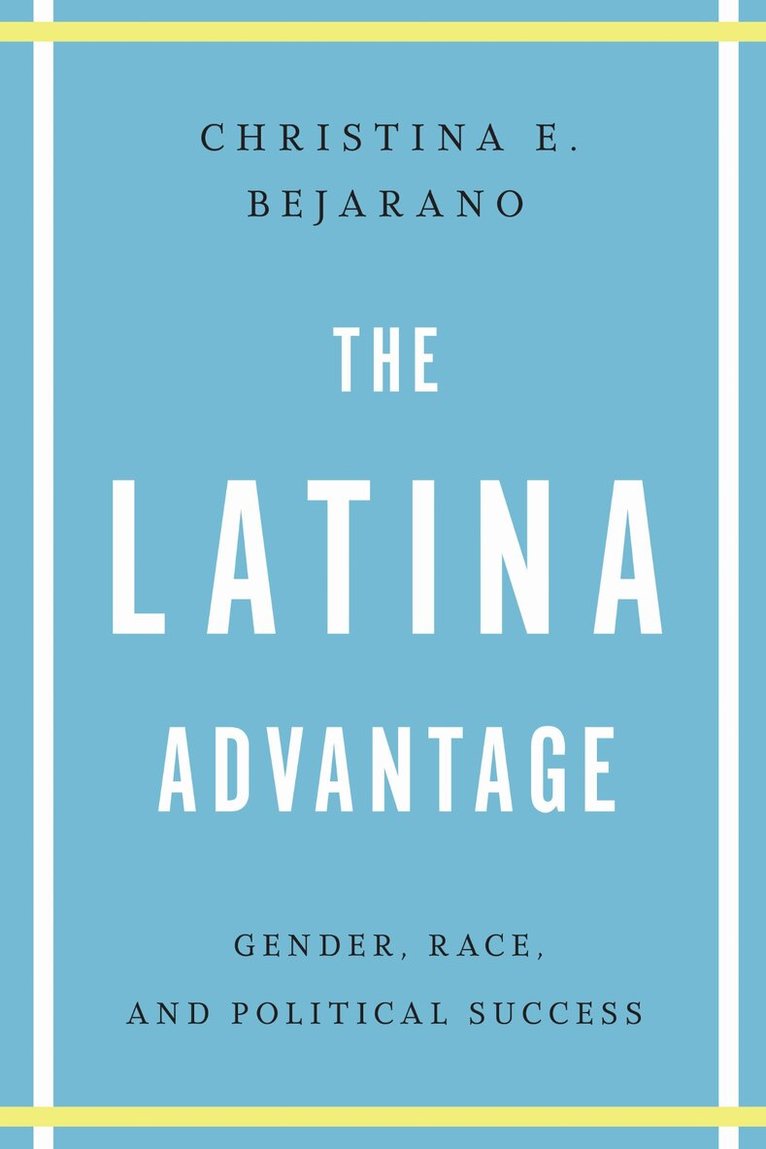
During the past decade, racial/ethnic minority women have made significant strides in U.S. politics, comprising large portions of their respective minority delegations both in Congress and in state legislatures. This trend has been particularly evident in the growing political presence of Latinas, yet scholars have offered no clear explanations for this electoral phenomenon-until now.In The Latina Advantage, Christina E. Bejarano draws on national public opinion datasets and a close examination of state legislative candidates in Texas and California to demonstrate the new power of the political intersection between race and gender. Underscoring the fact that racial/ethnic minority women form a greater share of minority representatives than do white women among white elected officials, Bejarano provides empirical evidence to substantiate previous theoretical predictions of the strategic advantage in the intersectionality of gender and ethnicity in Latinas. Her evidence indicates that two factors provide the basis for the advantage: increasingly qualified candidates and the softening of perceived racial threat, leading minority female candidates to encounter fewer disadvantages than their male counterparts.Overturning the findings of classic literature that reinforce stereotypes and describe minority female political candidates as being at a compounded electoral disadvantage, Bejarano brings a crucial new perspective to dialogues about the rapidly shifting face of America’s electorate.