Christine Burgin - Böcker
Visar alla böcker från författaren Christine Burgin. Handla med fri frakt och snabb leverans.
10 produkter
10 produkter
403 kr
Skickas inom 7-10 vardagar
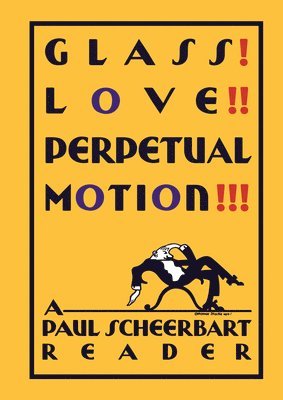
German writer, critic, and theorist Paul Scheerbart died nearly a century ago, but his influence is still being felt today. Considered by some a mad eccentric and by others an important visionary in his own time, he is now experiencing a revival thanks to a new generation of scholars who are rightfully situating him in the modernist pantheon. Glass! Love!! Perpetual Motion!!! is the first collection of Scheerbart's multifarious writings to be published in English. In addition to a selection of his fantastical short stories, it includes the influential architectural manifesto Glass Architecture and his literary tour de force Perpetual Motion: The Story of an Invention. The latter, written in the guise of a scientific work (complete with technical diagrams), was taken as such when first published but in reality is a function - albeit one with an important message. Glass! Love!! Perpetual Motion!!! is richly illustrated with period material, much of it never before reproduced, including a selection of artwork by Paul Scheerbart himself.Accompanying this original material is a selection of essays by scholars, novelists, and film-makers commissioned for this publication to illuminate Scheerbart's importance, then and now, in the worlds of art, architecture, and culture. Coedited by artist Josiah McElheny and Christine Burgin, with new artwork created for this publication by McElheny and beautifully designed by Purtill Family Business, Glass! Love!! Perpetual Motion!!! is a long-overdue monument to a modern master.
431 kr
Skickas inom 7-10 vardagar
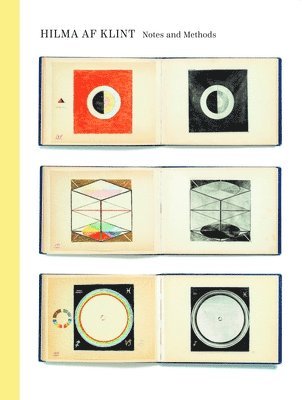
At the turn of the twentieth century, Swedish artist Hilma af Klint (1862–1944) created a body of work that left visible reality behind, exploring the radical possibilities of abstraction years before Vasily Kandinsky, Kazimir Malevich, or Piet Mondrian. Many consider her the first trained artist to create abstract paintings. With Hilma af Klint: Notes and Methods, we get to experience the arc of Klint’s artistic investigation in her own words.Hilma af Klint studied at the Royal Swedish Academy in Stockholm where she was part of the first generation of female students. Up until the beginning of the century, she painted mainly landscapes and detailed botanical studies. Her work from this period was that of a young artist of her time who meticulously observed the world around her. But, like many of her contemporaries, af Klint was also interested in the invisible relationships that shape our world, believing strongly in a spiritual dimension. She joined the Theosophical Society, and, with four fellow female members who together called themselves “The Five,” began to study mediumship. Between 1906 and 1915, purportedly guided by a higher power, af Klint created 193 individual works that, in both scale and scope of imagery, are like no other art created at that time. Botanically inspired images and mystical symbols, diagrams, words and geometric series, all form part af Klint’s abstract language. These abstract techniques would not be seen again until years later.Notes and Methods presents facsimile reproductions of a wide array of af Klint’s early notebooks accompanied by the first English translation of af Klint’s extensive writings. It contains the rarely seen “Blue Notebooks,” hand-painted and annotated catalogues af Klint created of her most famous series “Paintings for the Temple,” and a dictionary compiled by af Klint of the words and letters found in her work. An introduction by Iris Müller-Westermann illuminates this unique and important contribution to the legacy of Hilma af Klint.
289 kr
Skickas inom 5-8 vardagar
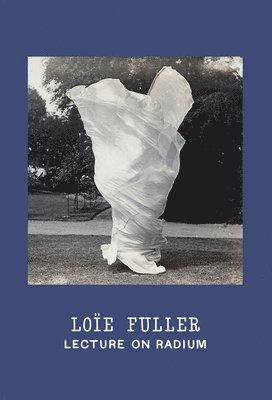
A luminary in more ways than one, celebrated dancer Loïe Fuller studied radium and its potential uses in performanceThe luminous and radical dance performances of Loïe Fuller (1862–1928) at the turn of the 20th century were unlike anything that had ever been staged before. In her Serpentine Dance, she wore a large, diaphanous gown she manipulated with her arms to form undulating waves, while colored lights projected onto the fabric gave the illusion of birds, animals or flowers. While her profound influence on writers and artists such as Mallarmé and Rodin is well documented, less well known is Fuller’s passion for technology and her involvement with the leading scientists of the time.Lecture on Radium spotlights Fuller’s scientific forays in her own words alongside an array of archival documents and photographs of the dancer in action. The centerpiece of the book is her 1907 lecture on the invention of radium, her notes on meeting Marie and Pierre Curie and Thomas Alva Edison, and her literally explosive efforts to create a glow-in-the-dark dance performance. Featuring an introduction by renowned cinema scholar Tom Gunning, this book presents Fuller’s eccentric passions and pioneering pursuits in a fresh light.
246 kr
Skickas inom 5-8 vardagar
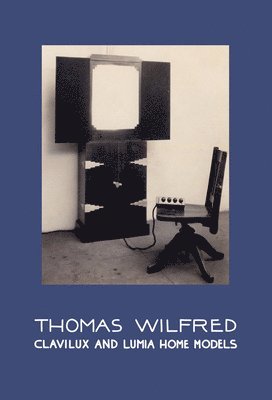
Wilfred’s pioneering and strangely prescient musical instrument predates television, video art and psychedeliaInventor, designer, artist and musician Thomas Wilfred (1889–1968) devoted his life to the creation of a new art form—"Lumia," or the art of light. He invented his own version of a color organ (a term he disliked) and dubbed it the Clavilux, from the Latin meaning "light played by key." After a successful international tour in the 1920s, Wilfred reinvented these large-scale performances as self-enclosed light shows for domestic entertainment. While they enjoyed a short commercial life, Wilfred’s aesthetically elegant and interactive Clavilux and Lumia home models soon found their way into storied collections. His work was included in the Museum of Modern Art’s 1952 exhibition 15 Americans, where it was seen by many artists who would work with light as their medium in the 1960s and ’70s.Clavilux and Lumia Home Models presents a stimulating collection of archival material culled from the Wilfred archive at Yale University and other sources, including Wilfred’s never-before-published sketches.
246 kr
Skickas inom 5-8 vardagar
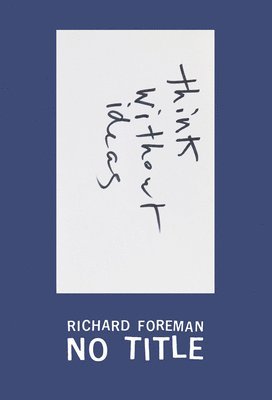
Cryptic, lyrical and philosophical words from a paragon of experimental New York theater, juxtaposed with the haunting maquettes he created for his playsAn avant-garde comrade of Jonas Mekas, George Maciunas, Jack Smith and others, Richard Foreman (born 1937) was at the forefront of downtown New York’s experimental theater scene of the 1960s. He wrote and directed more than 80 verbally and visually singular productions with his Ontological-Hysteric Theater company in a career that spanned 45 years. Foreman’s visually arresting plays made heavy use of static tableaux, frantic choreography, projected text and Foreman himself sitting in front of the stage operating the lights and sound. While Foreman has published many of his scripts, No Title is a text unlike anything preceding it. Handwritten on a series of note cards, these aphoristic declarations and philosophical asides hover between being a stream-of-consciousness dialogue and a message sent from another world. Foreman’s wonderfully elliptical words are counterposed with photographs of the mystifying diorama-like maquettes that he created while staging a number of his plays.
246 kr
Skickas inom 5-8 vardagar
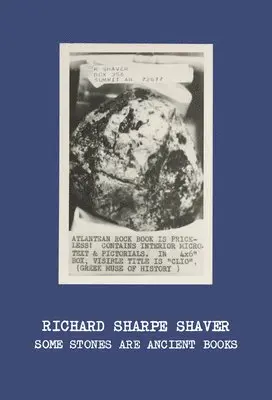
Cult sci-fi author and controversial theorist Richard Sharpe Shaver devoted his life to decoding messages from ancient civilizations left behind in rocksScience fiction writer Richard Sharpe Shaver believed that rocks were books imprinted with valuable information about such mythical ancient races as the Lemurians and Atlanteans. His controversial stories about an advanced prehistoric civilization and a race of evil beings living at the center of the earth appeared in Amazing Stories and other landmark sci-fi publications of the ’40s and ’50s.A decade later, he was living in relative isolation and devoting himself to rock book research, a course of study that he shared with a devoted group of correspondents. Shaver believed that ancient leaders had left behind images embedded into rocks, which he then tried to interpret. Some Stones Are Ancient Books contains a generous selection of Rokfogos accompanied by hand-typed texts in which Shaver explains—not always patiently—all that can be seen in these stones. Also included are facsimiles of his handmade books and publications, all of which he felt to be of incalculable importance to civilization.Richard Sharpe Shaver (1907–75) was an artist and author whose work frequently appeared in 1940s science fiction magazines such as Amazing Stories. He was the center of the Shaver Mystery, a controversy regarding his alleged discovery of a prehistoric civilization, which sparked mass interest and a devoted following that continues to this day.
246 kr
Skickas inom 5-8 vardagar
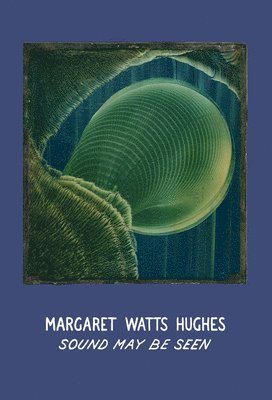
Ethereal and enigmatic glass slides preserve the resonance of Hughes’ voice in rippling, organic compositions The acclaimed Welsh singer and philanthropist Margaret Watts Hughes (1842–1907) was one of many inventors of her day fascinated by the visual documentation of sound. Her "eidophone" comprised a tube attached to a chamber covered in rubber, or "diaphragm." Hughes covered a glass slide with grains of sand or coarse pigment, then saturated it with water or milk. By singing into the device, the vibrations of her voice would etch out patterns onto the disc: an artistic rendering of the scientific principle of standing-wave resonance. Her "Voice Figures," as she called them, ranged from primitive patterns to designs resembling flowers, seashells and other natural phenomena. While Hughes valued her discovery for both its scientific and spiritual implications, leaders of the Theosophical movement saw her work as a means of making visible the invisible world.Sound May Be Seen presents selections from Hughes’ original 1891 publication of the "Voice Figures" and a rare surviving set of her glass slides, alongside contemporary reactions to her captivating and ultimately enigmatic work.
240 kr
Kommande
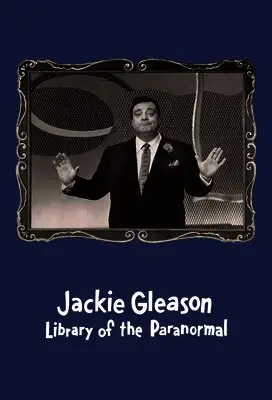
"I want to make hypnotic therapy and psychology my livelihood when I get out of this racket…And I'm going to spend as much time as possible investigating psychic phenomena." —Jackie Gleason, Parade, 1952Comic legend Jackie Gleason (1916–87) was one of the biggest, most beloved and best paid stars of his time. His role as Ralph Kramden in The Honeymooners remains a veritable classic of television's early days. As big as his star was, Gleason never shied away from one of his favorite, nonmainstream topics: the occult. A high school dropout with a photographic memory and a major case of insomnia, he was an avid reader and spiritual searcher who looked for answers in the most unexpected places. Gleason was also a confirmed skeptic who believed that some grand cosmic scheme existed, but he could not say what it might ultimately be.Additionally, Gleason amassed a staggering collection of over 3,000 esoteric books, ranging from scholarly studies to supermarket paperbacks, now part of the holdings of the University of Miami Special Collections Library. Library of the Paranormal lifts the lid on this treasure trove of arcana. A generous selection of colorful and quizzical covers from Charles Fort, L. Ron Hubbard and dozens more are reproduced alongside press excerpts and interviews in which Gleason manages to shoehorn his thoughts on ESP, aliens, life after death and other decidedly off-topic interests, including his failed plans in the early '50s to produce a television show devoted to paranormal experiences.
247 kr
Kommande
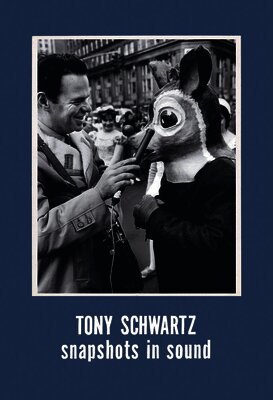
Children's games, taxi drivers, music from an open window—Schwartz's recordings are an auditory love letter to a bygone New York CityA born and bred New Yorker, Tony Schwartz (1923–2008) was enamored with his city. Though a popular campaign designer for Madison Avenue clients such as Johnson & Johnson and American Airlines, and later creating the sound for hundreds of political advertisements (including the infamous Daisy spot for Lyndon B. Johnson's 1964 campaign), his first and truest love was the sounds of the streets around him. Using a reel-to-reel tape recorder, the agoraphobic Schwartz ventured only a few blocks from his Hell's Kitchen apartment yet captured an encyclopedia of sounds. Many of these tapes were broadcast on his perennial WNYC radio show "Around New York" from 1945 to 1976. Though the term may seem an oxymoron, Tony Schwartz truly was an audio visionary.Sampling from Schwartz's voluminous catalog of recordings and coupling them with the poetic descriptions he gave to them, Snapshots in Sound assembles an A–Z of Schwartz's vivid practice. Filled with candid images of his documentation in action, cover art from his many records and his own writings, this charming volume also includes an appreciation of Schwartz's work from the legendary Village Voice columnist Nat Hentoff.
240 kr
Kommande
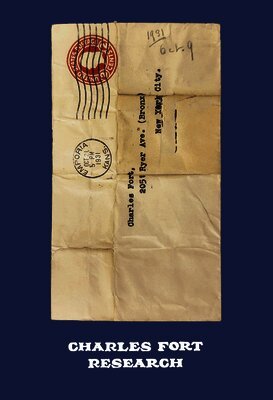
From teleportation to spontaneous human combustion, poltergeists and UFOs—Fort's expansive and erratic research forms the basis of modern paranormal studiesCharles Fort (1874–1932) was a true iconoclast who embodied the idea of the "cult writer" in every sense of the term with his wildly entertaining prose and confounding research into the unknown. His early admirers formed the Fortean Society during his lifetime, in 1931, to elevate his work. Since that time, Fort's name has been synonymous with the strange, in large part due to the Fortean Times, published since 1973.While Fort has received sustained attention over the years, Research is the first book to delve into his methodology and source material for his investigations into paranormal phenomena. In addition to Fort's famously small notes that are extensively reproduced here for the first time, the book includes Fort's remarkable letters soliciting information on a wide variety of inexplicable phenomena that appeared in newspapers worldwide, as well as the responses he received. From frogs falling from the sky to sea monsters who inhabit our oceans, it is all here in his inimitable style, along with an appreciation by acclaimed experimental filmmaker and self-proclaimed Fortean Peggy Ahwesh.