Christine Caldwell Ames – författare
Visar alla böcker från författaren Christine Caldwell Ames. Handla med fri frakt och snabb leverans.
6 produkter
6 produkter
E-bok
Engelska, 20131 145 kr
Läs direkt efter köp
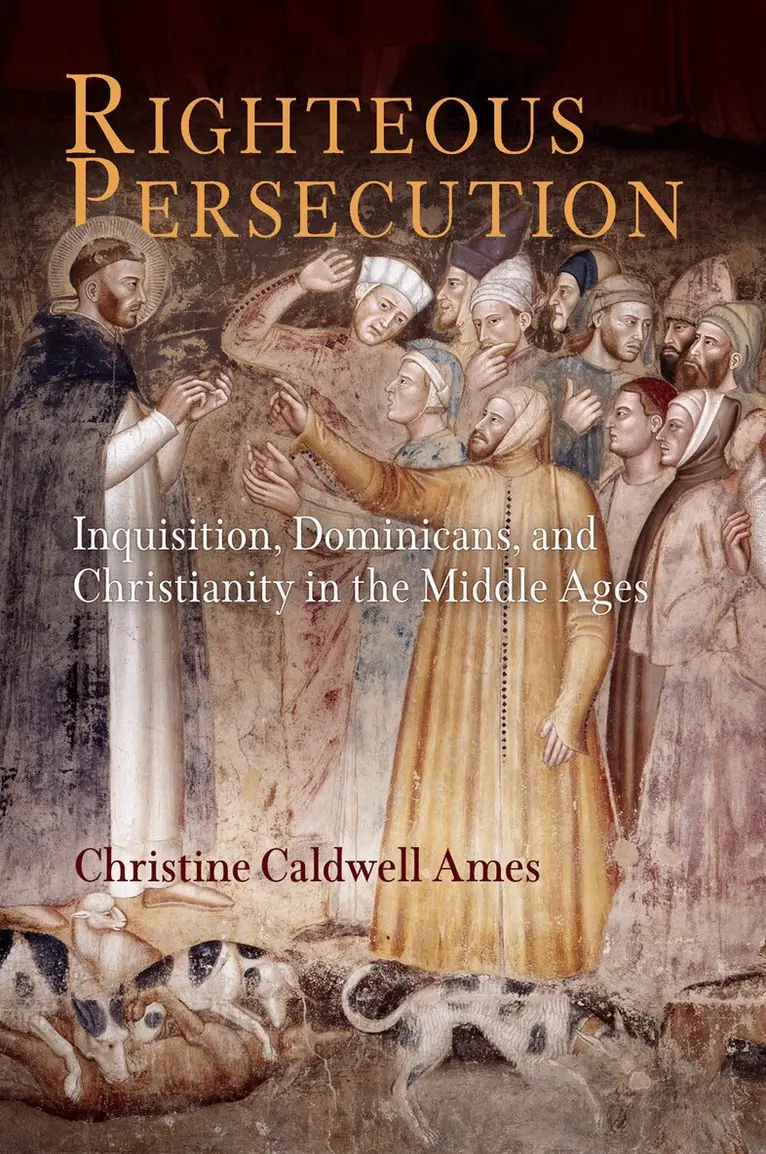
Righteous Persecution examines the long-controversial involvement of the Order of Preachers, or Dominicans, with inquisitions into heresy in medieval Europe. From their origin in the thirteenth century, the Dominicans were devoted to a ministry of preaching, teaching, and pastoral care, to "save souls" particularly tempted by the Christian heresies popular in western Europe. Many persons then, and scholars in our own time, have asked how members of a pastoral order modeled on Christ and the apostles could engage themselves so enthusiastically in the repressive persecution that constituted heresy inquisitions: the arrest, interrogation, torture, punishment, and sometimes execution of those who deviated in belief from Roman Christianity.Drawing on an extraordinarily wide base of ecclesiastical documents, Christine Caldwell Ames recounts how Dominican inquisitors and their supporters crafted and promoted explicitly Christian meanings for their inquisitorial persecution. Inquisitors' conviction that the sin of heresy constituted the graver danger to the Christian soul and to the church at large led to the belief that bringing the individual to repentance-even through the harshest means-was indeed a pious way to carry out their pastoral task. However, the resistance and criticism that inquisition generated in medieval communities also prompted Dominicans to consider further how this new marriage of persecution and holiness was compatible with authoritative Christian texts, exemplars, and traditions. Dominican inquisitors persecuted not despite their faith but rather because of it, as they formed a medieval Christianity that permitted-or demanded-persecution.Righteous Persecution deviates from recent scholarship that has deemphasized religious belief as a motive for inquisition and illuminates a powerful instance of the way Christianity was itself vulnerable in a context of persecution, violence, and intolerance.
Inbunden, Engelska, 2008
836 kr
Skickas inom 10-15 vardagar
Righteous Persecution examines the long-controversial involvement of the Order of Preachers, or Dominicans, with inquisitions into heresy in medieval Europe. From their origin in the thirteenth century, the Dominicans were devoted to a ministry of preaching, teaching, and pastoral care, to "save souls" particularly tempted by the Christian heresies popular in western Europe. Many persons then, and scholars in our own time, have asked how members of a pastoral order modeled on Christ and the apostles could engage themselves so enthusiastically in the repressive persecution that constituted heresy inquisitions: the arrest, interrogation, torture, punishment, and sometimes execution of those who deviated in belief from Roman Christianity.Drawing on an extraordinarily wide base of ecclesiastical documents, Christine Caldwell Ames recounts how Dominican inquisitors and their supporters crafted and promoted explicitly Christian meanings for their inquisitorial persecution. Inquisitors' conviction that the sin of heresy constituted the graver danger to the Christian soul and to the church at large led to the belief that bringing the individual to repentance-even through the harshest means-was indeed a pious way to carry out their pastoral task. However, the resistance and criticism that inquisition generated in medieval communities also prompted Dominicans to consider further how this new marriage of persecution and holiness was compatible with authoritative Christian texts, exemplars, and traditions. Dominican inquisitors persecuted not despite their faith but rather because of it, as they formed a medieval Christianity that permitted-or demanded-persecution.Righteous Persecution deviates from recent scholarship that has deemphasized religious belief as a motive for inquisition and illuminates a powerful instance of the way Christianity was itself vulnerable in a context of persecution, violence, and intolerance.
Inbunden, Engelska, 2015
1 031 kr
Skickas inom 7-10 vardagar
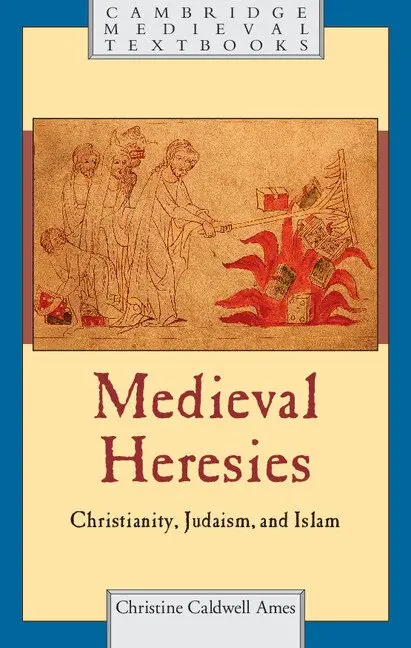
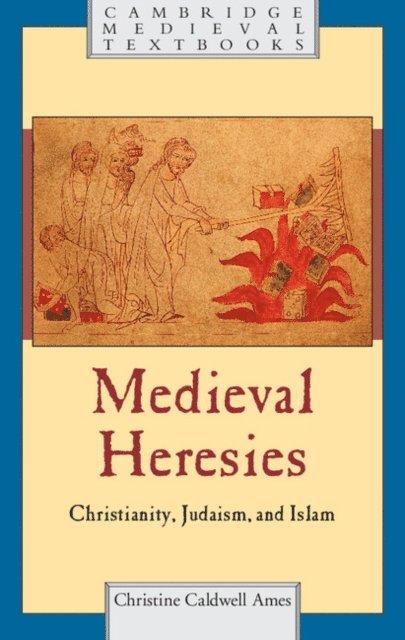
Jews, Christians, and Muslims in the Middle Ages were divided in many ways. But one thing they shared in common was the fear that God was offended by wrong belief. Medieval Heresies: Christianity, Judaism, and Islam is the first comparative survey of heresy and its response throughout the medieval world. Spanning England to Persia, it examines heresy, error, and religious dissent - and efforts to end them through correction, persuasion, or punishment - among Latin Christians, Greek Christians, Jews, and Muslims. With a lively narrative that begins in the late fourth century and ends in the early sixteenth century, Medieval Heresies is an unprecedented history of how the three great monotheistic religions of the Middle Ages resembled, differed from, and even interrelated with each other in defining heresy and orthodoxy.
Häftad, Engelska, 2015
335 kr
Skickas inom 7-10 vardagar
Jews, Christians, and Muslims in the Middle Ages were divided in many ways. But one thing they shared in common was the fear that God was offended by wrong belief. Medieval Heresies: Christianity, Judaism, and Islam is the first comparative survey of heresy and its response throughout the medieval world. Spanning England to Persia, it examines heresy, error, and religious dissent - and efforts to end them through correction, persuasion, or punishment - among Latin Christians, Greek Christians, Jews, and Muslims. With a lively narrative that begins in the late fourth century and ends in the early sixteenth century, Medieval Heresies is an unprecedented history of how the three great monotheistic religions of the Middle Ages resembled, differed from, and even interrelated with each other in defining heresy and orthodoxy.
E-bok
Engelska, 2015378 kr
Läs direkt efter köp
Jews, Christians, and Muslims in the Middle Ages were divided in many ways. But one thing they shared in common was the fear that God was offended by wrong belief. Medieval Heresies: Christianity, Judaism, and Islam is the first comparative survey of heresy and its response throughout the medieval world. Spanning England to Persia, it examines heresy, error, and religious dissent - and efforts to end them through correction, persuasion, or punishment - among Latin Christians, Greek Christians, Jews, and Muslims. With a lively narrative that begins in the late fourth century and ends in the early sixteenth century, Medieval Heresies is an unprecedented history of how the three great monotheistic religions of the Middle Ages resembled, differed from, and even interrelated with each other in defining heresy and orthodoxy.
E-bok
PDF, Engelska, 2015392 kr
Läs direkt efter köp
Jews, Christians, and Muslims in the Middle Ages were divided in many ways. But one thing they shared in common was the fear that God was offended by wrong belief. Medieval Heresies: Christianity, Judaism, and Islam is the first comparative survey of heresy and its response throughout the medieval world. Spanning England to Persia, it examines heresy, error, and religious dissent - and efforts to end them through correction, persuasion, or punishment - among Latin Christians, Greek Christians, Jews, and Muslims. With a lively narrative that begins in the late fourth century and ends in the early sixteenth century, Medieval Heresies is an unprecedented history of how the three great monotheistic religions of the Middle Ages resembled, differed from, and even interrelated with each other in defining heresy and orthodoxy.