Christine M. Hassenstab – författare
Visar alla böcker från författaren Christine M. Hassenstab. Handla med fri frakt och snabb leverans.
11 produkter
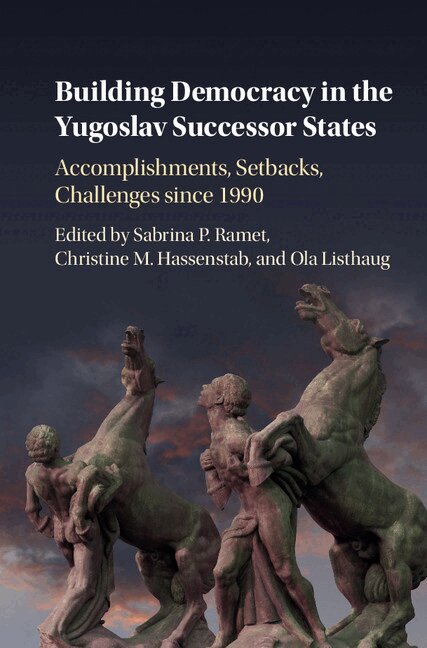
Building Democracy in the Yugoslav Successor States
Accomplishments, Setbacks, and Challenges since 1990
Av Sabrina P. Ramet, Christine M. Hassenstab m. fl.
Inbunden, 2017
1444 kr
Lägg i varukorg
Building democracy in societies that have known only authoritarian rule for half a century is complicated. Taking the post-Yugoslav region as its case study, this volume shows how success with democratisation depends on various factors, including establishing the rule of law, the consolidation of …
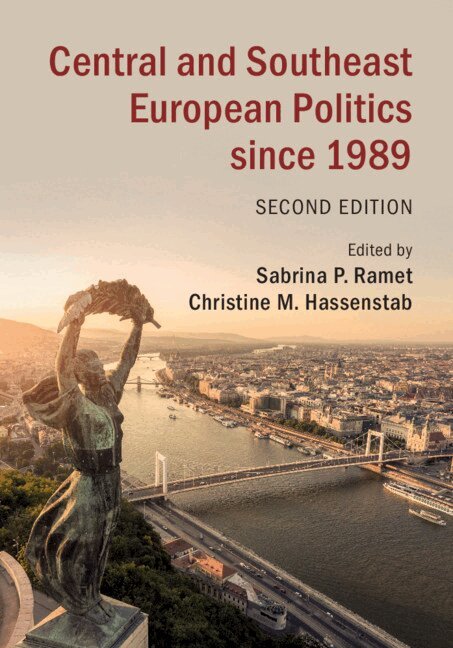
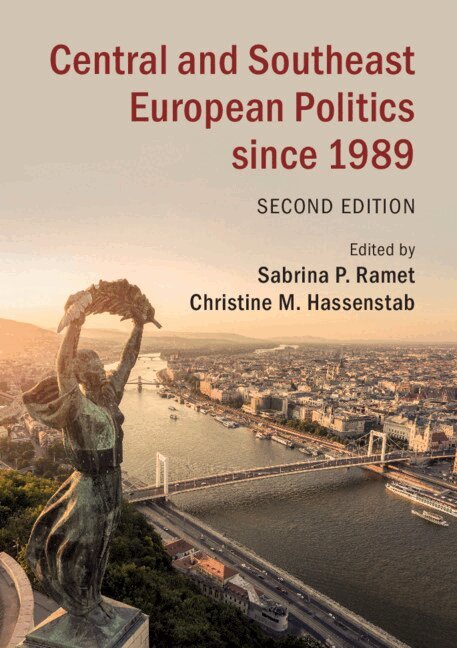
Central and Southeast European Politics since 1989
Av Sabrina P. Ramet, Christine M. Hassenstab
Inbunden, 2019
1872 kr
Lägg i varukorg
The collapse of the communist monopoly across Central and Southeastern Europe in 1989/1990 initiated a process of rapid political, economic, and cultural change. While Bosnia-Herzegovina, Croatia, and Serbia went on to suffer three and a half years of war, all the states of the region have …
Central and Southeast European Politics since 1989
Av Christine M. Hassenstab, Sabrina P. Ramet
E-bok, 2019
652 kr
Lägg i varukorg
The collapse of the communist monopoly across Central and Southeastern Europe in 1989/1990 initiated a process of rapid political, economic, and cultural change. While Bosnia-Herzegovina, Croatia, and Serbia went on to suffer three and a half years of war, all the states of the region have …
Central and Southeast European Politics since 1989
Av Christine M. Hassenstab, Sabrina P. Ramet
E-bok, 2019
638 kr
Lägg i varukorg
The collapse of the communist monopoly across Central and Southeastern Europe in 1989/1990 initiated a process of rapid political, economic, and cultural change. While Bosnia-Herzegovina, Croatia, and Serbia went on to suffer three and a half years of war, all the states of the region have …
Central and Southeast European Politics since 1989
Av Sabrina P. Ramet, Christine M. Hassenstab
Häftad, 2019
525 kr
Lägg i varukorg
The collapse of the communist monopoly across Central and Southeastern Europe in 1989/1990 initiated a process of rapid political, economic, and cultural change. While Bosnia-Herzegovina, Croatia, and Serbia went on to suffer three and a half years of war, all the states of the region have …
Civic and Uncivic Values in the Czech Republic
Value Transformation, Politics, Education, and Gender Equality
Av Sabrina P. Ramet, Vladimir Ðorđević m. fl.
Inbunden, 2022
1561 kr
Lägg i varukorg
This book considers the state of Czech democracy, following the rise of authoritarian regimes in Poland and Hungary and the ascent of billionaire oligarch Andrej Babiš to the office of prime minister of the Czech Republic, leading to concerns about conflict of interest. The authors argue that civic …
Civic and Uncivic Values in the Czech Republic
Value Transformation, Politics, Education, and Gender Equality
Av Christine M. Hassenstab, Vladimir Ðordevic m. fl.
E-bok, 2022
1948 kr
Lägg i varukorg
This book considers the state of Czech democracy, following the rise of authoritarian regimes in Poland and Hungary and the ascent of billionaire oligarch Andrej Babiš to the office of prime minister of the Czech Republic, leading to concerns about conflict of interest. The authors argue that civic …
Civic and Uncivic Values in the Czech Republic
Value Transformation, Politics, Education, and Gender Equality
Av Sabrina P. Ramet, Vladimir Ðorđević m. fl.
Häftad, 2023
1561 kr
Lägg i varukorg
This book considers the state of Czech democracy, following the rise of authoritarian regimes in Poland and Hungary and the ascent of billionaire oligarch Andrej Babiš to the office of prime minister of the Czech Republic, leading to concerns about conflict of interest. The authors argue that civic …
Civic and Uncivic Values in the Czech Republic
Value Transformation, Politics, Education, and Gender Equality
Av Sabrina P. Ramet, Vladimir Ðorđević m. fl.
Inbunden, 2026
1641 kr
Lägg i varukorg
The Czech Republic (also known as Czechia since 2016) has had a troubled post-communist transition, in particular with the ascent of billionaire oligarch Andrej Babiš to the office of prime minister of the Czech Republic in 2017, returning in 2015. The second edition of this book adds chapters on …
Civic and Uncivic Values in the Czech Republic
Value Transformation, Politics, Education, and Gender Equality
Av Christine M. Hassenstab, Vladimir Ðordevic m. fl.
E-bok, 2026
2111 kr
Lägg i varukorg
The Czech Republic (also known as Czechia since 2016) has had a troubled post-communist transition, in particular with the ascent of billionaire oligarch Andrej Babiš to the office of prime minister of the Czech Republic in 2017, returning in 2015. The second edition of this book adds chapters on …
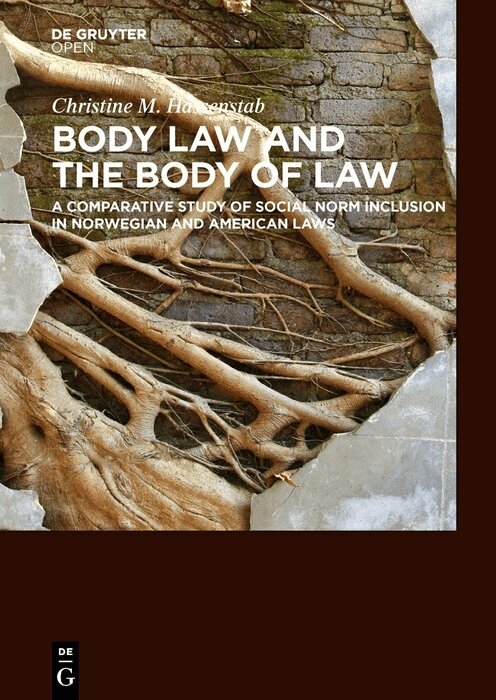
Body Law and the Body of Law
A Comparative Study of Social Norm Inclusion in Norwegian and American Laws
Inbunden, 2014
1880 kr
Lägg i varukorg
For some legal philosophers, if a law is procedurally correct, enacted in ways constitutionally recognised and agreed upon, then the content is of no significance. It is a “good” law, no matter what it does or justifies. The question of one's consent or opposition to any particular law is …