Christine Rubie-Davies - Böcker
Visar alla böcker från författaren Christine Rubie-Davies. Handla med fri frakt och snabb leverans.
4 produkter
4 produkter
2 434 kr
Skickas inom 10-15 vardagar
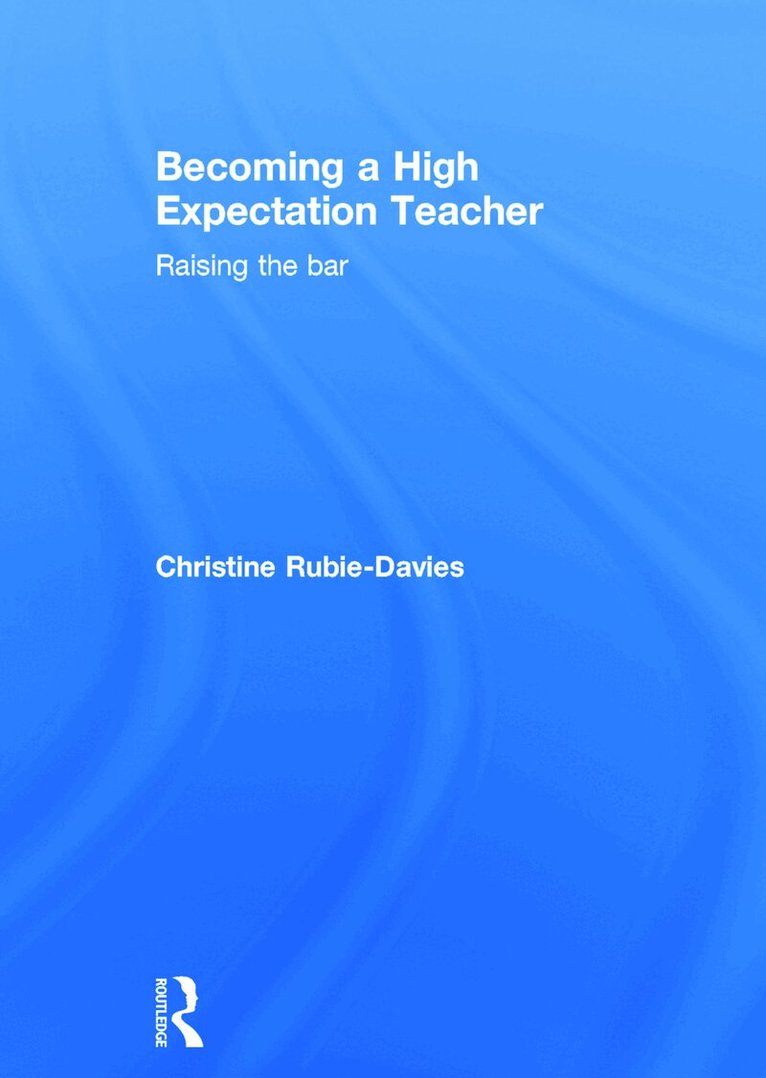
We constantly hear cries from politicians for teachers to have high expectations. But what this means in practical terms is never spelled out. Simply deciding that as a teacher you will expect all your students to achieve more than other classes you have taught in the same school, is not going to translate automatically into enhanced achievement for students.Becoming a High Expectation Teacher is a book that every education student, training or practising teacher, should read. It details the beliefs and practices of high expectation teachers – teachers who have high expectations for all their students – and provides practical examples for teachers of how to change classrooms into ones in which all students are expected to learn at much higher levels than teachers may previously have thought possible. It shows how student achievement can be raised by providing both research evidence and practical examples. This book is based on the first ever intervention study in the teacher expectation area, designed to change teachers’ expectations through introducing them to the beliefs and practices of high expectation teachers. A holistic view of the classroom is emphasised whereby both the instructional and socio-emotional aspects of the classroom are considered if teachers are to increase student achievement. There is a focus on high expectation teachers, those who have high expectations for all students, and a close examination of what it is that these teachers do in their classrooms that mean that their students make very large learning gains each year. Becoming a High Expectation Teacher explores three key areas in which what high expectation teachers do differs substantially from what other teachers do: the way they group students for learning, the way they create a caring classroom community, and the way in which they use goalsetting to motivate students, to promote student autonomy and to promote mastery learning. Areas covered include:- Formation of teacher expectations Teacher personality and expectation Ability grouping and goal setting Enhancing class climate Sustaining high expectations for students Becoming a High Expectation Teacher is an essential read for any researcher, student, trainee or practicing teacher who cares passionately about the teacher-student relationship and about raising expectations and student achievement.
637 kr
Skickas inom 10-15 vardagar
We constantly hear cries from politicians for teachers to have high expectations. But what this means in practical terms is never spelled out. Simply deciding that as a teacher you will expect all your students to achieve more than other classes you have taught in the same school, is not going to translate automatically into enhanced achievement for students.Becoming a High Expectation Teacher is a book that every education student, training or practising teacher, should read. It details the beliefs and practices of high expectation teachers – teachers who have high expectations for all their students – and provides practical examples for teachers of how to change classrooms into ones in which all students are expected to learn at much higher levels than teachers may previously have thought possible. It shows how student achievement can be raised by providing both research evidence and practical examples. This book is based on the first ever intervention study in the teacher expectation area, designed to change teachers’ expectations through introducing them to the beliefs and practices of high expectation teachers. A holistic view of the classroom is emphasised whereby both the instructional and socio-emotional aspects of the classroom are considered if teachers are to increase student achievement. There is a focus on high expectation teachers, those who have high expectations for all students, and a close examination of what it is that these teachers do in their classrooms that mean that their students make very large learning gains each year. Becoming a High Expectation Teacher explores three key areas in which what high expectation teachers do differs substantially from what other teachers do: the way they group students for learning, the way they create a caring classroom community, and the way in which they use goalsetting to motivate students, to promote student autonomy and to promote mastery learning. Areas covered include:- Formation of teacher expectations Teacher personality and expectation Ability grouping and goal setting Enhancing class climate Sustaining high expectations for students Becoming a High Expectation Teacher is an essential read for any researcher, student, trainee or practicing teacher who cares passionately about the teacher-student relationship and about raising expectations and student achievement.
2 237 kr
Skickas inom 10-15 vardagar
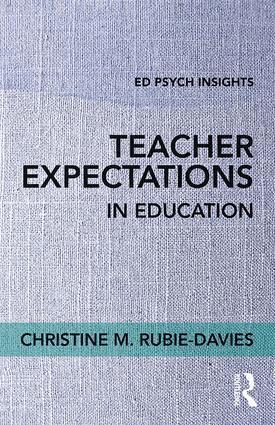
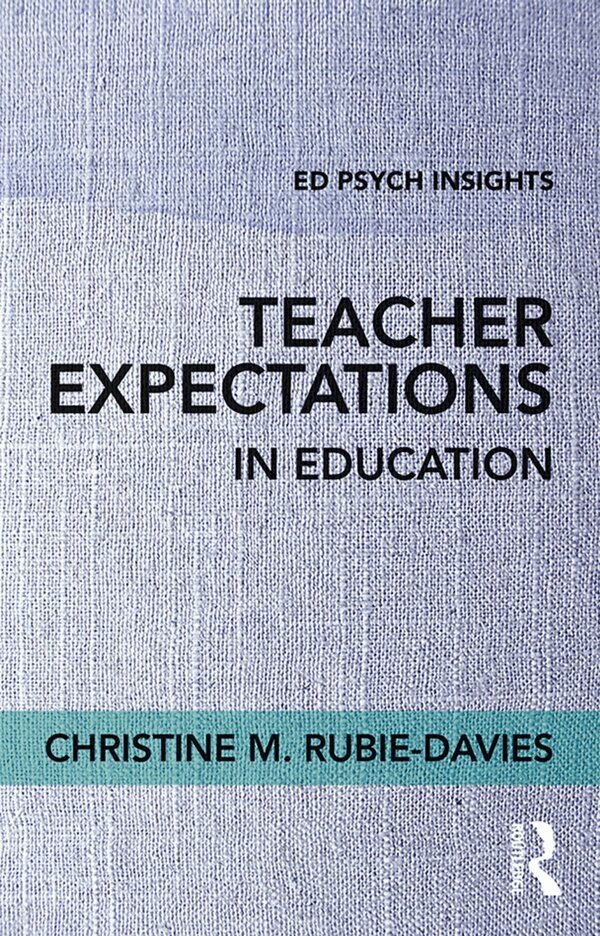
The influence of teacher expectations on student outcomes is routinely explored by professors, administrators, teachers, researchers, journalists, and scholars. Written by a leading expert on teacher expectations, this book situates the topic within the broader context of educational psychology research and theory, and brings it to a wider audience. With chapters on the history of the teacher expectation field, student perceptions of teacher expectations, and implications for practice, this concise volume is designed for use in educational psychology courses and any education course that includes social-psychological aspects of classrooms in the curriculum. It will be indispensable for student researchers and both pre- and in-service teachers alike.
413 kr
Skickas inom 10-15 vardagar
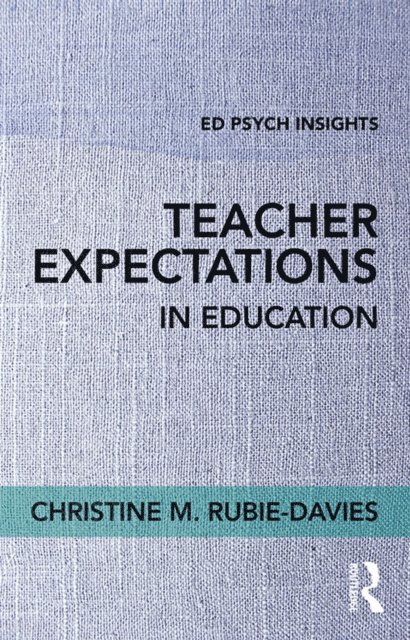
The influence of teacher expectations on student outcomes is routinely explored by professors, administrators, teachers, researchers, journalists, and scholars. Written by a leading expert on teacher expectations, this book situates the topic within the broader context of educational psychology research and theory, and brings it to a wider audience. With chapters on the history of the teacher expectation field, student perceptions of teacher expectations, and implications for practice, this concise volume is designed for use in educational psychology courses and any education course that includes social-psychological aspects of classrooms in the curriculum. It will be indispensable for student researchers and both pre- and in-service teachers alike.