Christoph Deutschmann - Böcker
Visar alla böcker från författaren Christoph Deutschmann. Handla med fri frakt och snabb leverans.
6 produkter
6 produkter
649 kr
Skickas inom 10-15 vardagar
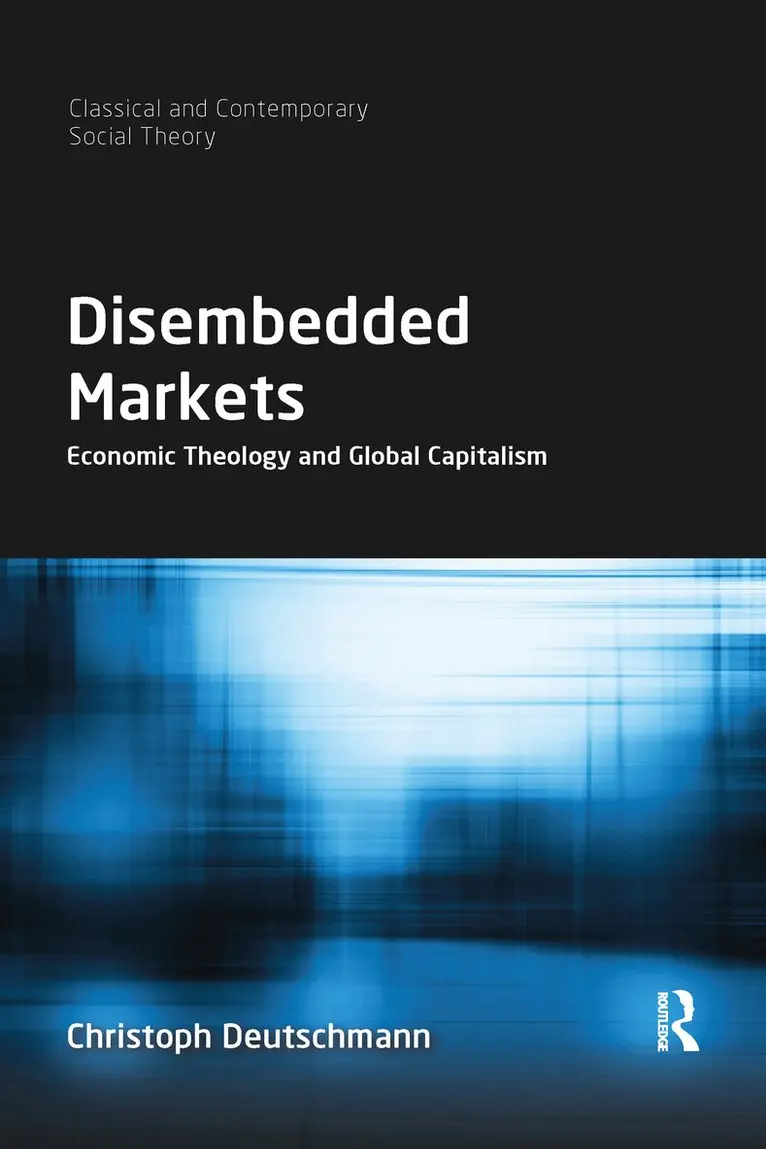
This book offers a sociological analysis of globalised capitalist markets, advancing the notion of ‘disembedded markets’ to challenge the idea of ‘social embeddedness’ common in economic sociology. Avoiding an exclusive focus on institutions, networks and trust relationships surrounding markets, the author concentrates on private property as the key institution of markets, in order to emphasise the historical origins of modern capitalism the free market narrative, and develop a socio-historical analysis of the disembedding process together with an account of the built-in contradictions and limits of market universalisation. Through an analysis of their encompassing character, this volume demonstrates that disembedded markets do not fit standard theoretical accounts of sociality – a problem taken up not only by Karl Marx, but also by Friedrich August von Hayek and Niklas Luhmann – and questions the attempts of the emerging approach of ‘economic theology’ to draw parallels between the practices that arise from disembedded markets and from forms of religious experience and ritual. A rigorous examination of the phenomenon of disembedded markets and the claims to which they give rise concerning the equivalences between religion and capitalism, this book will appeal to scholars of sociology and economics with interests in capitalism, social theory, and global markets.
2 103 kr
Skickas inom 10-15 vardagar
This book offers a sociological analysis of globalised capitalist markets, advancing the notion of ‘disembedded markets’ to challenge the idea of ‘social embeddedness’ common in economic sociology. Avoiding an exclusive focus on institutions, networks and trust relationships surrounding markets, the author concentrates on private property as the key institution of markets, in order to emphasise the historical origins of modern capitalism the free market narrative, and develop a socio-historical analysis of the disembedding process together with an account of the built-in contradictions and limits of market universalisation. Through an analysis of their encompassing character, this volume demonstrates that disembedded markets do not fit standard theoretical accounts of sociality – a problem taken up not only by Karl Marx, but also by Friedrich August von Hayek and Niklas Luhmann – and questions the attempts of the emerging approach of ‘economic theology’ to draw parallels between the practices that arise from disembedded markets and from forms of religious experience and ritual. A rigorous examination of the phenomenon of disembedded markets and the claims to which they give rise concerning the equivalences between religion and capitalism, this book will appeal to scholars of sociology and economics with interests in capitalism, social theory, and global markets.
455 kr
Skickas inom 10-15 vardagar
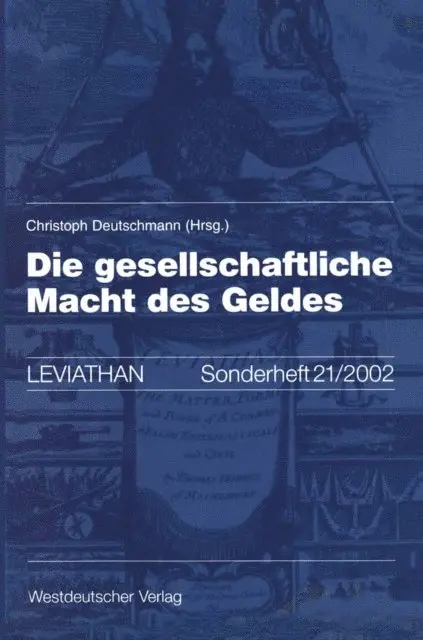
Dass Geld nicht nur Träger von "Kaufkraft" ist, sondern seinem Besitzer Macht verleiht, ja, dass es sich seines Willens und seiner Seele selbst bemächtigt, war zu allen Zeiten ein zentrales Thema der schönen Literatur. Für Shakespeare war Geld das "stärkste Gift", für George Bernhard Shaw "das Allerwichtigste auf der Welt", für Robert Musil "das Maß aller Dinge" (Weimer 1994). Die Aufmerksamkeit, die das Thema Geld in der Poesie immer genossen hat, hat in der Wissenschaft freilich bis heute nur wenig Widerhall gefunden. Für die Soziologie beschreibt Ganßmann (1996, S. 17) die Situation treffend wie folgt: "Weil es als normal gilt, daß fast das ganze soziale Leben am Tropf des Geldes hängt, richtet sich die soziologische Aufmerksamkeit kaum auf diese Normalität, eher auf verbliebene nicht-monetarisierte Bereiche, etwa die zarten Pflänzchen der Lebenswelt, oder die schon seit Beginn der modernen Gesellschaft bedrohten, 'letzten' moralischen Ressourcen". Auf die Frage nach dem Geld pflege der Soziologe zu antworten: "Dafür bin ich nicht zuständig. Der Kollege von nebenan kommt gleich". Aber, so stellt sich bald heraus: Auch der "Kollege von nebenan", nämlich der Ökonom, weiß zum Geld nicht allzu viel zu sagen. Die Wirtschaftstheorie betrachtet das Geld als Wertmaß und Tauschmittel. Man geht von der Vorstellung eines "realen" Tausches von Gütern gegen Güter aus, der - im Gleichgewicht - zu einer bestimmten Struktur der geldlos gedachten relativen Preise führt. Das Geld wird erst im zweiten Schritt eingeführt: als eine "Notlösung" (Aglietta 1993, S.
504 kr
Skickas inom 3-6 vardagar
Die Wirtschaft ist ein zentraler Bereich sozialen Handelns. In den vergangenen beiden Jahrzehnten hat die Wirtschaftssoziologie, ausgehend von den USA, einen Aufschwung erlebt und eine Fülle neuer Forschungsansätze entwickelt. Das wachsende Interesse an einer genuin soziologischen Betrachtung der Wirtschaft erklärt sich nicht zuletzt aus den durch das Vordringen des Neoliberalismus und die Globalisierung der Märkte verursachten gesellschaftlichen Krisen. Der Band gibt einen Überblick über die aktuelle wirtschaftssoziologische Forschung und ihre zentralen Themen, Debatten und theoretischen Ansätze.
455 kr
Skickas inom 10-15 vardagar
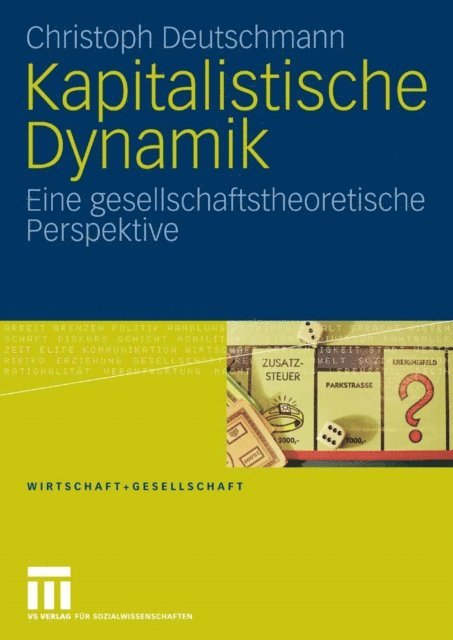
Der Band fasst die neueren Publikationen sowie einige Originalbeiträge des Autors zur Arbeits- und Wirtschaftssoziologie zusammen, in denen eine gesellschaftstheoretische Interpretation kapitalistischer Dynamik entwickelt wird.
605 kr
Skickas inom 10-15 vardagar
Der Band fasst die neueren Publikationen sowie einige Originalbeiträge des Autors zur Markt- und Wirtschaftssoziologie zusammen.