Christoph Dieckmann – författare
Visar alla böcker från författaren Christoph Dieckmann. Handla med fri frakt och snabb leverans.
9 produkter
9 produkter
Inbunden, Engelska, 2021
433 kr
Skickas inom 10-15 vardagar
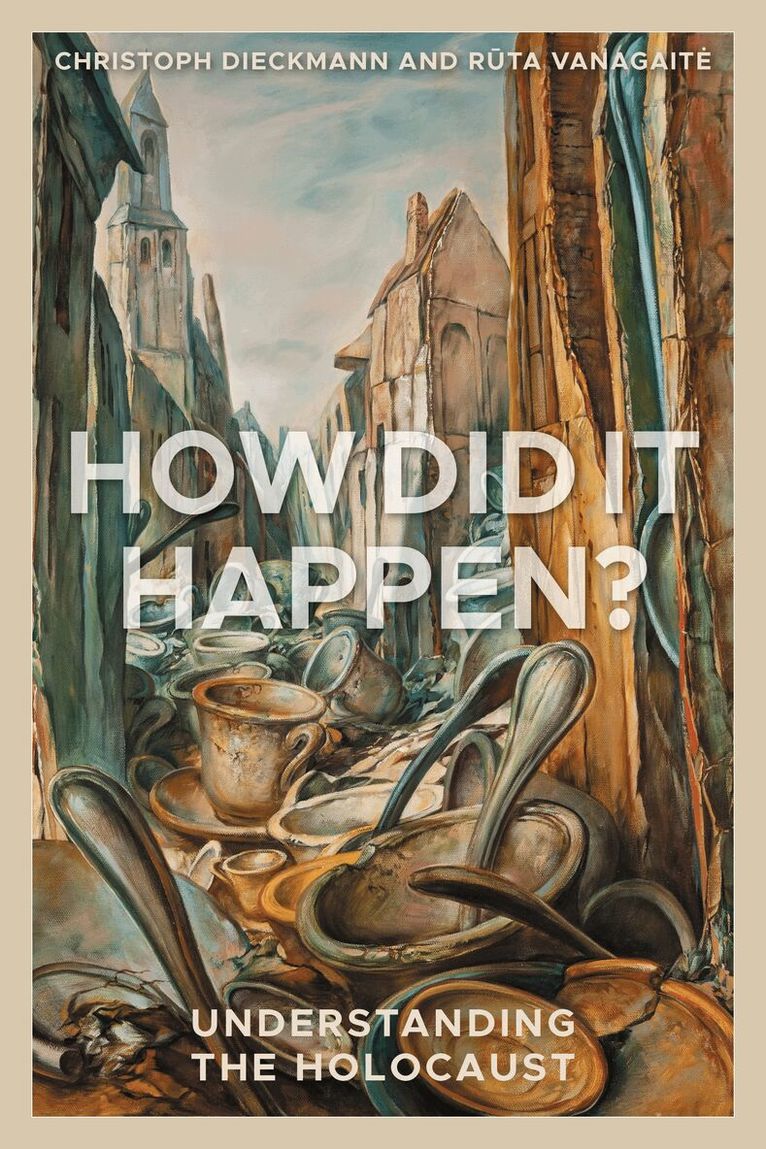
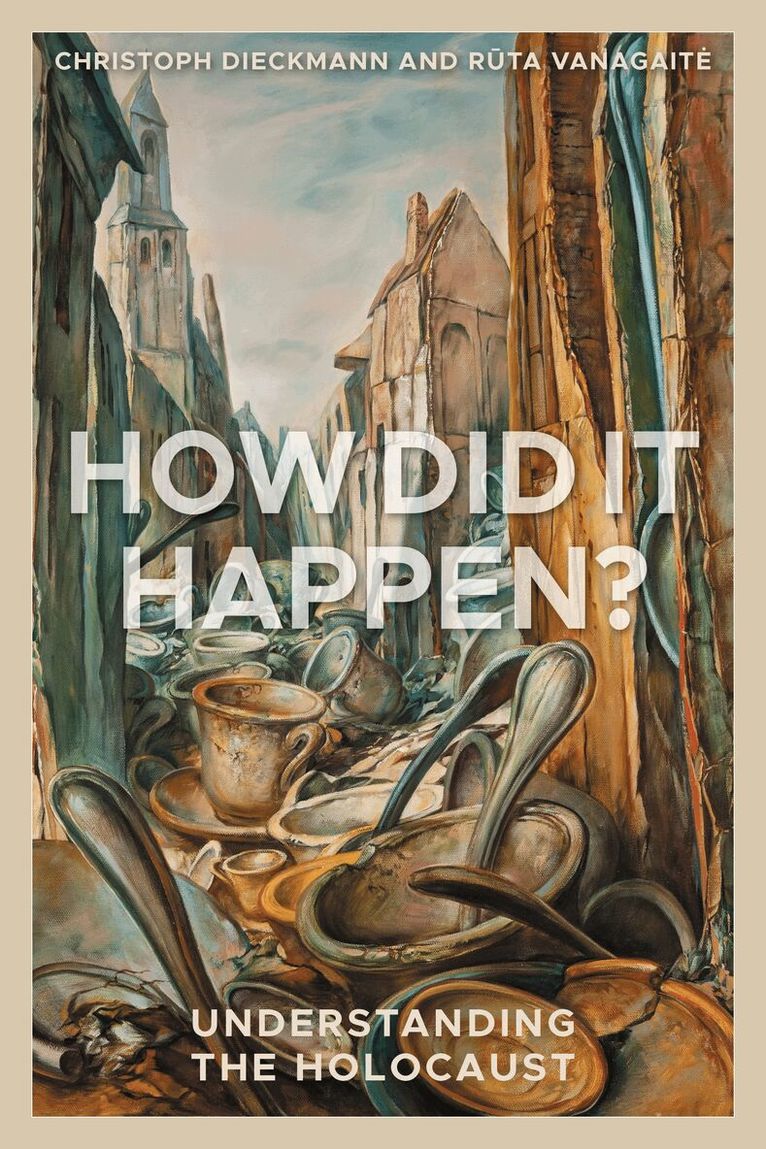
In this compelling book, Lithuanian author Ruta Vanagaite holds an extended conversation with noted historian Christoph Dieckmann. His exploration of the causes and consequences of the Holocaust in Lithuania provides the first overview for general readers that considers the perspectives of all the central groups involved—Jews, Lithuanians, and Germans. Drawing on a rich array of sources in all the key languages—Yiddish, Ivrit, Lithuanian, and German—Dieckmann considers not only the Berlin-based orientation of the German perpetrators but also the space where the Shoah took place—Lithuanian society with its Jewish minority under German occupation. He contends that this “space” of mass crimes is always linked with warfare and occupation. The Holocaust was unprecedented, but he makes a powerful case it cannot be isolated from the other mass crimes that took place at the same time in the same space against thousands of Soviet prisoners of war and forced refugees from the Soviet territories.Dieckmann shows that the Holocaust could not have unfolded throughout German-dominated Europe without the conditional cooperation of non-Germans in each occupied country. Existing antisemitism was radicalized from the 1930s onward, turning Jews, under the enormous stress of unrelenting warfare and often instable conditions of occupation, into what were perceived as deadly enemies. The Holocaust, its history and memory, can only be understood through this broader context. The authors’ searching exchanges illuminate the most profound questions we have as we struggle to understand the Holocaust.
E-bok
Engelska, 2021304 kr
Läs direkt efter köp
In this compelling book, Lithuanian author Ruta Vanagaite holds an extended conversation with noted historian Christoph Dieckmann. His exploration of the causes and consequences of the Holocaust in Lithuania provides the first overview for general readers that considers the perspectives of all the central groups involved—Jews, Lithuanians, and Germans. Drawing on a rich array of sources in all the key languages—Yiddish, Ivrit, Lithuanian, and German—Dieckmann considers not only the Berlin-based orientation of the German perpetrators but also the space where the Shoah took place—Lithuanian society with its Jewish minority under German occupation. He contends that this “space” of mass crimes is always linked with warfare and occupation. The Holocaust was unprecedented, but he makes a powerful case it cannot be isolated from the other mass crimes that took place at the same time in the same space against thousands of Soviet prisoners of war and forced refugees from the Soviet territories.Dieckmann shows that the Holocaust could not have unfolded throughout German-dominated Europe without the conditional cooperation of non-Germans in each occupied country. Existing antisemitism was radicalized from the 1930s onward, turning Jews, under the enormous stress of unrelenting warfare and often instable conditions of occupation, into what were perceived as deadly enemies. The Holocaust, its history and memory, can only be understood through this broader context. The authors’ searching exchanges illuminate the most profound questions we have as we struggle to understand the Holocaust.
Häftad, Engelska, 2023
291 kr
Skickas inom 10-15 vardagar
In this compelling book, Lithuanian author Ruta Vanagaite holds an extended conversation with noted historian Christoph Dieckmann. His exploration of the causes and consequences of the Holocaust in Lithuania provides the first overview for general readers that considers the perspectives of all the central groups involved—Jews, Lithuanians, and Germans. Drawing on a rich array of sources in all the key languages—Yiddish, Ivrit, Lithuanian, and German—Dieckmann considers not only the Berlin-based orientation of the German perpetrators but also the space where the Shoah took place—Lithuanian society with its Jewish minority under German occupation. He contends that this “space” of mass crimes is always linked with warfare and occupation. The Holocaust was unprecedented, but he makes a powerful case it cannot be isolated from the other mass crimes that took place at the same time in the same space against thousands of Soviet prisoners of war and forced refugees from the Soviet territories.Dieckmann shows that the Holocaust could not have unfolded throughout German-dominated Europe without the conditional cooperation of non-Germans in each occupied country. Existing antisemitism was radicalized from the 1930s onward, turning Jews, under the enormous stress of unrelenting warfare and often instable conditions of occupation, into what were perceived as deadly enemies. The Holocaust, its history and memory, can only be understood through this broader context. The authors’ searching exchanges illuminate the most profound questions we have as we struggle to understand the Holocaust.
E-bok
PDF, Tyska, 2012181 kr
Läs direkt efter köp
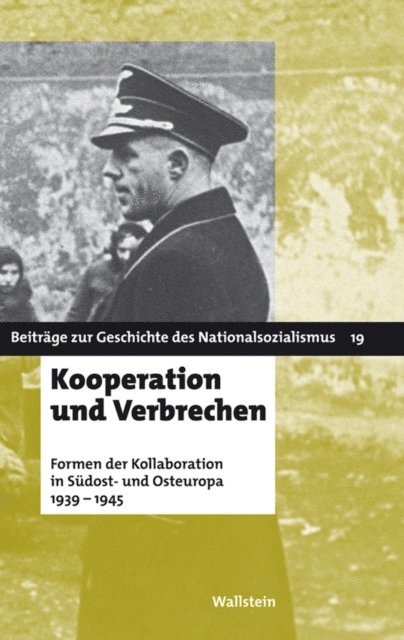
Welche Motive, Interessen und Handlungsspielräume hatten kooperierende einheimische Personen und Institutionen im östlichen Europa während der deutschen Besatzung?An vielen Orten hat es während des Zweiten Weltkrieges Formen von Zusammenarbeit zwischen deutschen Stellen und einheimischen Regierungen, Verwaltungen oder Einzelpersonen gegeben. Die Autorinnen und Autoren dieses Bandes untersuchen die Motive, Interessen und Handlungsspielräume der kooperierenden Akteure im östlichen Europa und fragen danach, welchen Einfluß ihr Handeln auf die begangenen Verbrechen, insbesondere gegen die jüdische Bevölkerung, hatte. Sie zeigen dabei, daß diese Gruppen einerseits in einem komplexen und dynamischen Verhältnis zu den deutschen zivilen und militärischen Instanzen standen, andererseits aber auch selbständig Handelnde mit eigenen Interessen waren.
E-bok
PDF, Tyska, 2012181 kr
Läs direkt efter köp
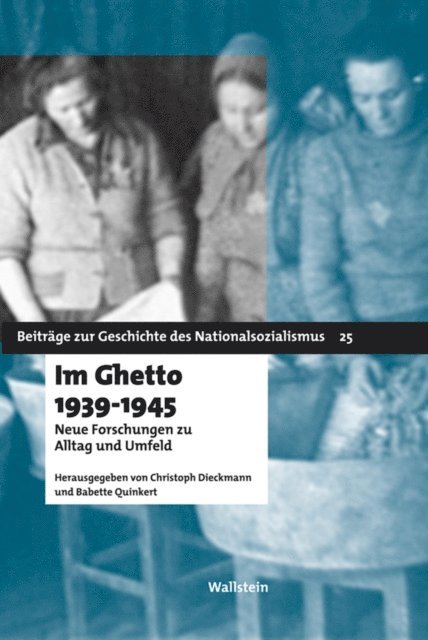
Die nationalsozialistischen Ghettos im Vergleich.Die Lebensverhältnisse in den über 1.000 nationalsozialistischen Ghettos variierten stark: Manche waren geschlossen, andere offen, manche existierten über einen längeren Zeitraum, andere nur wenige Wochen oder Monate. Dieser Teil des nationalsozialistischen Unterdrückungsapparats und besonders das Verhalten der übergroßen jüdischen Mehrheit in den Ghettos ist bislang nur teilweise erforscht. Die Autorinnen und Autoren untersuchen verschiedene Aspekte des Lebens der jüdischen Bevölkerung und tragen damit zu einem besseren Verständnis des Phänomens der Ghettos insgesamt bei.
E-bok
PDF, Tyska, 2015181 kr
Läs direkt efter köp
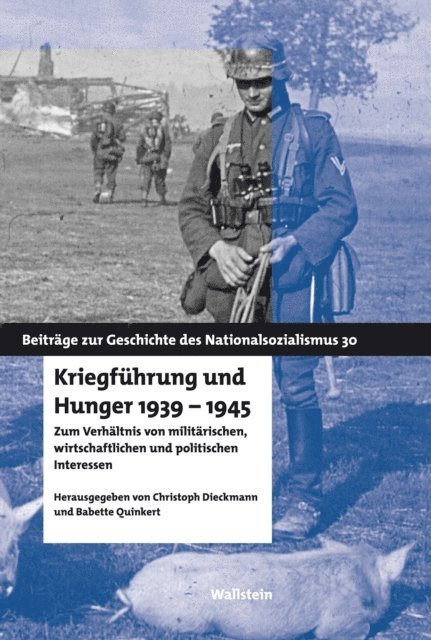
In welchem Verhältnis stehen die deutschen Massenverbrechen zur Kriegführung und Hungerpolitik während des Zweiten Weltkriegs?Von den etwa 13 Millionen Opfern deutscher Massenverbrechen zwischen 1933 und 1945 starben die meisten während des Zweiten Weltkrieges. Der regionale Schwerpunkt dieser Verbrechen lag in Osteuropa. Der Band fragt nach dem Verhältnis von Kriegführung und Massenverbrechen. Da ein wesentlicher Teil dieser Verbrechen während des Krieges eng mit Hunger und selektiver Nahrungsmittelpolitik verknüpft war, wird der Faktor Hunger in diesem Band besonders betont.
Häftad, Tyska, 2024
145 kr
Skickas inom 3-6 vardagar
E-bok
Tyska, 202491 kr
Läs direkt efter köp
1965 entdeckt der neunjährige Pfarrerssohn Christoph den Fußball – in doppelter Gestalt. Der sichtbare Fußball rollt auf dem Sportplatz von Traktor Dingelstedt am Huy, der unsichtbare im Radio, draußen in der weiten Welt. Dort gibt es eine sagenhafte Stadt namens Jena. Ihr Stadion liegt im Paradies, ihr Stern heißt Peter Ducke.Sieben Jahre später trifft der Jena-Fan sein Idol. Eine herbe Enttäuschung – zum Glück nicht die letzte Begegnung. Christoph Dieckmann schildert die kurvige Laufbahn des ungewöhnlichsten Kickers der DDR. Zugleich erzählt er Fußball als deutsche Zeitgeschichte, vom Nachkrieg bis in die Gegenwart.
Inbunden, Tyska, 2021
260 kr
Skickas inom 3-6 vardagar