Christoph Henke – författare
Visar alla böcker från författaren Christoph Henke. Handla med fri frakt och snabb leverans.
4 produkter
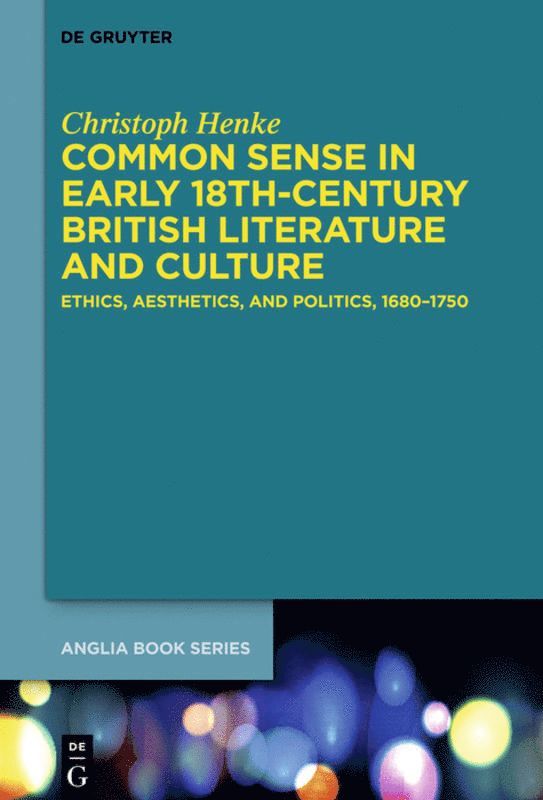
Common Sense in Early 18th-Century British Literature and Culture
Ethics, Aesthetics, and Politics, 1680–1750
Inbunden, 2014
2149 kr
Lägg i varukorg
While the popular talk of English common sense in the eighteenth century might seem a by-product of familiar Enlightenment discourses of rationalism and empiricism, this book argues that terms such as ‘common sense’ or ‘good sense’ are not simply synonyms of applied reason. On the contrary, the …
Common Sense in Early 18th-Century British Literature and Culture
Ethics, Aesthetics, and Politics, 1680–1750
E-bok, 2014
2171 kr
Lägg i varukorg
While the popular talk of English common sense in the eighteenth century might seem a by-product of familiar Enlightenment discourses of rationalism and empiricism, this book argues that terms such as ‘common sense’ or ‘good sense’ are not simply synonyms of applied reason. On the contrary, the …
Common Sense in Early 18th-Century British Literature and Culture
Ethics, Aesthetics, and Politics, 1680–1750
E-bok, 2014
2171 kr
Lägg i varukorg
While the popular talk of English common sense in the eighteenth century might seem a by-product of familiar Enlightenment discourses of rationalism and empiricism, this book argues that terms such as ‘common sense’ or ‘good sense’ are not simply synonyms of applied reason. On the contrary, the …
Über die Evolution des Rechts
Warum ändert sich das Recht?
Häftad, 2010
864 kr
Tillfälligt slut
Christoph Henke untersucht die Ursachen und Mechanismen des Wandels im Recht und beschreibt die Triebkräfte für diesen Wandel. Dabei geht es ihm um das Warum der Veränderungen des Rechts. Sein Ausgangspunkt ist der evolutionäre Ansatz, dass die Prinzipien von Variation und Selektion nicht nur in …