Christoph Jäger - Böcker
Visar alla böcker från författaren Christoph Jäger. Handla med fri frakt och snabb leverans.
5 produkter
5 produkter
1 069 kr
Skickas inom 10-15 vardagar
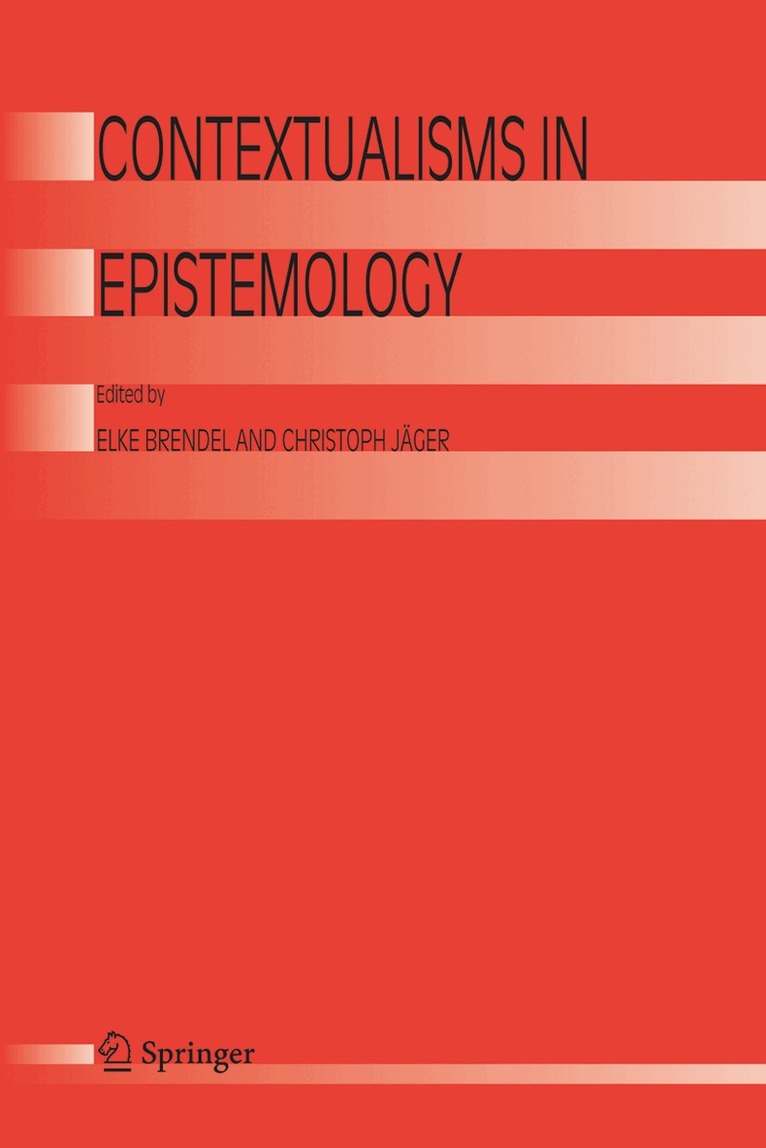
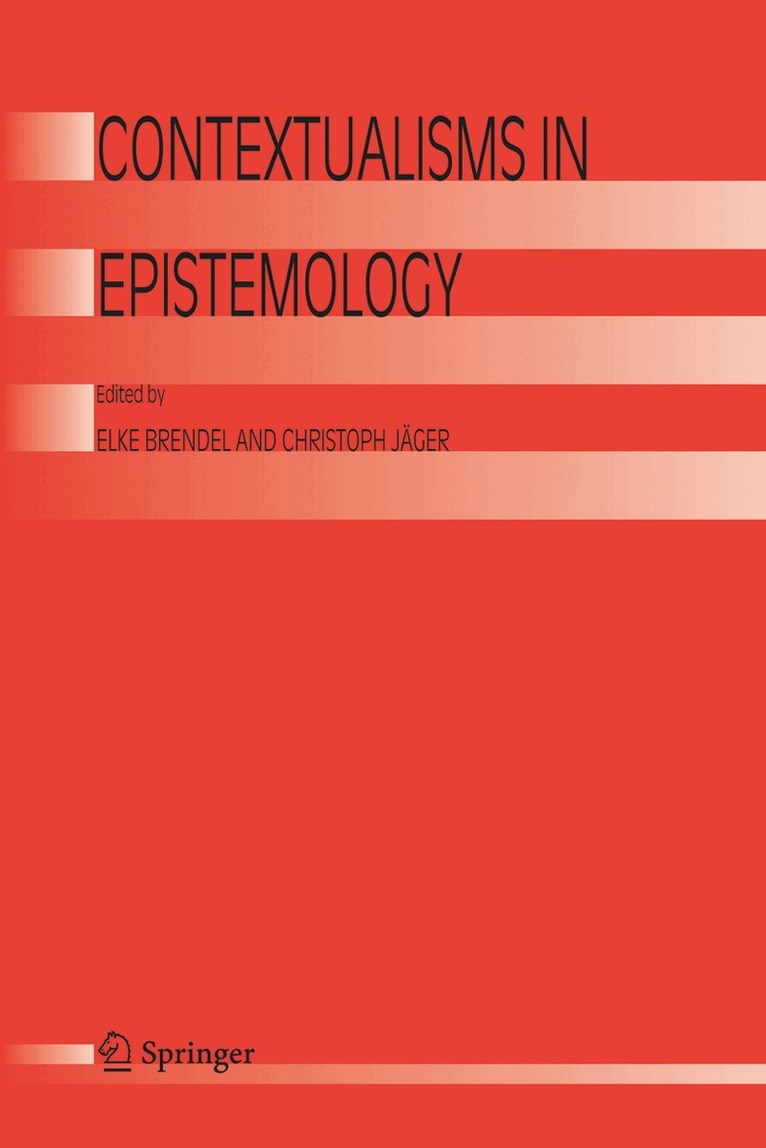
Contextualism has become one of the leading paradigms in contemporary epistemology. According to this view, there is no context-independent standard of knowledge, and as a result, all knowledge ascriptions are context-sensitive. Contextualists contend that their account this analysis allows us to resolve some major epistemological problems such as skeptical paradoxes and the lottery paradox, and that it helps us explain various other linguistic data about knowledge ascriptions. The apparent ease with which contextualism seems to solve numerous epistemological quandaries has inspired the burgeoning interest in it.This comprehensive anthology collects twenty original essays and critical commentaries on different aspects of contextualism, written by leading philosophers on the topic. The editors’ introduction sketches the historical development of the contextualist movement and provides a survey and analysis of its arguments and major positions. The papers explore, inter alia, the central problems and prospects of semantic (or conversational) contextualism and its main alternative approaches such as inferential (or issue) contextualism, epistemic contextualism, and virtue contextualism. They also investigate the connections between contextualism and epistemic particularism, and between contextualism and stability accounts of knowledge.
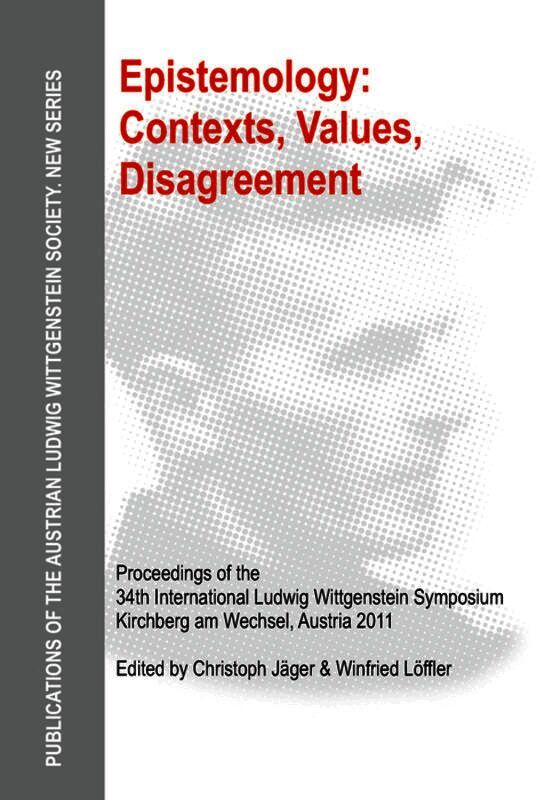
Epistemology: Contexts, Values, Disagreement
Proceedings of the 34th International Ludwig Wittgenstein Symposium in Kirchberg, 2011
Inbunden, Engelska, 2007
2 547 kr
Skickas inom 5-8 vardagar
This volume collects papers that were presented at the 34th International Ludwig Wittgenstein Symposium 2011 in Kirchberg am Wechsel, Austria. They focus on five key debates in contemporary epistemology: Does the term “to know” vary its meaning according to features of the contexts in which it is uttered? What role may “epistemic virtues” play in our cognitive activities? What is the surplus value of having knowledge instead of mere true belief? What is the structure and significance of testimonial knowledge and belief? And when is disagreement rational, especially if it occurs among “epistemic peers”? In addition, a section is devoted to novel discussions of the work of Wittgenstein. Papers by A. Beckermann, E. Brendel, W. Davis, C. Elgin, S. Goldberg, J. Greco, A. Kemmerling, H. Kornblith, M. Solomon, M. Williams, and many others.
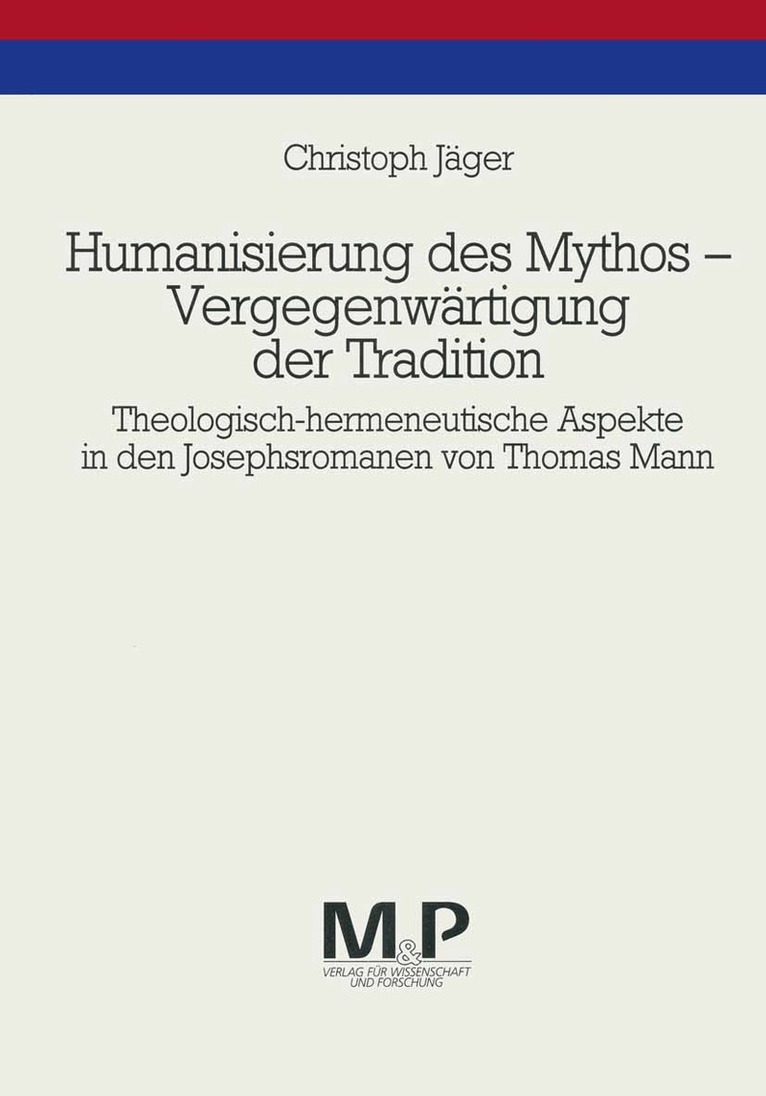
Humanisierung des Mythos - Vergegenwärtigung der Tradition
Theologisch-hermeneutische Aspekte in den Josephsromanen von Thomas Mann. M & P Schriftenreihe
Häftad, Tyska, 1992
334 kr
Skickas inom 10-15 vardagar
1 562 kr
Skickas inom 7-10 vardagar
1 069 kr
Skickas inom 10-15 vardagar
Contextualism has become one of the leading paradigms in contemporary epistemology. According to this view, there is no context-independent standard of knowledge, and as a result, all knowledge ascriptions are context-sensitive. Contextualists contend that their account this analysis allows us to resolve some major epistemological problems such as skeptical paradoxes and the lottery paradox, and that it helps us explain various other linguistic data about knowledge ascriptions. The apparent ease with which contextualism seems to solve numerous epistemological quandaries has inspired the burgeoning interest in it.This comprehensive anthology collects twenty original essays and critical commentaries on different aspects of contextualism, written by leading philosophers on the topic. The editors’ introduction sketches the historical development of the contextualist movement and provides a survey and analysis of its arguments and major positions. The papers explore, inter alia, the central problems and prospects of semantic (or conversational) contextualism and its main alternative approaches such as inferential (or issue) contextualism, epistemic contextualism, and virtue contextualism. They also investigate the connections between contextualism and epistemic particularism, and between contextualism and stability accounts of knowledge.