Christophe Bene – författare
Visar alla böcker från författaren Christophe Bene. Handla med fri frakt och snabb leverans.
9 produkter
9 produkter
E-bok
Tyska, 201315 kr
Läs direkt efter köp
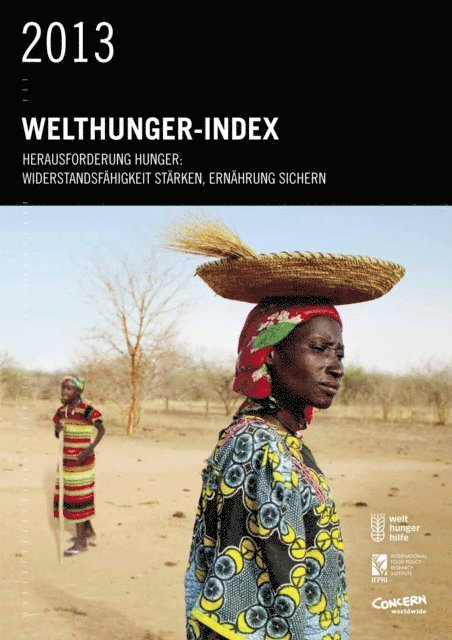
Der Bericht zum Welthunger-Index 2013 – der achte in einer jährlich erscheinenden Serie – stellt die Entwicklung des weltweiten, regionalen und nationalen Hungers mittels eines mehrdimensionalen Indexwertes dar. Er zeigt, dass die Weltgemeinschaft bei der Bekämpfung des Hungers seit 1990 gewisse Fortschritte gemacht hat, dass aber noch viel zu tun ist. Der Welthunger-Index-Bericht 2013 stellt die Resilienz (Widerstandsfähigkeit) in Theorie und Praxis in den Mittelpunkt. Nothilfe und Entwicklungszusammenarbeit hatten lange Schwierigkeiten zu verstehen, warum manche Menschen besser als andere mit Belastungen und Krisen zurechtkommen. Angesichts der, laut Index, nach wie vor "ernsten" Hungersituation in der Welt sind dringend Anstrengungen notwendig, um die Widerstandsfähigkeit armer und verwundbarer Menschen zu stärken, so dass sie mit Hungerperioden, Dürren und anderen natürlichen und von Menschen verursachten Katastrophen kurzfristig und auch langfristig umgehen können. Die Verbesserung der Ernährungssicherheit ist dafür eine wichtige Voraussetzung. Um dieses Ziel zu erreichen, müssen Nothilfe und Entwicklungszusammenarbeit besser zusammenwirken.
E-bok
Engelska, 2025275 kr
Läs direkt efter köp
E-bok
PDF, Engelska, 2025285 kr
Läs direkt efter köp
Inbunden, Engelska, 2004
1 080 kr
Skickas inom 10-15 vardagar
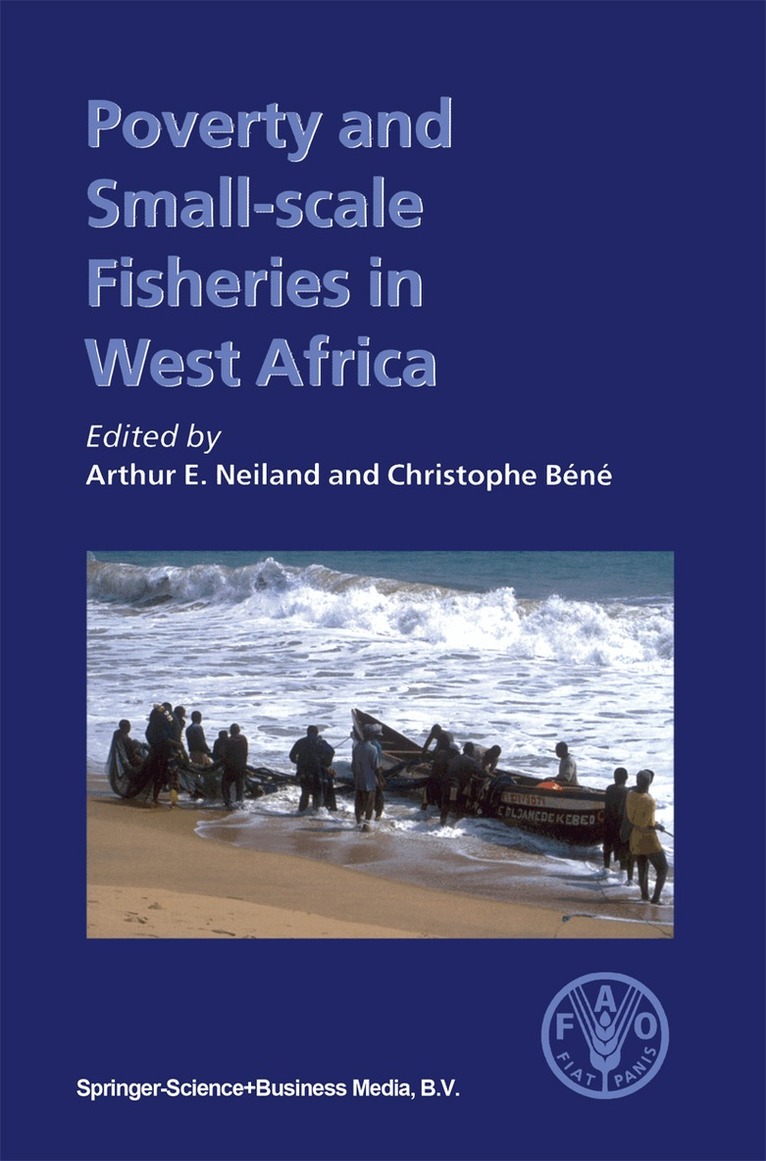
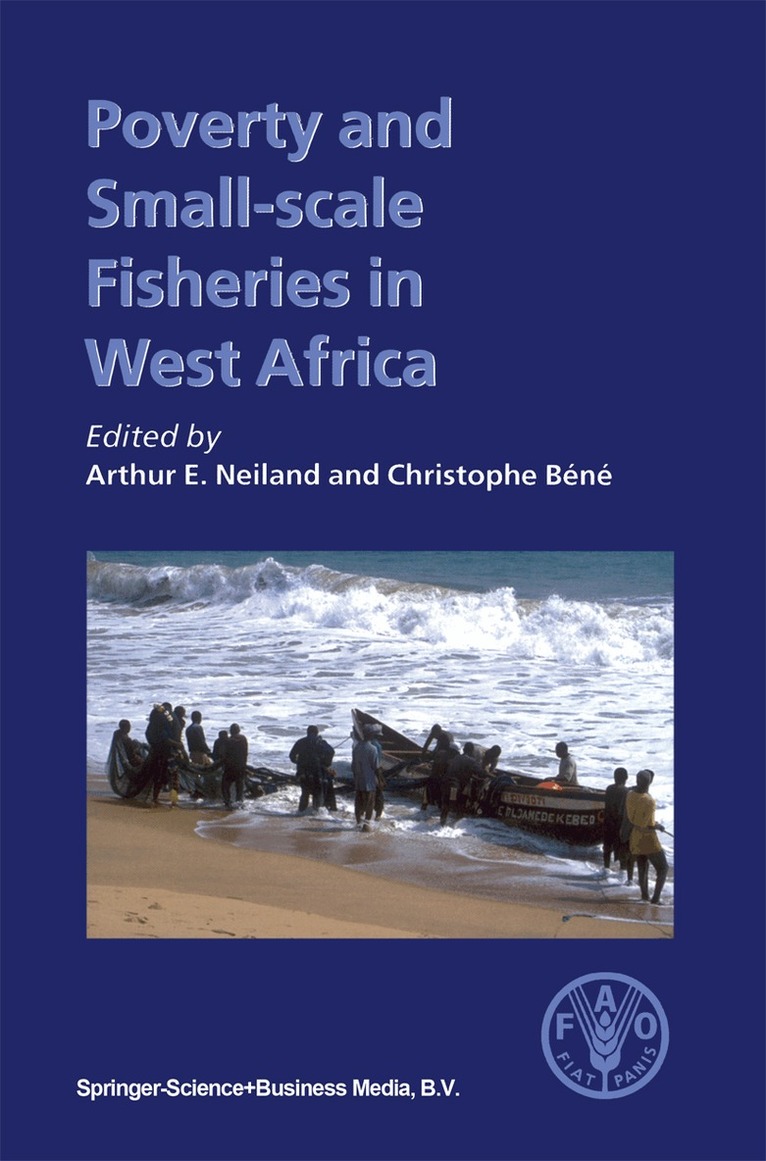
This book arises from case studies and two back-to-back workshops held in Cotonou, Benin in November 2001. They were the combination of much experience and knowledge gathered in the West Africa region and were brought about to explore the concept of poverty, especially how it is a part of the life of fishing communities and our ways of thinking about resolving the issue. The workshops were conceived as a partnership between the UK Department for International Development (DFID), the Food and Agriculture Organization of the United Nations (F AO) and 25 countries of West Africa, working together through the Sustainable Fisheries Livelihood Programme (SFLP) to join forces with the Centre for the Economics and Management of Aquatic Resources (CEMARE). The SFLP, with its remit of poverty alleviation in West African artisanal fisheries communities through better governance and improved policies to involve communities in management of the resources on which their livelihoods depend, had quickly realised that it needed to define what and whom it was targeting. In this respect, the two large back-to-back workshops marked a milestone for the SFLP. Those participating in the workshop soon emphasised that we need to push forward our ideas from the previous simplistic "less than a dollar a day" type definitions to show that poverty is multi-faceted and a dynamic feature of human society.
Inbunden, Engelska, 2023
549 kr
Skickas inom 10-15 vardagar
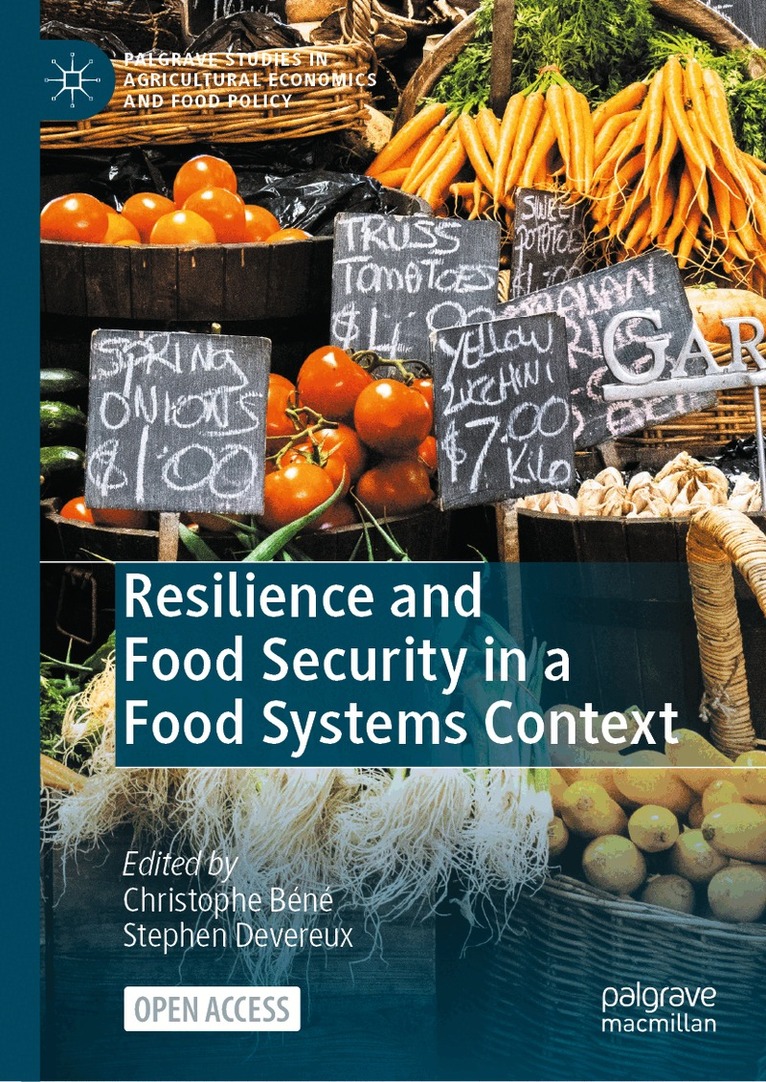
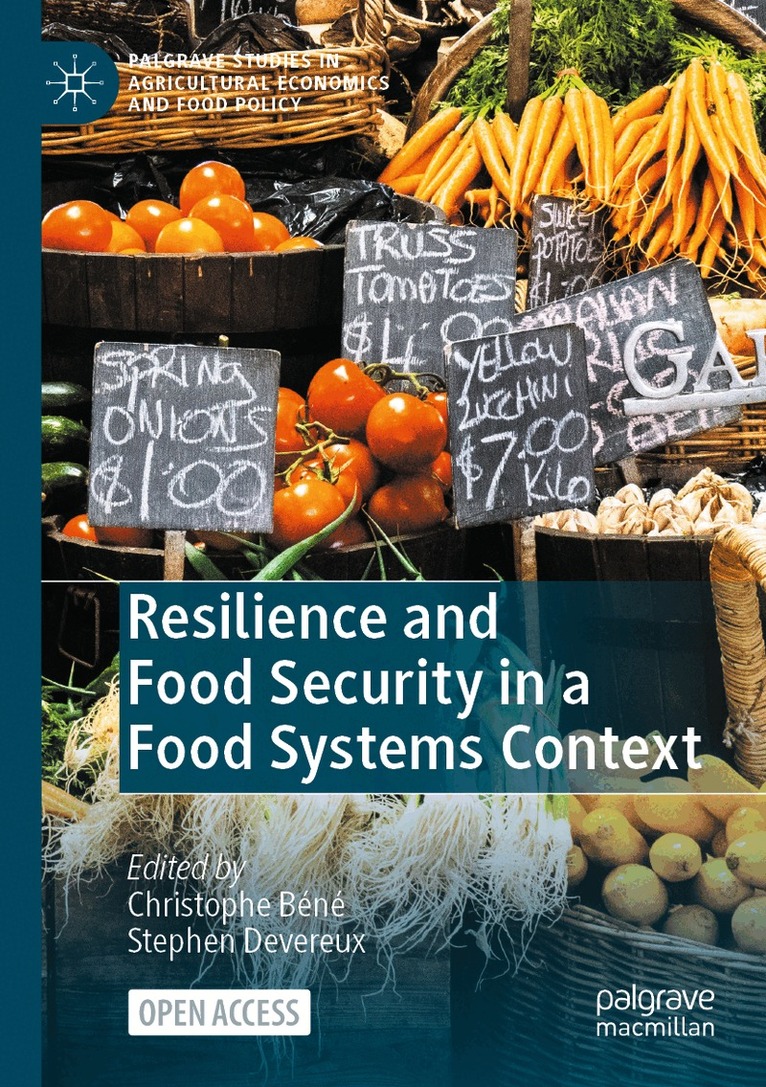
This open access book compiles a series of chapters written by internationally recognized experts known for their in-depth but critical views on questions of resilience and food security. The book assesses rigorously and critically the contribution of the concept of resilience in advancing our understanding and ability to design and implement development interventions in relation to food security and humanitarian crises. For this, the book departs from the narrow beaten tracks of agriculture and trade, which have influenced the mainstream debate on food security for nearly 60 years, and adopts instead a wider, more holistic perspective, framed around food systems. The foundation for this new approach is the recognition that in the current post-globalization era, the food and nutritional security of the world’s population no longer depends just on the performance of agriculture and policies on trade, but rather on the capacity of the entire (food) system to produce, process, transport and distribute safe, affordable and nutritious food for all, in ways that remain environmentally sustainable. In that context, adopting a food system perspective provides a more appropriate frame as it incites to broaden the conventional thinking and to acknowledge the systemic nature of the different processes and actors involved. This book is written for a large audience, from academics to policymakers, students to practitioners.This is an open access book.
Engelska, 2023
648 kr
Skickas inom 5-8 vardagar
Häftad, Engelska, 2023
440 kr
Skickas inom 10-15 vardagar
This open access book compiles a series of chapters written by internationally recognized experts known for their in-depth but critical views on questions of resilience and food security. The book assesses rigorously and critically the contribution of the concept of resilience in advancing our understanding and ability to design and implement development interventions in relation to food security and humanitarian crises. For this, the book departs from the narrow beaten tracks of agriculture and trade, which have influenced the mainstream debate on food security for nearly 60 years, and adopts instead a wider, more holistic perspective, framed around food systems. The foundation for this new approach is the recognition that in the current post-globalization era, the food and nutritional security of the world’s population no longer depends just on the performance of agriculture and policies on trade, but rather on the capacity of the entire (food) system to produce, process, transport and distribute safe, affordable and nutritious food for all, in ways that remain environmentally sustainable. In that context, adopting a food system perspective provides a more appropriate frame as it incites to broaden the conventional thinking and to acknowledge the systemic nature of the different processes and actors involved. This book is written for a large audience, from academics to policymakers, students to practitioners.This is an open access book.
Häftad, Engelska, 2010
1 091 kr
Skickas inom 10-15 vardagar
This book arises from case studies and two back-to-back workshops held in Cotonou, Benin in November 2001. They were the combination of much experience and knowledge gathered in the West Africa region and were brought about to explore the concept of poverty, especially how it is a part of the life of fishing communities and our ways of thinking about resolving the issue. The workshops were conceived as a partnership between the UK Department for International Development (DFID), the Food and Agriculture Organization of the United Nations (F AO) and 25 countries of West Africa, working together through the Sustainable Fisheries Livelihood Programme (SFLP) to join forces with the Centre for the Economics and Management of Aquatic Resources (CEMARE). The SFLP, with its remit of poverty alleviation in West African artisanal fisheries communities through better governance and improved policies to involve communities in management of the resources on which their livelihoods depend, had quickly realised that it needed to define what and whom it was targeting. In this respect, the two large back-to-back workshops marked a milestone for the SFLP. Those participating in the workshop soon emphasised that we need to push forward our ideas from the previous simplistic "less than a dollar a day" type definitions to show that poverty is multi-faceted and a dynamic feature of human society.
E-bok
PDF, Engelska, 20131 416 kr
Läs direkt efter köp
This book arises from case studies and two back-to-back workshops held in Cotonou, Benin in November 2001. They were the combination of much experience and knowledge gathered in the West Africa region and were brought about to explore the concept of poverty, especially how it is a part of the life of fishing communities and our ways of thinking about resolving the issue. The workshops were conceived as a partnership between the UK Department for International Development (DFID), the Food and Agriculture Organization of the United Nations (F AO) and 25 countries of West Africa, working together through the Sustainable Fisheries Livelihood Programme (SFLP) to join forces with the Centre for the Economics and Management of Aquatic Resources (CEMARE). The SFLP, with its remit of poverty alleviation in West African artisanal fisheries communities through better governance and improved policies to involve communities in management of the resources on which their livelihoods depend, had quickly realised that it needed to define what and whom it was targeting. In this respect, the two large back-to-back workshops marked a milestone for the SFLP. Those participating in the workshop soon emphasised that we need to push forward our ideas from the previous simplistic "less than a dollar a day" type definitions to show that poverty is multi-faceted and a dynamic feature of human society.